Instant
01 · Ask
Ask the AI a follow-up
Got more questions about metal Staircase Installation? Describe the bit you're unsure about — the AI explains options, sequencing and what to ask the metalwork & blacksmith.

Bespoke metal stair — straight, helical or spiral — designed, welded and installed.
You've read the brief on metal Staircase Installation. Now lean on us to find the right metalwork & blacksmith — and stay in control of the job.
Got more questions about metal Staircase Installation? Describe the bit you're unsure about — the AI explains options, sequencing and what to ask the metalwork & blacksmith.
Costs, timelines, pitfalls and the right questions to ask before any metalwork & blacksmith starts on metal Staircase Installation.
Itemised quotes from up to 3 local metalwork & blacksmiths on metal Staircase Installation — so you can compare like-for-like, not lump sums.
Ready when you are
Enter your postcode and get free quotes from local pros.
Four moves that separate a smooth job from a nightmare.
Metal stairs can be noisy. To avoid this, ensure the design includes rubber gaskets or choose treads with acoustic dampening (like wood-filled trays).
If external stairs are only painted rather than hot-dip galvanised, they will begin to rust within 2-3 years in the British climate.
If the gauge of the steel is too thin or the fixings are inadequate, the staircase may "bounce" or vibrate when walked upon.
Many DIY "kits" found online do not meet UK Building Regulations regarding the gap between spindles or the pitch of the stairs.
Indicative UK ranges and what affects price.
By job type
Quote spread is typically ± 18% — always get 3 quotes.
Metalwork & Blacksmith quick-view
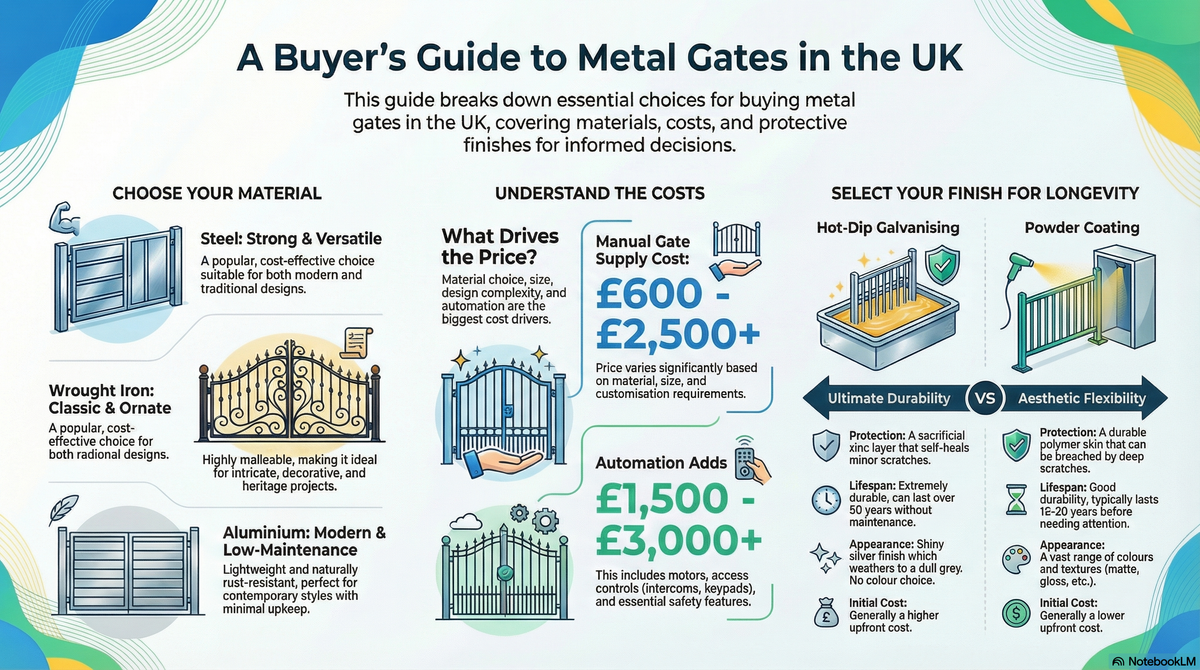
Beyond their visual appeal, metal staircases are fire-resistant and require significantly less maintenance than wood. For UK homeowners, choosing a bespoke metal installation is an investment in both the safety and the long-term value of the property.
The cost of a metal staircase is primarily driven by the complexity of the design and the type of metal used. Bespoke architectural pieces require more labour than "off-the-shelf" modular kits.
| Item | Low £ | High £ | Notes |
|---|---|---|---|
| Basic Straight Flight (Steel) | £2,500 | £5,000 | Simple design, standard powder-coated finish. |
| Spiral Staircase (Internal) | £3,500 | £8,000 | Price increases with premium treads (e.g., oak or glass). |
| External Fire Escape | £4,000 | £9,000+ | Includes galvanising and anti-slip treads. |
| Bespoke Feature Staircase | £10,000 | £25,000+ | High-end architectural designs with glass balustrades. |
| Site Survey & Structural Calcs | £400 | £900 | Essential for Building Control approval. |
Prices include VAT and installation. Factors such as restricted site access, the need for structural reinforcements, and the choice of handrail materials (e.g., brass or stainless steel) will significantly impact the final quote.
Installing a metal staircase is strictly a professional task. Unlike timber stairs, metal components are incredibly heavy and require specialist lifting equipment and precision welding skills.
Structural integrity is non-negotiable; a poorly installed staircase is a significant safety hazard and will fail UK Building Regulations inspections.
Furthermore, any structural metalwork in the UK must comply with BS EN 1090. A professional blacksmith or fabricator will ensure the staircase is "CE" or "UKCA" marked, proving it meets essential safety standards.
Generally, no. Internal alterations do not usually require planning permission unless the building is Listed. However, you will always need Building Regulations approval to ensure safety and fire compliance.
They can be if not treated correctly. For external stairs, you should insist on "durbar" (chequered) plates, perforated steel, or anti-slip inserts to ensure safety during rain or frost.
Absolutely. Many homeowners choose a steel carcass with oak treads or glass balustrades. This softens the industrial look and helps the staircase blend with traditional home interiors.
Internal powder-coated stairs simply need wiping down with a damp cloth. External galvanised stairs are virtually maintenance-free for 25+ years, though they may require a fresh coat of specialist metal paint every decade to maintain their colour.
Metal requires more specialised equipment, higher material costs (steel prices fluctuate), and significantly more labour in the fabrication stage. However, the lifespan of metal is often double that of timber.
This guide was written with AI assistance and is intended for general information only. Prices are estimates based on UK averages and may vary by region. Always get at least three quotes and consult a qualified professional before starting any work.
Ask follow-ups in plain English. The AI explains options, sequencing and what to ask the metalwork & blacksmith — so you walk in informed.
Custom metal railings are a significant investment for UK homeowners, offering a blend of security, safety, and architectural character. Whether you are restori...
READ GUIDE →GuideA well-installed handrail is more than just a safety requirement; it is a vital architectural feature that provides stability and style to UK homes. Whether you...
READ GUIDE →GuideEmergency metal repairs are often critical for home security and structural safety. Whether it is a snapped driveway gate hinge, a failing fire escape, or a dam...
READ GUIDE →GuideMetal fabrication is a cornerstone of UK home improvement, bridging the gap between structural necessity and aesthetic appeal. Whether you are installing a stru...
READ GUIDE →GuideCustom steel fabrication is the backbone of many UK home improvement projects, ranging from essential structural beams (RSJs) to decorative garden gates and bes...
READ GUIDE →GuideCustom metal gates are a premium investment for UK homeowners, offering a level of security, durability, and kerb appeal that off-the-shelf timber options simpl...
READ GUIDE →