Instant
01 · Ask
Ask the AI a follow-up
Got more questions about wrought iron gate installation? Describe the bit you're unsure about — the AI explains options, sequencing and what to ask the metalwork & blacksmith.

Bespoke wrought iron driveway or pedestrian gate — forged, galvanised, painted and fitted to brick piers.
You've read the brief on wrought iron gate installation. Now lean on us to find the right metalwork & blacksmith — and stay in control of the job.
Got more questions about wrought iron gate installation? Describe the bit you're unsure about — the AI explains options, sequencing and what to ask the metalwork & blacksmith.
Costs, timelines, pitfalls and the right questions to ask before any metalwork & blacksmith starts on wrought iron gate installation.
Itemised quotes from up to 3 local metalwork & blacksmiths on wrought iron gate installation — so you can compare like-for-like, not lump sums.
Ready when you are
Enter your postcode and get free quotes from local pros.
Four moves that separate a smooth job from a nightmare.
Occurs when gates are only painted rather than galvanised; rust starts at the joints and "bleeds" down the metalwork.
If foundations are too shallow, the weight of the gate acts as a lever, causing the posts to tilt inward and the gates to misalign.
Using cheap, non-greasable hinges leads to stiff operation and eventually snapped brackets.
Failing to account for rising ground levels in the "swing zone" can result in the gate scraping the driveway.
Indicative UK ranges and what affects price.
By job type
Quote spread is typically ± 18% — always get 3 quotes.
Metalwork & Blacksmith quick-view
Installing these gates requires precision engineering and heavy-duty groundworks to manage the significant weight of the metal. Professional installation ensures that your gates remain perfectly aligned, swing smoothly, and do not sag over time due to seasonal ground movement.
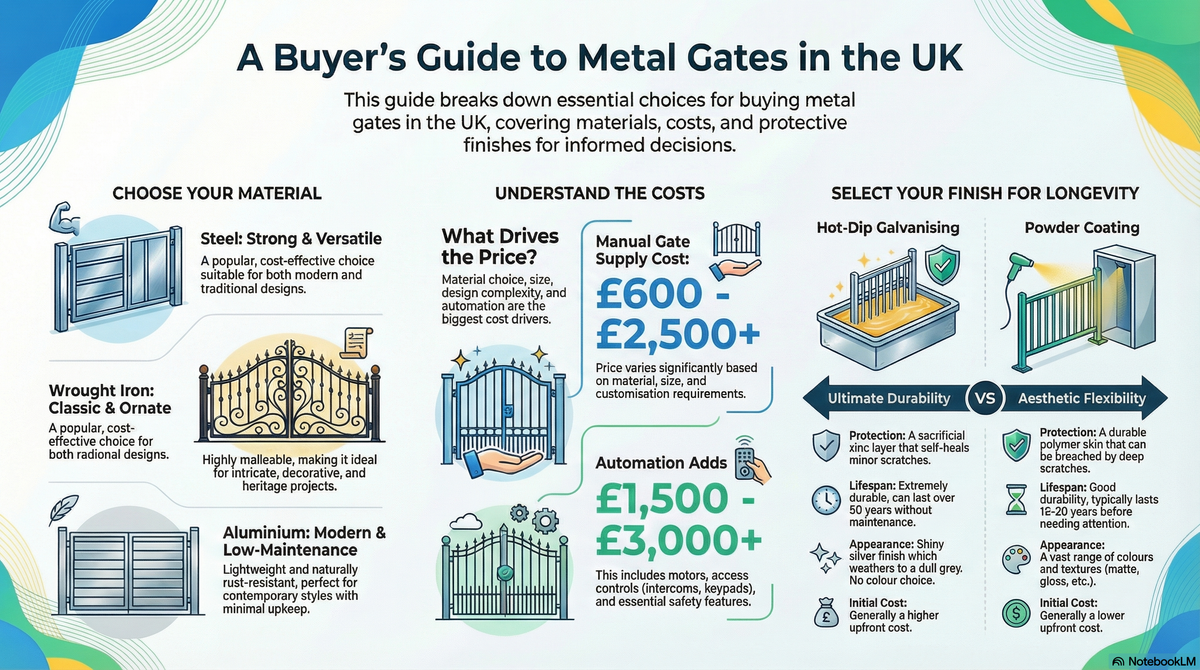
The cost of wrought iron gate installation varies significantly based on whether you choose "off-the-shelf" patterns or bespoke, hand-forged designs from a blacksmith. Prices below include professional installation and VAT.
| Item | Low £ | High £ | Notes |
|---|---|---|---|
| Single Side Gate (Standard) | £550 | £1,200 | Includes posts, basic latch, and installation. |
| Double Driveway Gates (Manual) | £1,600 | £4,500 | Standard designs; price scales with width/height. |
| Bespoke Blacksmith Design | £4,000 | £10,000+ | Unique, hand-forged scrolls and heavy-gauge steel. |
| Automation Add-on | £2,000 | £4,500 | Includes motors, safety sensors, and basic intercom. |
| Refurbishing Existing Gates | £400 | £900 | Removal, shot-blasting, powder coating, and re-hanging. |
Material thickness is the primary price driver; "wrought iron" style gates sold at high-street retailers are often hollow-core or thin-gauge steel, whereas professional blacksmith-made gates use solid bars. Expect to pay a premium for hot-dip galvanising, which is the only way to truly "rust-proof" the metal for decades.
While a DIY enthusiast can install a lightweight garden gate, driveway gates are a different prospect. Wrought iron is exceptionally heavy; a single driveway leaf can weigh over 100kg, posing a significant safety risk if the hinges or posts fail.
Professional installers have the welding equipment, heavy-duty lifting gear, and experience to ensure the foundations are deep enough to prevent "gate lean." Furthermore, if you are installing automated gates, UK law requires the system to be installed and "force tested" by a competent person to meet safety standards (EN 12453).
Always ensure that automated gates include safety photocells and "edges" to prevent the gate from crushing a person or vehicle.
True wrought iron is no longer produced on a commercial scale; modern "wrought iron" gates are actually made from mild steel. Steel is more versatile and easier to weld, but it must be galvanised to match the natural corrosion resistance of historical wrought iron.
In the UK climate, yes. Hot-dip galvanising involves dipping the steel into molten zinc, creating a permanent bond that prevents rust for up to 50 years, even if the top coat of paint is scratched.
Usually, yes. As long as the gates are structurally sound and the posts are strong enough to withstand the "push and pull" of the motors, automation arms can be retrofitted.
Wash the metalwork annually with soapy water to remove salt and grit. Grease the hinges every six months and touch up any chips in the paint immediately to prevent rust from taking hold.
Ideally, no. A correctly installed gate should be supported entirely by its hinges and posts. Support wheels are often a "sticking plaster" for poor foundations or undersized posts and can fail if the ground is uneven.
This guide was written with AI assistance and is intended for general information only. Prices are estimates based on UK averages and may vary by region. Always get at least three quotes and consult a qualified professional before starting any work.
Ask follow-ups in plain English. The AI explains options, sequencing and what to ask the metalwork & blacksmith — so you walk in informed.
Custom metal railings are a significant investment for UK homeowners, offering a blend of security, safety, and architectural character. Whether you are restori...
READ GUIDE →GuideA well-installed handrail is more than just a safety requirement; it is a vital architectural feature that provides stability and style to UK homes. Whether you...
READ GUIDE →GuideEmergency metal repairs are often critical for home security and structural safety. Whether it is a snapped driveway gate hinge, a failing fire escape, or a dam...
READ GUIDE →GuideMetal fabrication is a cornerstone of UK home improvement, bridging the gap between structural necessity and aesthetic appeal. Whether you are installing a stru...
READ GUIDE →GuideMetal staircases have become a hallmark of modern British architecture, offering a sleek, industrial aesthetic that traditional timber cannot match. Whether you...
READ GUIDE →GuideCustom steel fabrication is the backbone of many UK home improvement projects, ranging from essential structural beams (RSJs) to decorative garden gates and bes...
READ GUIDE →