Instant
01 · Ask
Ask the AI a follow-up
Got more questions about patio Design Cost &? Describe the bit you're unsure about — the AI explains options, sequencing and what to ask the patios.

Patio design service — layout, material, drainage, lighting and planting. Designed by a landscaper.
You've read the brief on patio Design Cost &. Now lean on us to find the right patios — and stay in control of the job.
Got more questions about patio Design Cost &? Describe the bit you're unsure about — the AI explains options, sequencing and what to ask the patios.
Costs, timelines, pitfalls and the right questions to ask before any patios starts on patio Design Cost &.
Itemised quotes from up to 3 local patioss on patio Design Cost & — so you can compare like-for-like, not lump sums.
Ready when you are
Enter your postcode and get free quotes from local pros.
Four moves that separate a smooth job from a nightmare.
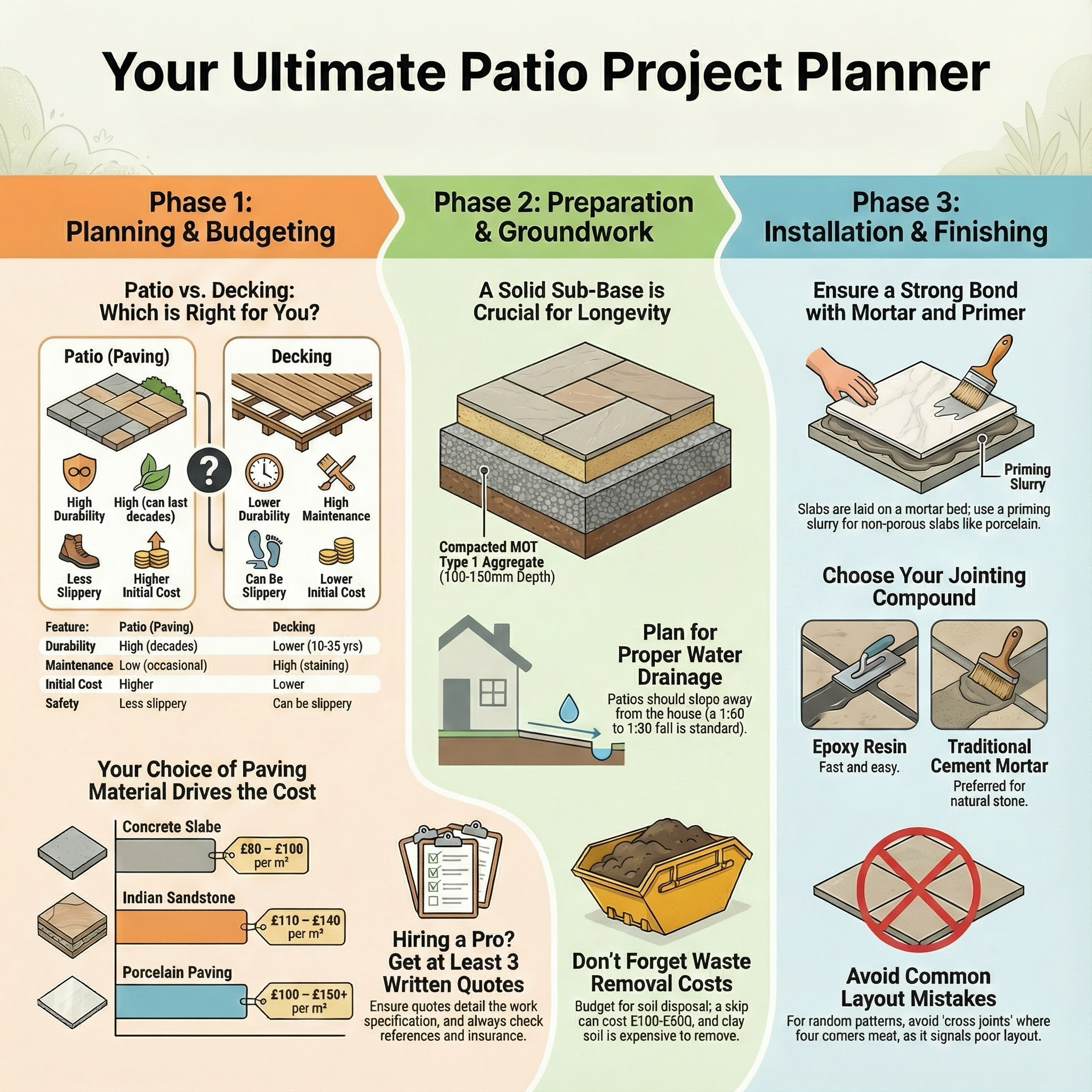
Water pooling in the centre of the patio because the "fall" (slope) was calculated incorrectly.
Installers using spots of mortar rather than a full bed, leading to rocking slabs and "reflective staining."
Paving over access covers makes future utility repairs impossible; always use "recessed" covers that hold matching stone.
Using too little hardcore, causing the patio to sink or crack within the first two years.
Indicative UK ranges and a typical week-by-week schedule.
By job type
Quote spread is typically ± 18% — always get 3 quotes.
30 m² patio install · week by week
Schedule slips on dependencies — pad each phase by 10–20% for real-world delays.
Patios quick-view
Patios explained
Investing in a professional design before the first spade hits the ground prevents costly mistakes. It allows you to visualise the flow of your garden, integrate lighting, and ensure the finished product adds genuine value to your property.
| Item | Low £ | High £ | Notes |
|---|---|---|---|
| Initial Consultation | £100 | £250 | Site visit and brief discussion of requirements. |
| Basic 2D Design Package | £350 | £650 | Scale drawings and material specifications. |
| Full 3D Visualisation | £600 | £1,500 | Realistic renderings and lighting plans. |
| Installation (per m²) | £120 | £250 | Labour and materials (varies by stone type). |
The total cost is heavily influenced by your choice of material—Indian Sandstone is generally more affordable than high-end Italian Porcelain. Additionally, significant changes in garden levels will require retaining walls, which can double the initial design and construction budget.
While laying a few stepping stones is a manageable DIY task, designing a full patio requires technical knowledge of fall and drainage. If a patio is tilted towards your house or covers the Damp Proof Course (DPC), it can cause catastrophic rising damp and structural issues.
Professional designers understand SUDS (Sustainable Urban Drainage Systems) regulations, which are legal requirements in many UK residential areas to prevent local flooding.
Generally, no. Patios are considered "Permitted Development" provided they are at ground level. However, if you live in a listed building or are installing a very large non-permeable surface in a front garden, you should check with your local council.
Porcelain is non-porous, meaning it won't grow algae and is very easy to clean, but it can look "clinical" to some. Natural stone (like Sandstone or Limestone) offers a classic look but requires sealing and more frequent scrubbing to prevent moss growth.
It is possible, but not ideal. Mortar and grout cannot be used if temperatures drop below 3-5°C, as the water in the mix will freeze and compromise the bond. Most UK contractors prefer working between March and October.
It is a metal tray that replaces a standard heavy manhole lid. It allows you to lay your patio slabs inside the tray so the drainage access blends seamlessly with the rest of the design.
A standard patio should have a minimum fall of 1:60. This means for every 60cm of width, the patio should drop by 1cm to ensure rainwater runs off effectively.
This guide was written with AI assistance and is intended for general information only. Prices are estimates based on UK averages and may vary by region. Always get at least three quotes and consult a qualified professional before starting any work.
Ask follow-ups in plain English. The AI explains options, sequencing and what to ask the patios — so you walk in informed.
A well-installed patio is one of the most effective ways to add value and functional living space to a UK home. Given our unpredictable climate, a durable, leve...
READ GUIDE →GuideA professionally installed patio is more than just a place for a summer BBQ; it is a functional extension of your home that can significantly increase property ...
READ GUIDE →GuidePatio and Garden Maintenance Overview Refreshes patio surfaces, restores tidy garden hard‑landscapes and gets sliding/French doors running smoothly. Skill level...
READ GUIDE →GuideResin bonding is an increasingly popular choice for UK homeowners looking to revitalise tired concrete or tarmac patios without the upheaval of a full excavatio...
READ GUIDE →GuideEverything UK homeowners need to know about Indian sandstone patios — costs per m², install steps, sealing, and how to choose a trusted installer.
READ GUIDE →GuideYorkshire stone patios: reclaimed vs new, costs per m², install detail, and how to find authentic British flagstones in 2026.
READ GUIDE →