Instant
01 · Ask
Ask the AI a follow-up
Got more questions about patio Installation? Describe the bit you're unsure about — the AI explains options, sequencing and what to ask the patios.

Concrete, stone, porcelain or composite — sub-base prepped, surface laid and joints finished.
You've read the brief on patio Installation. Now lean on us to find the right patios — and stay in control of the job.
Got more questions about patio Installation? Describe the bit you're unsure about — the AI explains options, sequencing and what to ask the patios.
Costs, timelines, pitfalls and the right questions to ask before any patios starts on patio Installation.
Itemised quotes from up to 3 local patioss on patio Installation — so you can compare like-for-like, not lump sums.
Ready when you are
Enter your postcode and get free quotes from local pros.
Four moves that separate a smooth job from a nightmare.
Patios laid perfectly flat will hold water, leading to algae growth and slippery surfaces.
Placing mortar only on the corners of slabs creates voids where water collects, causing slabs to rock or crack in freezing temperatures.
Using "soil" or "sand only" as a base will cause the patio to sink and become uneven within months.
White salty deposits can appear on stone; while natural, a professional can advise on the best sealants to minimise this.
Indicative UK ranges and a typical week-by-week schedule.
By job type
Quote spread is typically ± 18% — always get 3 quotes.
30 m² patio install · week by week
Schedule slips on dependencies — pad each phase by 10–20% for real-world delays.
Patios quick-view
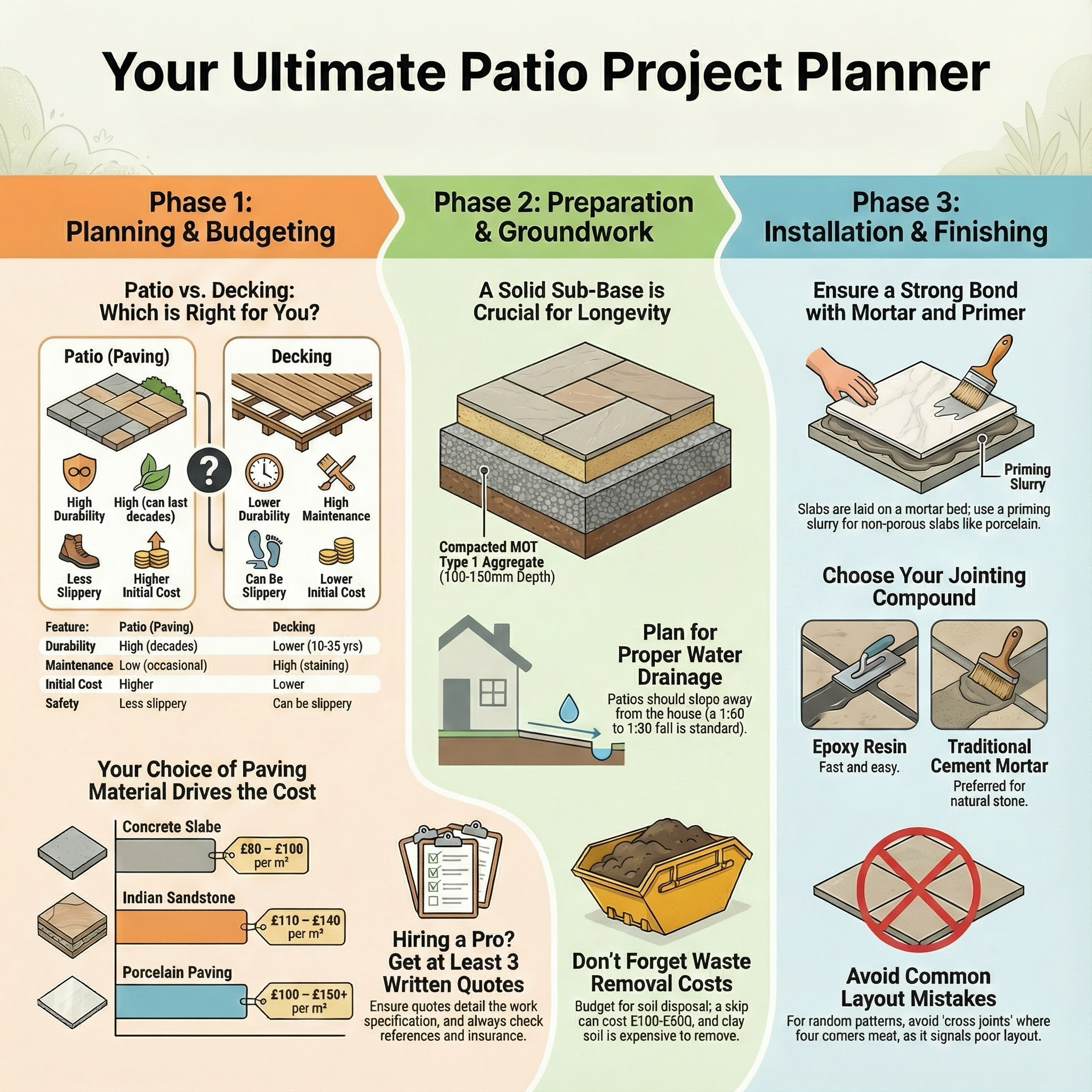
Patios explained
Whether you are opting for traditional Indian Sandstone or modern low-maintenance Porcelain, the success of the project relies on what happens beneath the surface. Professional installation ensures proper ground preparation, preventing the common issues of sinking, cracking, or water pooling near your home's foundations.
| Item / Material | Low £ (per m²) | High £ (per m²) | Notes |
|---|---|---|---|
| Basic Concrete Slabs | £70 | £110 | Includes basic excavation and sub-base. |
| Indian Sandstone | £110 | £160 | Popular natural stone; requires sealing. |
| Porcelain Paving | £160 | £250 | High-end finish; requires specialist primers. |
| York Stone / Slate | £180 | £300+ | Premium materials with high labour intensity. |
| Waste Removal (Skip) | £250 | £450 | Per 6-8 yard skip; varies by region. |
Prices in 2025/26 are heavily influenced by material choice and site access. If your garden is only accessible through the house or via a narrow side gate, labour costs will increase due to the manual handling of heavy materials and soil.
Pro Tip: Always ask for a quote that includes VAT and waste disposal, as soil and old concrete removal can be surprisingly expensive.
While laying a few stepping stones is a manageable DIY task, a full patio installation is a major structural project. Professional installers have the heavy-duty machinery (wacker plates, stone saws) and the expertise to handle drainage and sub-base compaction correctly.
In the UK, poor DIY installations often lead to "picture framing" (staining on the stone) or slabs coming loose within a year. Hiring a professional ensures the work meets British Standard BS 7533, which governs the installation of pavements and paving.
Questions to ask:
In most cases, no. However, if you live in a listed building, a conservation area, or if the patio is very large and non-permeable in a front garden, you should check with your local council.
Porcelain is the gold standard for low maintenance. It is non-porous, meaning it resists moss, algae, and staining, and only requires an occasional wash with soapy water.
It is generally not recommended. Laying over old paving can raise the height above the DPC and hides potential sub-base failures. It is always better to dig out and start fresh.
Spring and Autumn are ideal. Summer can be difficult as mortar dries too quickly, and Winter carries the risk of frost damage to fresh pointing.
Yes, natural stones like Sandstone and Limestone are porous. Sealing them helps prevent oil stains, bird lime damage, and reduces algae growth, though it usually needs reapplying every 2–3 years.
This guide was written with AI assistance and is intended for general information only. Prices are estimates based on UK averages and may vary by region. Always get at least three quotes and consult a qualified professional before starting any work.
Ask follow-ups in plain English. The AI explains options, sequencing and what to ask the patios — so you walk in informed.
A professionally installed patio is more than just a place for a summer BBQ; it is a functional extension of your home that can significantly increase property ...
READ GUIDE →GuideA well-designed patio is more than just a flat surface for a garden table; it is an extension of your home’s living space. In the UK, professional patio design ...
READ GUIDE →GuidePatio and Garden Maintenance Overview Refreshes patio surfaces, restores tidy garden hard‑landscapes and gets sliding/French doors running smoothly. Skill level...
READ GUIDE →GuideResin bonding is an increasingly popular choice for UK homeowners looking to revitalise tired concrete or tarmac patios without the upheaval of a full excavatio...
READ GUIDE →GuideEverything UK homeowners need to know about Indian sandstone patios — costs per m², install steps, sealing, and how to choose a trusted installer.
READ GUIDE →GuideYorkshire stone patios: reclaimed vs new, costs per m², install detail, and how to find authentic British flagstones in 2026.
READ GUIDE →