Instant
01 · Ask
Ask the AI a follow-up
Got more questions about resin Bonding Patio? Describe the bit you're unsure about — the AI explains options, sequencing and what to ask the patios.

How resin-bonded patio finishes work — applied over existing concrete, fast to lay, 10-year warranty.
You've read the brief on resin Bonding Patio. Now lean on us to find the right patios — and stay in control of the job.
Got more questions about resin Bonding Patio? Describe the bit you're unsure about — the AI explains options, sequencing and what to ask the patios.
Costs, timelines, pitfalls and the right questions to ask before any patios starts on resin Bonding Patio.
Itemised quotes from up to 3 local patioss on resin Bonding Patio — so you can compare like-for-like, not lump sums.
Ready when you are
Enter your postcode and get free quotes from local pros.
Four moves that separate a smooth job from a nightmare.
If the underlying concrete base cracks, the thin resin-bonded layer will crack in exactly the same place.
Some initial shedding is normal, but persistent loss of stone indicates the resin layer was applied too thinly or the stone was damp.
The resin peeling away from the base, usually caused by applying it to a damp or dirty surface.
White patches appearing in the resin, caused by moisture or rain hitting the resin before it has fully cured.
Indicative UK ranges and a typical week-by-week schedule.
By job type
Quote spread is typically ± 18% — always get 3 quotes.
30 m² patio install · week by week
Schedule slips on dependencies — pad each phase by 10–20% for real-world delays.
Patios quick-view
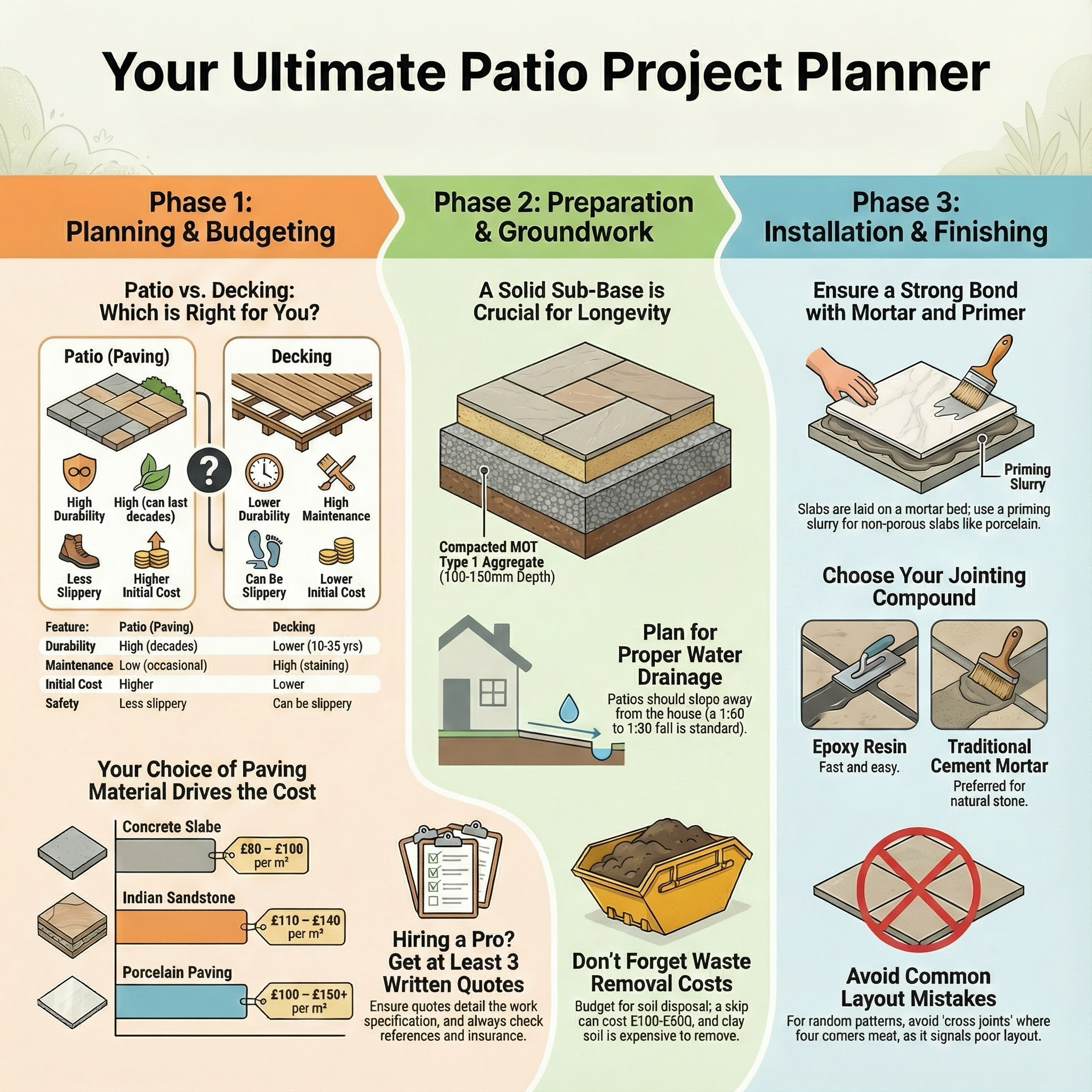
Patios explained
Unlike loose gravel, resin bonding provides a fixed surface that is slip-resistant and visually striking. It is particularly effective for upgrading existing outdoor spaces where the substrate is still structurally sound but aesthetically dated.
Prices for resin bonding are generally lower than resin-bound systems because the layer is thinner and the installation process is faster. However, the quality of the resin (UV stable vs. non-UV stable) significantly impacts the final quote.
| Item | Low £ | High £ | Notes |
|---|---|---|---|
| Small Patio (up to 20m²) | £1,100 | £1,600 | Includes basic prep and standard aggregate. |
| Medium Patio (40m²) | £2,200 | £3,000 | Assumes a sound concrete or tarmac base. |
| Cost per m² (Materials & Labour) | £50 | £85 | Higher rates for UV-stable resins. |
| Base Preparation/Repairs | £150 | £500 | Depends on the level of cleaning and cracking. |
Factors affecting the price include the size of the area, the choice of aggregate (rare quartz vs. standard flint), and the condition of the existing substrate. If the base requires significant levelling or repair, costs will increase toward the higher end of the scale.
While DIY resin kits are available, professional installation is strongly recommended for patio bonding. The resin has a very short "open time," meaning it begins to set rapidly; any hesitation or uneven spreading will result in visible joins and "bald" patches. Furthermore, professionals use industrial-grade equipment to ensure the surface is perfectly clean, which is the most critical factor in preventing the resin from peeling off in the future.
Expert Tip: Always ensure your installer uses UV-stable resin. Non-UV resins are cheaper but will turn a sickly yellow or brown when exposed to sunlight within just a few months.
Resin bonded (this guide) is a "scatter" system where resin is spread and stone is thrown on top; it is non-permeable and has a rougher texture. Resin bound is a "mixed" system where stone and resin are agitated together and trowelled smooth; it is fully permeable and usually more expensive.
It is not recommended. The joints between flags move independently, which will cause the resin to crack along every single join line. It is best applied to a monolithic surface like concrete or tarmac.
Regular sweeping with a stiff brush is usually enough. You can use a light pressure wash, but avoid holding the nozzle too close to the surface, as high pressure can dislodge the bonded stones.
Yes, it is highly slip-resistant. Because the stones are scattered on top, they remain exposed, providing a natural "sandpaper" texture that offers excellent grip even when wet.
When installed correctly on a stable base with UV-stable resin, you can expect a resin-bonded surface to last 10 to 15 years before it requires significant maintenance or a "re-scatter" coat.
Yes, significantly. The surface must be 100% dry, and the ambient temperature must be above 5°C. If it rains during the installation, the resin will react with the water and fail to bond correctly.
This guide was written with AI assistance and is intended for general information only. Prices are estimates based on UK averages and may vary by region. Always get at least three quotes and consult a qualified professional before starting any work.
Ask follow-ups in plain English. The AI explains options, sequencing and what to ask the patios — so you walk in informed.
A well-installed patio is one of the most effective ways to add value and functional living space to a UK home. Given our unpredictable climate, a durable, leve...
READ GUIDE →GuideA professionally installed patio is more than just a place for a summer BBQ; it is a functional extension of your home that can significantly increase property ...
READ GUIDE →GuideA well-designed patio is more than just a flat surface for a garden table; it is an extension of your home’s living space. In the UK, professional patio design ...
READ GUIDE →GuidePatio and Garden Maintenance Overview Refreshes patio surfaces, restores tidy garden hard‑landscapes and gets sliding/French doors running smoothly. Skill level...
READ GUIDE →GuideEverything UK homeowners need to know about Indian sandstone patios — costs per m², install steps, sealing, and how to choose a trusted installer.
READ GUIDE →GuideYorkshire stone patios: reclaimed vs new, costs per m², install detail, and how to find authentic British flagstones in 2026.
READ GUIDE →