Instant
01 · Ask
Ask the AI a follow-up
Got more questions about aggregate Waste Removal? Describe the bit you're unsure about — the AI explains options, sequencing and what to ask the rubbish clearance.

Building rubble, soil, brick or concrete waste — removed by licensed waste carrier.
You've read the brief on aggregate Waste Removal. Now lean on us to find the right rubbish clearance — and stay in control of the job.
Got more questions about aggregate Waste Removal? Describe the bit you're unsure about — the AI explains options, sequencing and what to ask the rubbish clearance.
Costs, timelines, pitfalls and the right questions to ask before any rubbish clearance starts on aggregate Waste Removal.
Itemised quotes from up to 3 local rubbish clearances on aggregate Waste Removal — so you can compare like-for-like, not lump sums.
Ready when you are
Enter your postcode and get free quotes from local pros.
Four moves that separate a smooth job from a nightmare.
Grab lorries are large and heavy; low bridges, narrow gates, or weak driveways can prevent them from reaching the waste.
"Fluffed up" soil takes up significantly more space than compacted earth, often leading to homeowners needing a second skip or load.
Placing general rubbish or hazardous materials (like asbestos or oil) in an aggregate pile will lead to the entire load being rejected or heavily fined.
Heavy lorries or skips can crack paving slabs or sink into tarmac if the ground isn't properly protected with boards.
Indicative UK ranges and what affects price.
By job type
Quote spread is typically ± 18% — always get 3 quotes.
Rubbish Clearance quick-view
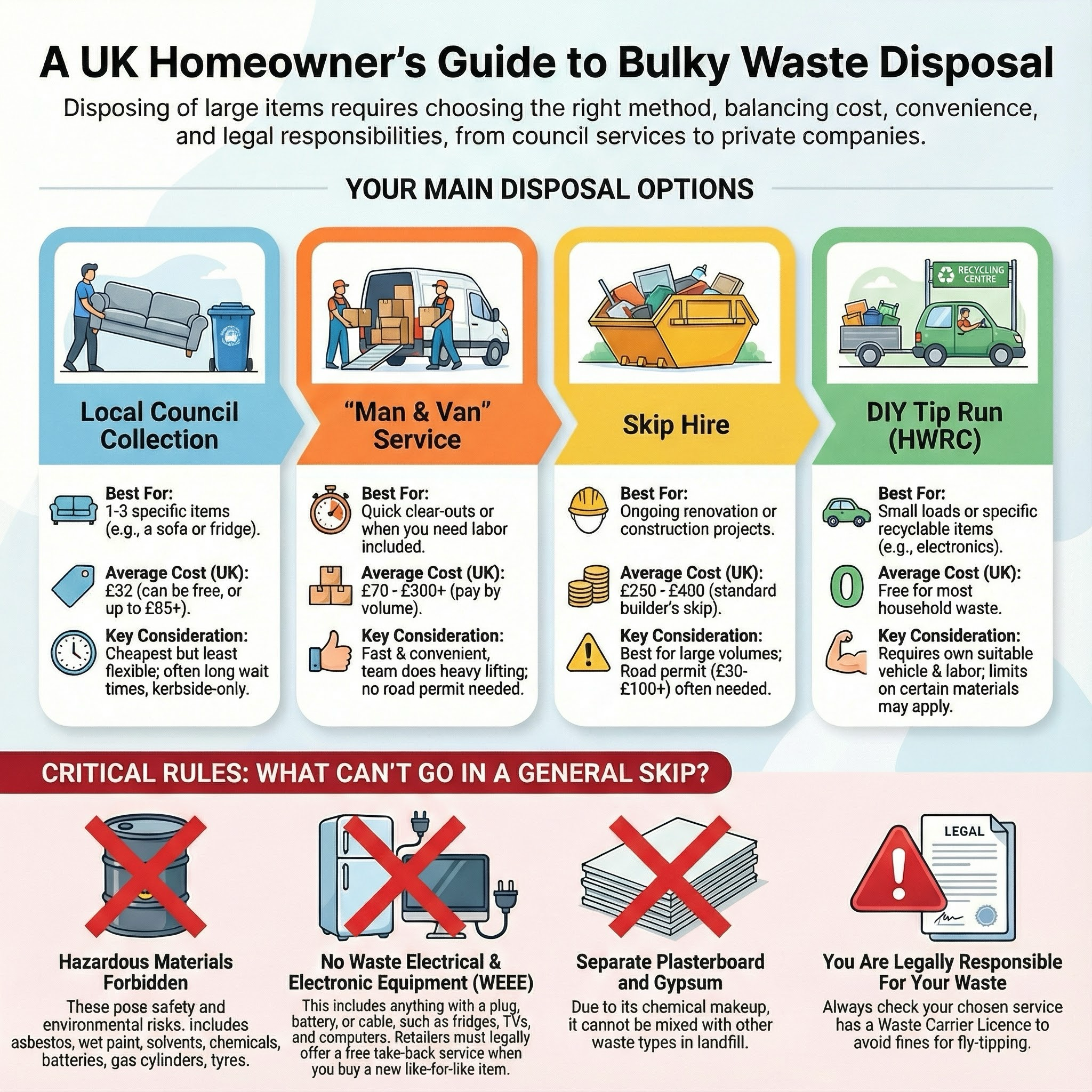
Rubbish Clearance explained
Efficiently clearing aggregate ensures your site remains safe and allows your project to progress without delays. Whether you choose a skip, a grab hire, or a man-and-van service, understanding the logistics and costs involved will help you avoid unexpected charges and environmental fines.
| Item | Low £ | High £ | Notes |
|---|---|---|---|
| Grab Hire (Full Load - approx. 12-15 tonnes) | £250 | £450 | Price varies significantly by region and material type. |
| 8-Yard "Builders" Skip | £240 | £380 | Standard for heavy waste; usually has a weight limit. |
| Man and Van (per tonne) | £150 | £220 | Best for small volumes or restricted access areas. |
| Wait and Load Service (per hour) | £60 | £90 | Excludes disposal fees; ideal if you can't get a skip permit. |
| Waste Transfer Note / Admin Fee | £0 | £30 | Often included in the total quote, but check first. |
Prices are heavily influenced by your location—London and the South East typically see rates 20-30% higher than the North. Contaminated waste, such as soil mixed with plasterboard or asbestos, will attract significant surcharges or may be refused entirely.
Pro Tip: "Clean" hardcore (only concrete and brick) is often cheaper to remove than soil, as it can be easily crushed and recycled into new aggregate.
Removing small amounts of aggregate—a few bags of soil or old patio slabs—is achievable via a local household waste recycling centre (the "tip"). However, most UK councils now limit the amount of DIY waste you can bring for free, often charging per bag or per carload for rubble.
For anything over half a tonne, professional removal is highly recommended. Aggregate is deceptively heavy; a single cubic metre of soil weighs roughly 1.5 tonnes, posing a serious risk of injury or vehicle damage if handled without the right equipment. Professionals also handle the Duty of Care paperwork, protecting you from fines associated with fly-tipping.
Generally, yes, if you have a large volume of waste. A grab lorry can carry the equivalent of two to three builders' skips, often at a lower price per tonne, and you won't need to pay for a skip permit.
This refers to waste consisting only of bricks, stone, concrete, and tiles. It must be free from soil, wood, plastic, or metal. Because it can be recycled easily, it is often the cheapest aggregate to have removed.
Yes, but be careful with the weight. Most skip companies only allow soil and stone in skips up to 8 yards in size. Anything larger becomes too heavy for the lorry to lift safely once filled.
You should ask for their Waste Carrier License number and check it against the official Environment Agency (or SEPA in Scotland/NRW in Wales) public register online.
If the waste is easily accessible (e.g., on a driveway or front garden) and payment has been arranged, you usually don't need to be present. However, it's helpful to be available via phone in case of access issues.
Grab lorries are very heavy (up to 32 tonnes). If your driveway is thin tarmac or decorative paving, the weight or the stabiliser legs could cause damage. It is often safer to have the lorry operate from the road if reach allows.
This guide was written with AI assistance and is intended for general information only. Prices are estimates based on UK averages and may vary by region. Always get at least three quotes and consult a qualified professional before starting any work.
Ask follow-ups in plain English. The AI explains options, sequencing and what to ask the rubbish clearance — so you walk in informed.
Disposing of an old mattress or a bulky bed frame is one of the more challenging tasks for UK homeowners. Beyond the physical strain of navigating heavy, awkwar...
READ GUIDE →GuideManaging commercial waste is a significantly different beast compared to standard residential rubbish. Whether you are a landlord clearing a shop unit, a home-b...
READ GUIDE →GuideDisposing of an old sofa or armchair in the UK has become more complex due to recent environmental legislation. Bulky furniture is difficult to move, and many i...
READ GUIDE →GuideScrapping a car in the UK is a straightforward process, but it is governed by strict environmental and legal regulations. Whether your vehicle is a non-runner, ...
READ GUIDE →GuideAccumulating black bin bags is a common headache for UK homeowners, whether it’s due to a missed council collection, a deep spring clean, or the aftermath of a ...
READ GUIDE →GuideWhether you are decommissioning a commercial suite or simply reclaiming a spare bedroom from years of "home office" clutter, a professional office clean-out is ...
READ GUIDE →