Instant
01 · Ask
Ask the AI a follow-up
Got more questions about appliance Removal? Describe the bit you're unsure about — the AI explains options, sequencing and what to ask the rubbish clearance.

Fridge, freezer, oven or washing machine removed — WEEE-compliant disposal at a licensed facility.
You've read the brief on appliance Removal. Now lean on us to find the right rubbish clearance — and stay in control of the job.
Got more questions about appliance Removal? Describe the bit you're unsure about — the AI explains options, sequencing and what to ask the rubbish clearance.
Costs, timelines, pitfalls and the right questions to ask before any rubbish clearance starts on appliance Removal.
Itemised quotes from up to 3 local rubbish clearances on appliance Removal — so you can compare like-for-like, not lump sums.
Ready when you are
Enter your postcode and get free quotes from local pros.
Four moves that separate a smooth job from a nightmare.
Heavy washing machines often have "feet" that can gouge lino or wood if dragged rather than lifted.
Old water valves often fail to shut off completely when a washing machine is removed, leading to kitchen floods.
Modern "American" fridges are often wider than standard UK doorframes; measure twice before the team arrives.
Rogue "man and van" services may take your money and dump the appliance in a country lane, leaving you legally liable for the fine.
Indicative UK ranges and what affects price.
By job type
Quote spread is typically ± 18% — always get 3 quotes.
Rubbish Clearance quick-view
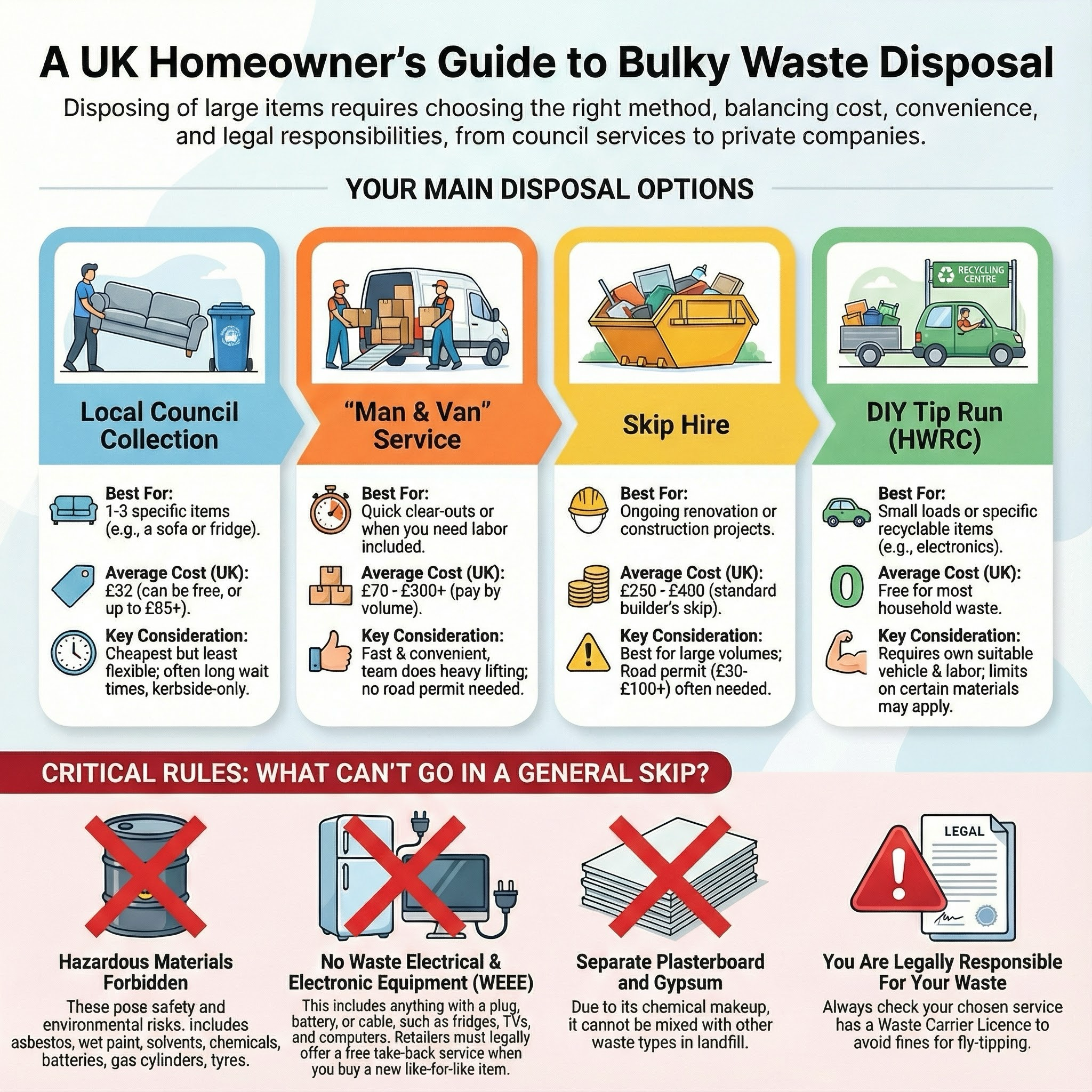
Rubbish Clearance explained
Professional appliance removal ensures your old items are disconnected safely, moved without damaging your flooring, and processed at licensed recycling centres. This guide covers everything from current 2025 pricing to the essential paperwork you need to stay compliant with environmental regulations.
| Item / Service | Low £ | High £ | Notes |
|---|---|---|---|
| Minimum Call-out Fee | £60 | £150 | Covers fuel and initial labour for 1-2 small items. |
| Standard Appliance (e.g. Washer) | £40 | £80 | Price per item if added to a larger collection. |
| Fridge / Freezer (Domestic) | £50 | £100 | Higher cost due to hazardous gas removal (degassing). |
| American Style Fridge-Freezer | £100 | £180 | Requires extra labour due to size and weight. |
| Integrated Appliance Removal | £30 | £60 | Surcharge for removing cupboard doors and fixings. |
| Labour (per hour) | £30 | £60 | Usually charged if access is difficult or items aren't ready. |
Prices vary based on your location and the ease of access. Expect to pay a premium for "upstairs" removals without a lift or for properties within the London Congestion Charge zone. Hazardous items like older fridges often incur a specific environmental surcharge to cover the cost of safe chemical disposal.
While you can move small appliances yourself, fridges and freezers are legally classified as hazardous waste. If you DIY, you must ensure the item reaches a licensed recycling centre; leaving it on the pavement is considered fly-tipping, which carries heavy fines.
Professional removal is highly recommended for integrated units or gas appliances. Under UK law, only a Gas Safe registered engineer can legally disconnect a gas cooker. For electrical items, a professional clearance team avoids the risk of personal injury or "blown" sockets caused by improper disconnection.
Yes, you should ideally defrost it 24 hours in advance. This prevents water from leaking all over your carpets and the collection vehicle, and it makes the unit significantly lighter to carry.
Most UK councils charge a "bulky waste" fee, typically ranging from £20 to £50. While often cheaper than private firms, they usually require you to leave the item outside your property, which may not be possible if you live in a flat or cannot lift it yourself.
Fridges contain refrigerants (gases) and insulation foam that are harmful to the environment. Specialist facilities charge extra to safely extract these, and this cost is passed on to the consumer, usually adding £20–£40 to the base price.
Most will, but you must specify this when booking. Integrated units take longer to remove because they are fixed to the surrounding cabinetry and require the removal of the decorative wooden front panel.
This is risky. If an unlicensed "scrapper" takes the item and strips it for parts before dumping the remains, you can be held liable for fly-tipping. It is always safer to use a licensed waste carrier who provides a transfer note.
This guide was written with AI assistance and is intended for general information only. Prices are estimates based on UK averages and may vary by region. Always get at least three quotes and consult a qualified professional before starting any work.
Ask follow-ups in plain English. The AI explains options, sequencing and what to ask the rubbish clearance — so you walk in informed.
Disposing of an old mattress or a bulky bed frame is one of the more challenging tasks for UK homeowners. Beyond the physical strain of navigating heavy, awkwar...
READ GUIDE →GuideManaging commercial waste is a significantly different beast compared to standard residential rubbish. Whether you are a landlord clearing a shop unit, a home-b...
READ GUIDE →GuideDisposing of an old sofa or armchair in the UK has become more complex due to recent environmental legislation. Bulky furniture is difficult to move, and many i...
READ GUIDE →GuideScrapping a car in the UK is a straightforward process, but it is governed by strict environmental and legal regulations. Whether your vehicle is a non-runner, ...
READ GUIDE →GuideAccumulating black bin bags is a common headache for UK homeowners, whether it’s due to a missed council collection, a deep spring clean, or the aftermath of a ...
READ GUIDE →GuideWhether you are decommissioning a commercial suite or simply reclaiming a spare bedroom from years of "home office" clutter, a professional office clean-out is ...
READ GUIDE →