Instant
01 · Ask
Ask the AI a follow-up
Got more questions about furniture Removal? Describe the bit you're unsure about — the AI explains options, sequencing and what to ask the rubbish clearance.

Sofa, wardrobe, bed, table — single or multi-item removal by a licensed waste carrier.
You've read the brief on furniture Removal. Now lean on us to find the right rubbish clearance — and stay in control of the job.
Got more questions about furniture Removal? Describe the bit you're unsure about — the AI explains options, sequencing and what to ask the rubbish clearance.
Costs, timelines, pitfalls and the right questions to ask before any rubbish clearance starts on furniture Removal.
Itemised quotes from up to 3 local rubbish clearances on furniture Removal — so you can compare like-for-like, not lump sums.
Ready when you are
Enter your postcode and get free quotes from local pros.
Four moves that separate a smooth job from a nightmare.
Furniture that was built inside a room often won't fit back out the door. Always measure doorways and hallways before the crew arrives.
Unusually low quotes often indicate a rogue trader who will dump your furniture illegally, leaving you liable for the fine.
Inexperienced lifters can easily gouge plasterboard or scratch hardwood floors; always ensure the team uses protective equipment.
Be wary of "estimate" quotes that don't account for heavy items or parking restrictions, leading to a much higher final bill.
Indicative UK ranges and what affects price.
By job type
Quote spread is typically ± 18% — always get 3 quotes.
Rubbish Clearance quick-view
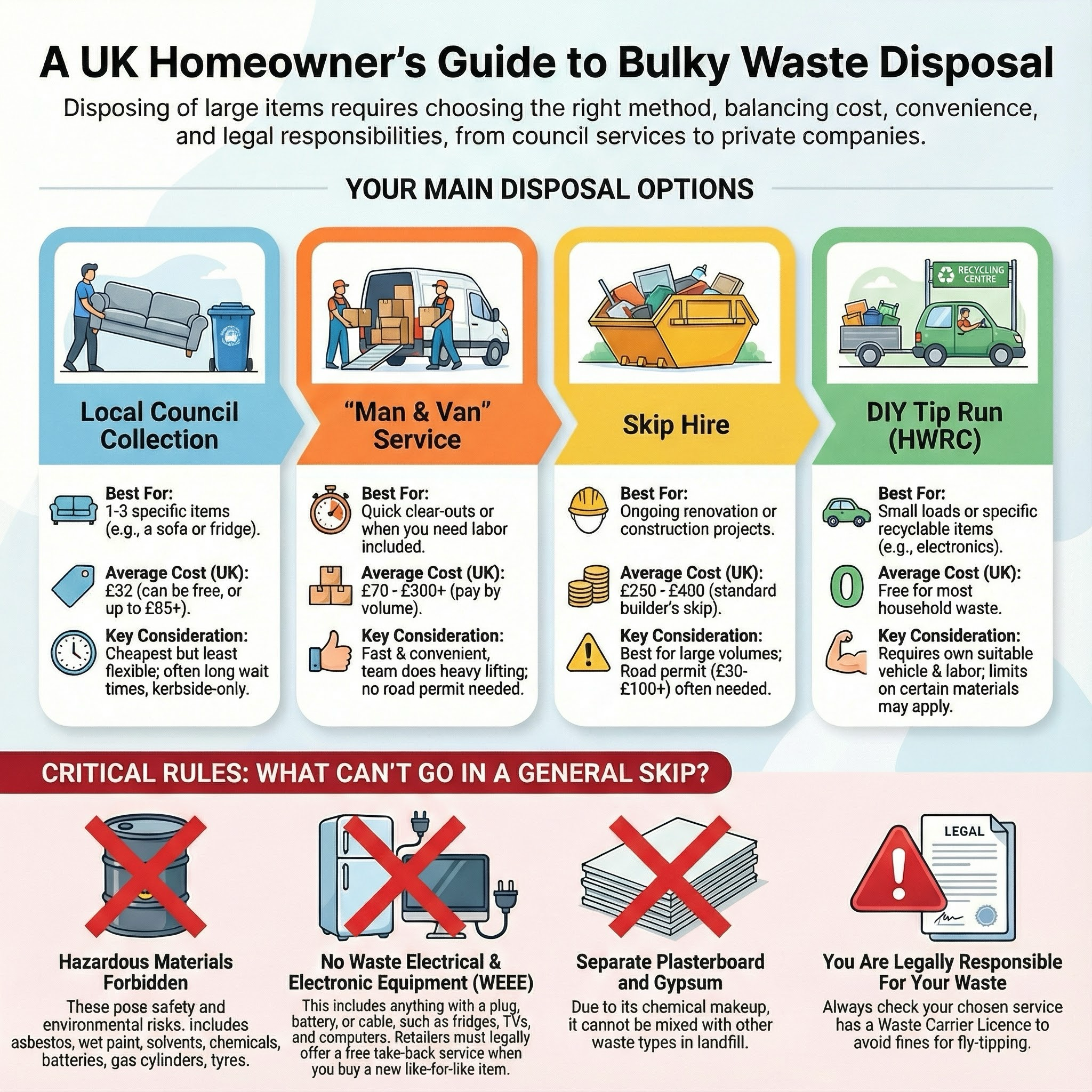
Rubbish Clearance explained
Whether you are upgrading a single sofa or clearing an entire property, using a licensed waste carrier ensures your items are recycled, donated, or disposed of responsibly. This guide covers everything from current UK pricing to the essential paperwork you need to stay compliant with environmental laws.
Prices for furniture removal vary based on the volume of items, their weight, and any specific disposal requirements, such as the 2023 POPs (Persistent Organic Pollutants) regulations for upholstered seating.
| Item / Service | Low £ | High £ | Notes |
|---|---|---|---|
| Minimum Call-out Fee | £60 | £95 | Covers travel and first 15-30 mins of labour. |
| Single Sofa (POPs compliant) | £50 | £90 | Higher cost due to specialist incineration rules. |
| Large Wardrobe (Dismantled) | £40 | £75 | Price depends on size and weight. |
| Full Van Load (approx. 10-12 cubic yards) | £350 | £550 | Includes labour and all disposal fees. |
| Surcharge for Flats (No lift) | £20 | £60 | Per floor, depending on the number of items. |
Factors that increase the price include "long carries" (where the van cannot park near the door), ULEZ or Congestion Zone charges, and the need for additional crew members for exceptionally heavy items like pianos or American-style fridge freezers.
While taking a small chair to the local "tip" (Household Waste Recycling Centre) is manageable, large-scale furniture removal is physically demanding and carries legal risks. Under UK law, you have a "Duty of Care" to ensure your waste is disposed of by a licensed carrier; if you hire an unlicensed "man with a van" who fly-tips your sofa, you could face a heavy fine or prosecution.
Professional teams carry the necessary insurance and Environment Agency licenses, protecting both your property and your legal liability.
Yes, but they cannot be donated to charity. Without fire labels, UK charities are legally prohibited from reselling them, so they must be sent for recycling or disposal.
POPs are Persistent Organic Pollutants found in the foam and fabric of many upholstered items. UK law now requires these to be disposed of in high-temperature incinerators rather than landfill, which has increased disposal fees for sofas and armchairs.
It is preferred so you can sign the Waste Transfer Note, but many companies offer "external collections" where items are left on a driveway or in a garden, provided they are kept dry and accessible.
Most professional crews can dismantle items, but this usually incurs an extra labour charge. It is always cheaper to dismantle items yourself before the team arrives.
Reputable companies aim for a high diversion-from-landfill rate. Usable items go to charities or furniture re-use projects, while the rest is stripped for wood, metal, and fabric recycling.
Most furniture removal teams cannot take hazardous waste like asbestos, tins of half-full paint, car batteries, or gas canisters unless they hold a specific hazardous waste license.
This guide was written with AI assistance and is intended for general information only. Prices are estimates based on UK averages and may vary by region. Always get at least three quotes and consult a qualified professional before starting any work.
Ask follow-ups in plain English. The AI explains options, sequencing and what to ask the rubbish clearance — so you walk in informed.
Disposing of an old mattress or a bulky bed frame is one of the more challenging tasks for UK homeowners. Beyond the physical strain of navigating heavy, awkwar...
READ GUIDE →GuideManaging commercial waste is a significantly different beast compared to standard residential rubbish. Whether you are a landlord clearing a shop unit, a home-b...
READ GUIDE →GuideDisposing of an old sofa or armchair in the UK has become more complex due to recent environmental legislation. Bulky furniture is difficult to move, and many i...
READ GUIDE →GuideScrapping a car in the UK is a straightforward process, but it is governed by strict environmental and legal regulations. Whether your vehicle is a non-runner, ...
READ GUIDE →GuideAccumulating black bin bags is a common headache for UK homeowners, whether it’s due to a missed council collection, a deep spring clean, or the aftermath of a ...
READ GUIDE →GuideWhether you are decommissioning a commercial suite or simply reclaiming a spare bedroom from years of "home office" clutter, a professional office clean-out is ...
READ GUIDE →