Instant
01 · Ask
Ask the AI a follow-up
Got more questions about garden Clearance and Green Waste Removal? Describe the bit you're unsure about — the AI explains options, sequencing and what to ask the rubbish clearance.

Garden waste, hedge cuttings and leaves removed — chipped for compost or recycled.
You've read the brief on garden Clearance and Green Waste Removal. Now lean on us to find the right rubbish clearance — and stay in control of the job.
Got more questions about garden Clearance and Green Waste Removal? Describe the bit you're unsure about — the AI explains options, sequencing and what to ask the rubbish clearance.
Costs, timelines, pitfalls and the right questions to ask before any rubbish clearance starts on garden Clearance and Green Waste Removal.
Itemised quotes from up to 3 local rubbish clearances on garden Clearance and Green Waste Removal — so you can compare like-for-like, not lump sums.
Ready when you are
Enter your postcode and get free quotes from local pros.
Four moves that separate a smooth job from a nightmare.
Overgrown grass often hides glass, old ponds, or sharp metal. Always warn your contractor about known buried items.
If the team arrives and discovers they have to carry waste through a pristine hallway because there is no side gate, the price will likely rise.
Throwing plastic pots or old toys into a pile of branches makes it "mixed waste," which is significantly more expensive to tip than pure green waste.
Waste often "fluffs up" once cut down. A small pile of brambles can easily fill a large van once it is hacked and loaded.
Indicative UK ranges and what affects price.
By job type
Quote spread is typically ± 18% — always get 3 quotes.
Rubbish Clearance quick-view
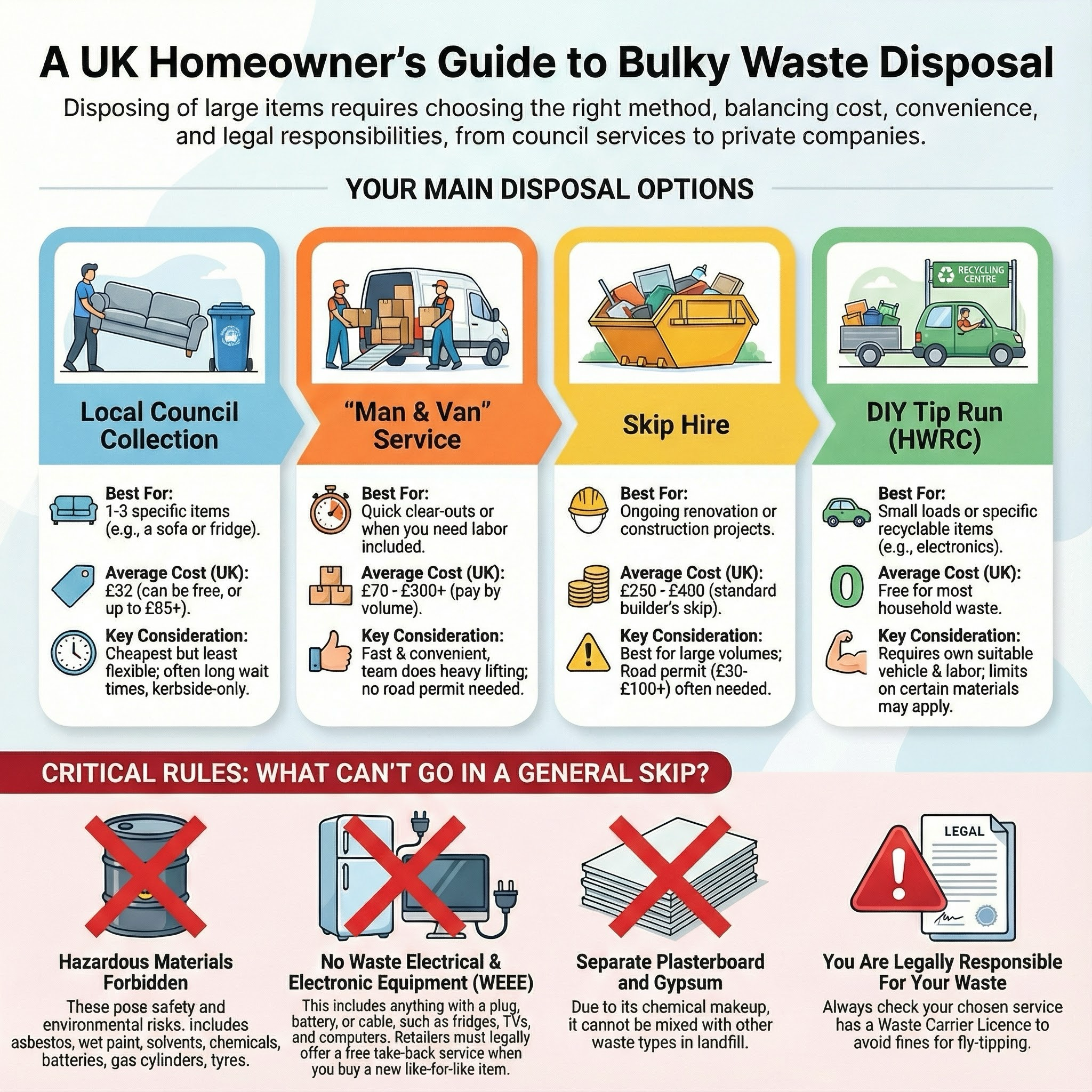
Rubbish Clearance explained
For UK homeowners, the challenge often lies in the volume and variety of waste, from thorny brambles to old timber sheds. Hiring a specialist ensures that green waste is composted correctly and that non-organic rubbish is disposed of at licensed facilities, keeping you on the right side of environmental laws.
The cost of garden clearance in the UK is primarily driven by the volume of waste and the time required to load it. Most contractors charge based on "fractions of a load" (e.g., half-van or full-van) or by the hour for labour-intensive clearing.
| Item | Low £ | High £ | Notes |
|---|---|---|---|
| Minimum Call-out / Small Load | £70 | £120 | Up to 2 cubic yards; ideal for 10-15 bags of green waste. |
| Half-Van Load | £160 | £250 | Approx. 6-7 cubic yards; includes 1 hour of labour. |
| Full-Van Load | £300 | £550 | Approx. 12-14 cubic yards; includes 2 hours of labour. |
| Labour (per person/hour) | £35 | £60 | Applied for heavy clearing, e.g., hacking through thick brambles. |
| Shed Dismantling | £100 | £250 | Depends on size and if the base (concrete/timber) is removed. |
| Soil/Rubble Surcharge | £50 | £150 | Per tonne; these are "heavy" fractions and cost more to tip. |
Prices generally include VAT and disposal fees. However, expect to pay a premium for "mixed" loads where green waste is contaminated with plastic or rubble, as these require more sorting at the transfer station.
Clearing a garden yourself is physically demanding but possible for light green waste that can be composted or taken to a local Household Waste Recycling Centre (HWRC). However, be aware that many UK councils now require permits for vans or trailers at local tips, and some have banned "trade-like" waste entirely.
Professional clearance is essential if:
Note: If you hire an unlicensed "man with a van" and they fly-tip your garden waste, you are legally liable and could face a fine of up to £5,000.
No, most UK councils forbid putting soil, stones, or large amounts of green waste in general waste bins. You should use the dedicated council green bin (usually a paid subscription) or hire a private clearance service for larger volumes.
As long as the contractor has clear access to the garden (e.g., a side gate) and the work has been quoted beforehand, you do not usually need to stay on-site. However, it is helpful to be there at the start to point out any items you wish to keep.
Most garden clearance specialists offer shed dismantling and removal as an add-on service. Be sure to specify if the shed is empty or full of old tools and chemicals, as this affects the price.
Always ask for a Waste Transfer Note. This document lists the waste type, the carrier's licence number, and the destination (the waste transfer station). You can also verify a carrier's licence on the Environment Agency website.
Pure green waste (branches, grass, leaves) is typically taken to a commercial composting facility where it is turned into mulch or soil conditioner. Mixed waste is taken to a transfer station where it is sorted for recycling or energy-from-waste processing.
Yes, winter is actually an excellent time for clearance as deciduous plants have lost their leaves, making it easier to see the structure of the garden and identify what needs to go. It also avoids the bird nesting season.
This guide was written with AI assistance and is intended for general information only. Prices are estimates based on UK averages and may vary by region. Always get at least three quotes and consult a qualified professional before starting any work.
Ask follow-ups in plain English. The AI explains options, sequencing and what to ask the rubbish clearance — so you walk in informed.
Disposing of an old mattress or a bulky bed frame is one of the more challenging tasks for UK homeowners. Beyond the physical strain of navigating heavy, awkwar...
READ GUIDE →GuideManaging commercial waste is a significantly different beast compared to standard residential rubbish. Whether you are a landlord clearing a shop unit, a home-b...
READ GUIDE →GuideDisposing of an old sofa or armchair in the UK has become more complex due to recent environmental legislation. Bulky furniture is difficult to move, and many i...
READ GUIDE →GuideScrapping a car in the UK is a straightforward process, but it is governed by strict environmental and legal regulations. Whether your vehicle is a non-runner, ...
READ GUIDE →GuideAccumulating black bin bags is a common headache for UK homeowners, whether it’s due to a missed council collection, a deep spring clean, or the aftermath of a ...
READ GUIDE →GuideWhether you are decommissioning a commercial suite or simply reclaiming a spare bedroom from years of "home office" clutter, a professional office clean-out is ...
READ GUIDE →