Instant
01 · Ask
Ask the AI a follow-up
Got more questions about material Recovery Process? Describe the bit you're unsure about — the AI explains options, sequencing and what to ask the rubbish clearance.

How materials are sorted, baled and re-sold at a MRF (material recovery facility).
You've read the brief on material Recovery Process. Now lean on us to find the right rubbish clearance — and stay in control of the job.
Got more questions about material Recovery Process? Describe the bit you're unsure about — the AI explains options, sequencing and what to ask the rubbish clearance.
Costs, timelines, pitfalls and the right questions to ask before any rubbish clearance starts on material Recovery Process.
Itemised quotes from up to 3 local rubbish clearances on material Recovery Process — so you can compare like-for-like, not lump sums.
Ready when you are
Enter your postcode and get free quotes from local pros.
Four moves that separate a smooth job from a nightmare.
Many pre-2000 homes contain asbestos in floor tiles or textured coatings. Always get a survey if you suspect its presence before starting recovery.
Mixing "clean" wood with "dirty" waste (like food or chemicals) makes the entire load unrecoverable and doubles your costs.
Over-enthusiastic dismantling of floorboards or joists can compromise the building's integrity if not handled by an expert.
Salvaged timber or bricks left uncovered in the rain can degrade quickly, losing their resale value.
Indicative UK ranges and what affects price.
By job type
Quote spread is typically ± 18% — always get 3 quotes.
Rubbish Clearance quick-view
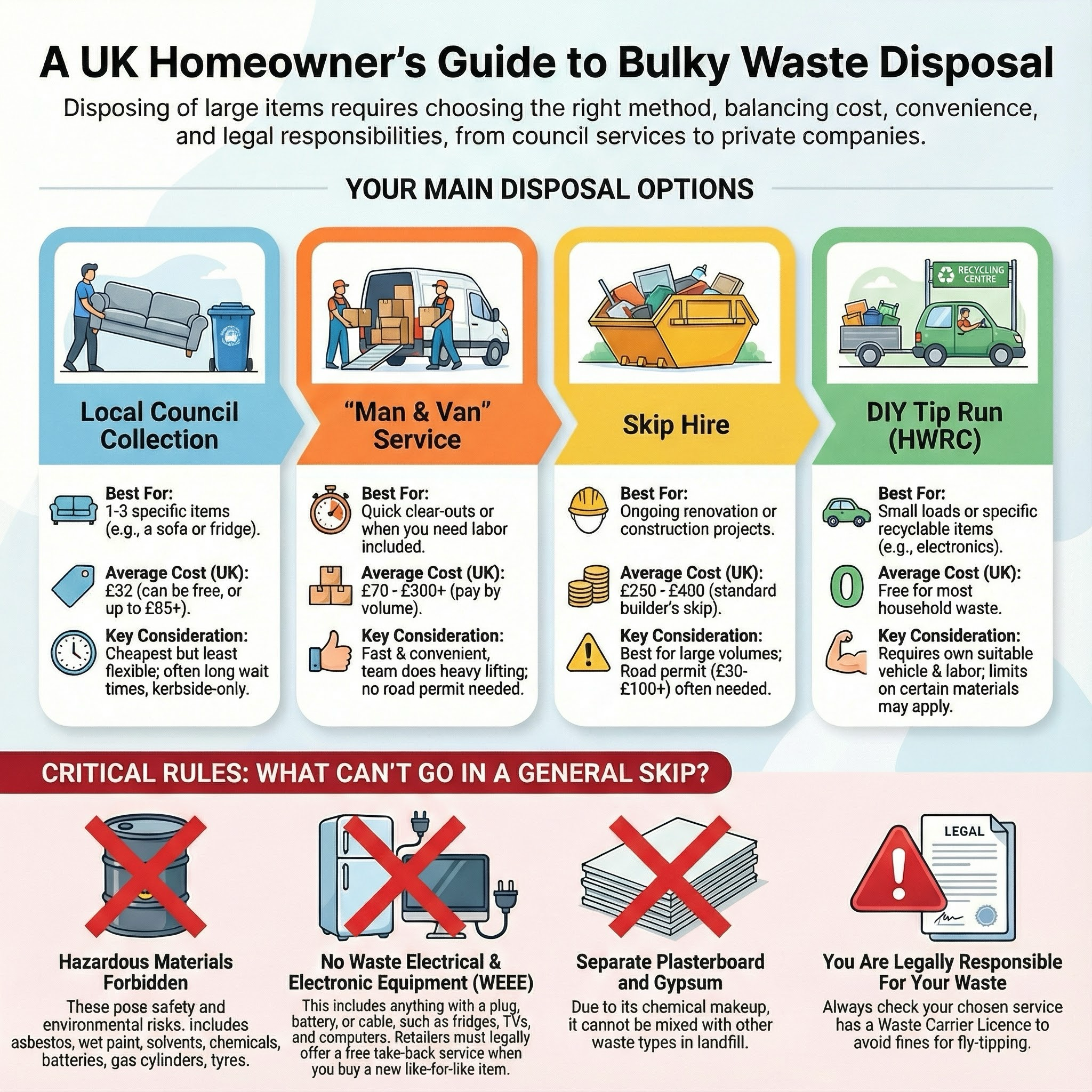
Rubbish Clearance explained
By prioritising recovery over disposal, you can often offset the cost of the clearance itself. Whether you are stripping out a kitchen or dismantling an old outbuilding, understanding the recovery process ensures that valuable resources are preserved and hazardous waste is handled according to UK law.
The cost of material recovery varies based on the volume of waste and the "pickability" of the materials. While labour costs are higher than a standard "man and van" junk removal, you often save money through reduced landfill taxes and potential rebates from salvaged goods.
| Item / Service | Low £ | High £ | Notes |
|---|---|---|---|
| Initial Site Survey | £60 | £120 | Often waived if the full project is booked. |
| Daily Labour (per person) | £180 | £300 | Skilled labour for careful dismantling. |
| Waste Disposal (per tonne) | £160 | £240 | For non-recoverable "mixed" waste. |
| Processing Fee (Cleaning/Sorting) | £40 | £70 | Per hour for de-nailing and brick cleaning. |
| Total Project (Average Room) | £450 | £950 | Includes labour, sorting, and disposal. |
Prices are influenced by site access (e.g., third-floor flats vs. driveways) and the purity of the material. Contaminated loads—such as wood mixed with plasterboard—will always incur higher disposal fees at the gate.
While homeowners can certainly sort their own recycling, professional material recovery is recommended for larger projects. Professionals possess the tools for non-destructive removal and, crucially, understand Hazardous Waste Regulations. Handling old insulation, lead pipes, or asbestos-containing materials (ACMs) requires specialist training and PPE.
Note: If you hire a professional to remove waste from your home, you have a legal "Duty of Care" to ensure they are a Registered Waste Carrier. If they fly-tip your materials, you—the homeowner—can be held legally liable and fined.
Architectural antiques, York stone flags, reclaimed "stock" bricks, and cast iron radiators are highly sought after. Solid hardwood flooring and large structural timbers also hold significant value if removed carefully.
If you are using a skip to store materials before they are collected, and that skip is on a public road, you need a permit from your local council. If it is on your private driveway, no permit is required.
Ask for their registration number and check it against the Environment Agency's public register. A legitimate trader will never be offended by this request and will usually have their certificate ready to show.
Some specialists operate on a "value-offset" model where the labour cost is reduced based on the resale value of the items they recover. Always agree on this split in writing before work begins.
Non-reusable waste is taken to a licensed Material Recovery Facility (MRF). There, it is further sorted by industrial machinery to extract smaller fragments of metal, plastic, and wood for recycling.
No. Junk removal is focused on speed and disposal. Material recovery is a slower, more deliberate process focused on salvage, preservation, and environmental responsibility.
This guide was written with AI assistance and is intended for general information only. Prices are estimates based on UK averages and may vary by region. Always get at least three quotes and consult a qualified professional before starting any work.
Ask follow-ups in plain English. The AI explains options, sequencing and what to ask the rubbish clearance — so you walk in informed.
Disposing of an old mattress or a bulky bed frame is one of the more challenging tasks for UK homeowners. Beyond the physical strain of navigating heavy, awkwar...
READ GUIDE →GuideManaging commercial waste is a significantly different beast compared to standard residential rubbish. Whether you are a landlord clearing a shop unit, a home-b...
READ GUIDE →GuideDisposing of an old sofa or armchair in the UK has become more complex due to recent environmental legislation. Bulky furniture is difficult to move, and many i...
READ GUIDE →GuideScrapping a car in the UK is a straightforward process, but it is governed by strict environmental and legal regulations. Whether your vehicle is a non-runner, ...
READ GUIDE →GuideAccumulating black bin bags is a common headache for UK homeowners, whether it’s due to a missed council collection, a deep spring clean, or the aftermath of a ...
READ GUIDE →GuideWhether you are decommissioning a commercial suite or simply reclaiming a spare bedroom from years of "home office" clutter, a professional office clean-out is ...
READ GUIDE →