Instant
01 · Ask
Ask the AI a follow-up
Got more questions about pallet removal? Describe the bit you're unsure about — the AI explains options, sequencing and what to ask the rubbish clearance.

Wooden pallets collected for recycling, repurposing or disposal — bulk volume discounts.
You've read the brief on pallet removal. Now lean on us to find the right rubbish clearance — and stay in control of the job.
Got more questions about pallet removal? Describe the bit you're unsure about — the AI explains options, sequencing and what to ask the rubbish clearance.
Costs, timelines, pitfalls and the right questions to ask before any rubbish clearance starts on pallet removal.
Itemised quotes from up to 3 local rubbish clearances on pallet removal — so you can compare like-for-like, not lump sums.
Ready when you are
Enter your postcode and get free quotes from local pros.
Four moves that separate a smooth job from a nightmare.
Broken pallets often leave behind sharp rusted nails in driveways which can cause punctures or injuries.
Pallets used for chemical or oil transport may be refused by standard recyclers, leading to unexpected disposal surcharges.
Offering pallets for "free to a good home" on social media often results in "no-shows" or people taking the good ones and leaving the scrap behind.
Selling "blue" CHEP pallets is technically illegal as they are rented assets; a pro will know how to return these to the pool.
Indicative UK ranges and what affects price.
By job type
Quote spread is typically ± 18% — always get 3 quotes.
Rubbish Clearance quick-view
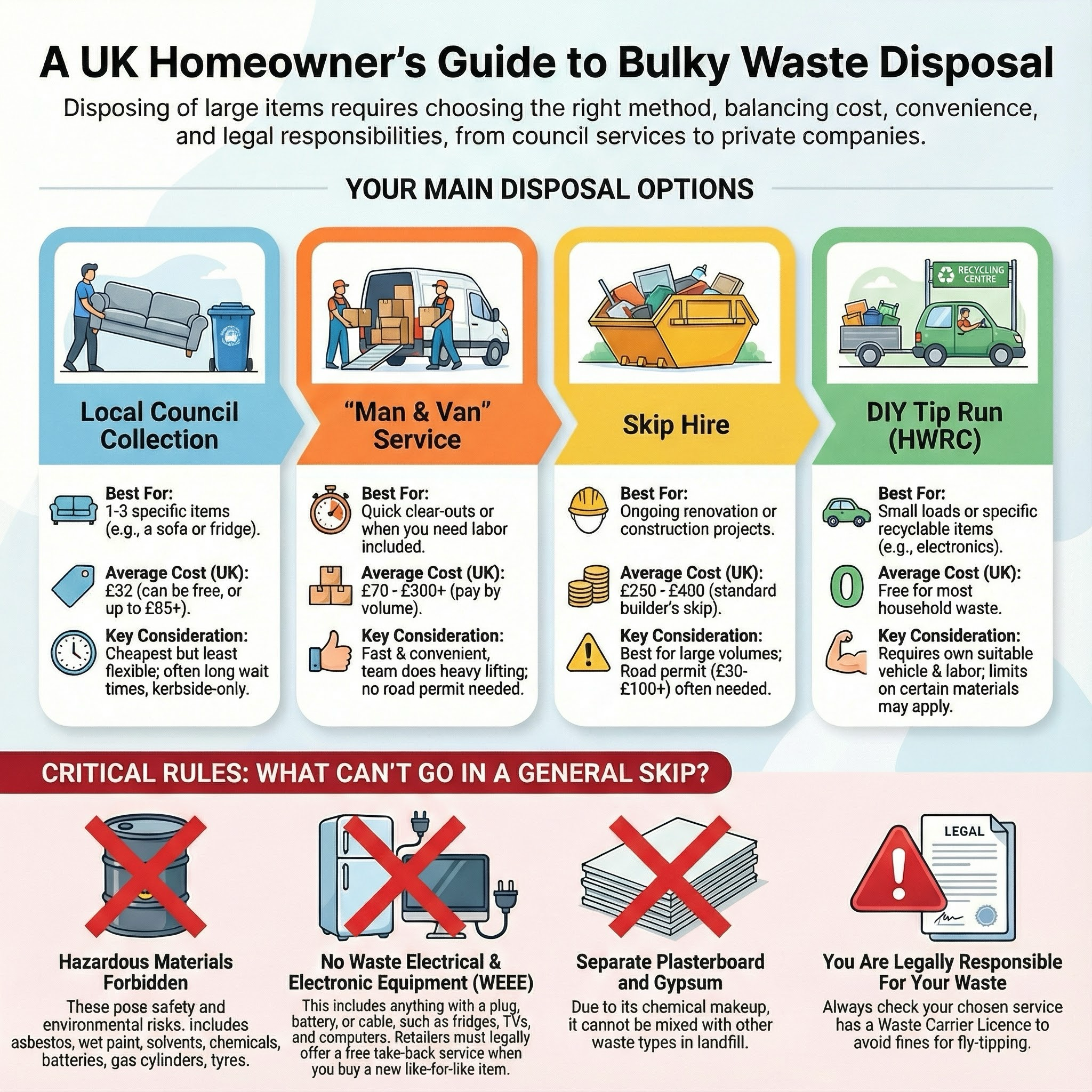
Rubbish Clearance explained
Hiring a professional pallet removal service ensures your driveway or garden is cleared quickly and safely. Experts can distinguish between reusable "Euro" pallets and scrap timber, ensuring the materials are diverted from landfill and processed according to UK environmental standards.
The cost of pallet removal depends heavily on the volume of wood and whether any of the pallets have resale value. Some companies may offer a discount if you have a large quantity of high-grade Euro pallets in good condition.
| Item | Low £ | High £ | Notes |
|---|---|---|---|
| Minimum Call-out Fee | £65 | £130 | Covers travel and first 30 minutes of labour. |
| Labour (per hour) | £45 | £75 | Usually based on a two-person team for efficiency. |
| Disposal Fee (per load) | £30 | £180 | Varies by weight and local commercial tip fees. |
| Euro Pallet Rebate | -£3 | -£8 | Potential credit per pallet for high-quality reusable units. |
| Restricted Access Surcharge | £25 | £60 | For flats, long carries, or narrow alleyways. |
Prices are influenced by your location, with London and the South East typically seeing rates 15-20% higher than the national average. If your pallets are heavily damaged or contaminated with oil or paint, expect to pay towards the higher end of the scale for disposal.
Dismantling pallets yourself is labour-intensive and carries a high risk of injury from protruding nails and splinters. Most local council recycling centres (HWRCs) will only accept a very limited number of pallets from householders, and many strictly forbid "trade waste" like delivery pallets.
Burning pallets is often discouraged as many are treated with Methyl Bromide (marked MB) or contain glues and paints that release toxic fumes. Hiring a professional is the only way to guarantee a Waste Transfer Note, which protects you from fines if the wood is later fly-tipped by an unscrupulous "man with a van."
Professional removal is essential for "blue" or "red" branded pallets (like CHEP or LPR), as these remain the property of the pallet pool and must be returned to the correct network.
Questions to ask:
You should only burn pallets marked with "HT" (Heat Treated). Avoid any marked with "MB" (Methyl Bromide) or those that are painted (blue, red, or green), as these release toxic chemicals when burned.
Most UK councils will not collect pallets as part of their standard bulky waste service. You may be able to take one or two to a local tip, but many sites classify them as industrial waste and will turn you away.
Euro pallets (standardised at 1200x800mm) are high-quality, reusable frames. Because they have a resale value, a removal company might offer you a discount or even collect them for free if you have a significant quantity.
Look for the IPPC stamp on the side of the pallet. "HT" means heat-treated (safe), while "MB" indicates Methyl Bromide fumigation (toxic). If there is no stamp, assume it is chemically treated and handle with care.
If the pallets are easily accessible on a driveway or front garden, most companies can collect them without you being present, provided payment and paperwork are handled digitally.
This guide was written with AI assistance and is intended for general information only. Prices are estimates based on UK averages and may vary by region. Always get at least three quotes and consult a qualified professional before starting any work.
Ask follow-ups in plain English. The AI explains options, sequencing and what to ask the rubbish clearance — so you walk in informed.
Disposing of an old mattress or a bulky bed frame is one of the more challenging tasks for UK homeowners. Beyond the physical strain of navigating heavy, awkwar...
READ GUIDE →GuideManaging commercial waste is a significantly different beast compared to standard residential rubbish. Whether you are a landlord clearing a shop unit, a home-b...
READ GUIDE →GuideDisposing of an old sofa or armchair in the UK has become more complex due to recent environmental legislation. Bulky furniture is difficult to move, and many i...
READ GUIDE →GuideScrapping a car in the UK is a straightforward process, but it is governed by strict environmental and legal regulations. Whether your vehicle is a non-runner, ...
READ GUIDE →GuideAccumulating black bin bags is a common headache for UK homeowners, whether it’s due to a missed council collection, a deep spring clean, or the aftermath of a ...
READ GUIDE →GuideWhether you are decommissioning a commercial suite or simply reclaiming a spare bedroom from years of "home office" clutter, a professional office clean-out is ...
READ GUIDE →