Instant
01 · Ask
Ask the AI a follow-up
Got more questions about rubbish and furniture collection? Describe the bit you're unsure about — the AI explains options, sequencing and what to ask the rubbish clearance.

Combined rubbish and furniture pickup — by a licensed waste carrier, in one visit.
You've read the brief on rubbish and furniture collection. Now lean on us to find the right rubbish clearance — and stay in control of the job.
Got more questions about rubbish and furniture collection? Describe the bit you're unsure about — the AI explains options, sequencing and what to ask the rubbish clearance.
Costs, timelines, pitfalls and the right questions to ask before any rubbish clearance starts on rubbish and furniture collection.
Itemised quotes from up to 3 local rubbish clearances on rubbish and furniture collection — so you can compare like-for-like, not lump sums.
Ready when you are
Enter your postcode and get free quotes from local pros.
Four moves that separate a smooth job from a nightmare.
Some companies quote a low "base rate" but add significant fees for mattresses, tyres, or fridges on the day. Always declare these items upfront.
Bulky furniture can easily scuff walls or scratch floors. Ensure the crew uses floor runners or at least takes adequate care.
A van might look half-empty but be at its legal weight limit if carrying "heavy" waste like tiles or soil. This can lead to unexpected extra charges.
If the van cannot park within 15–20 metres of the property, many companies will apply a "long carry" surcharge.
Indicative UK ranges and what affects price.
By job type
Quote spread is typically ± 18% — always get 3 quotes.
Rubbish Clearance quick-view
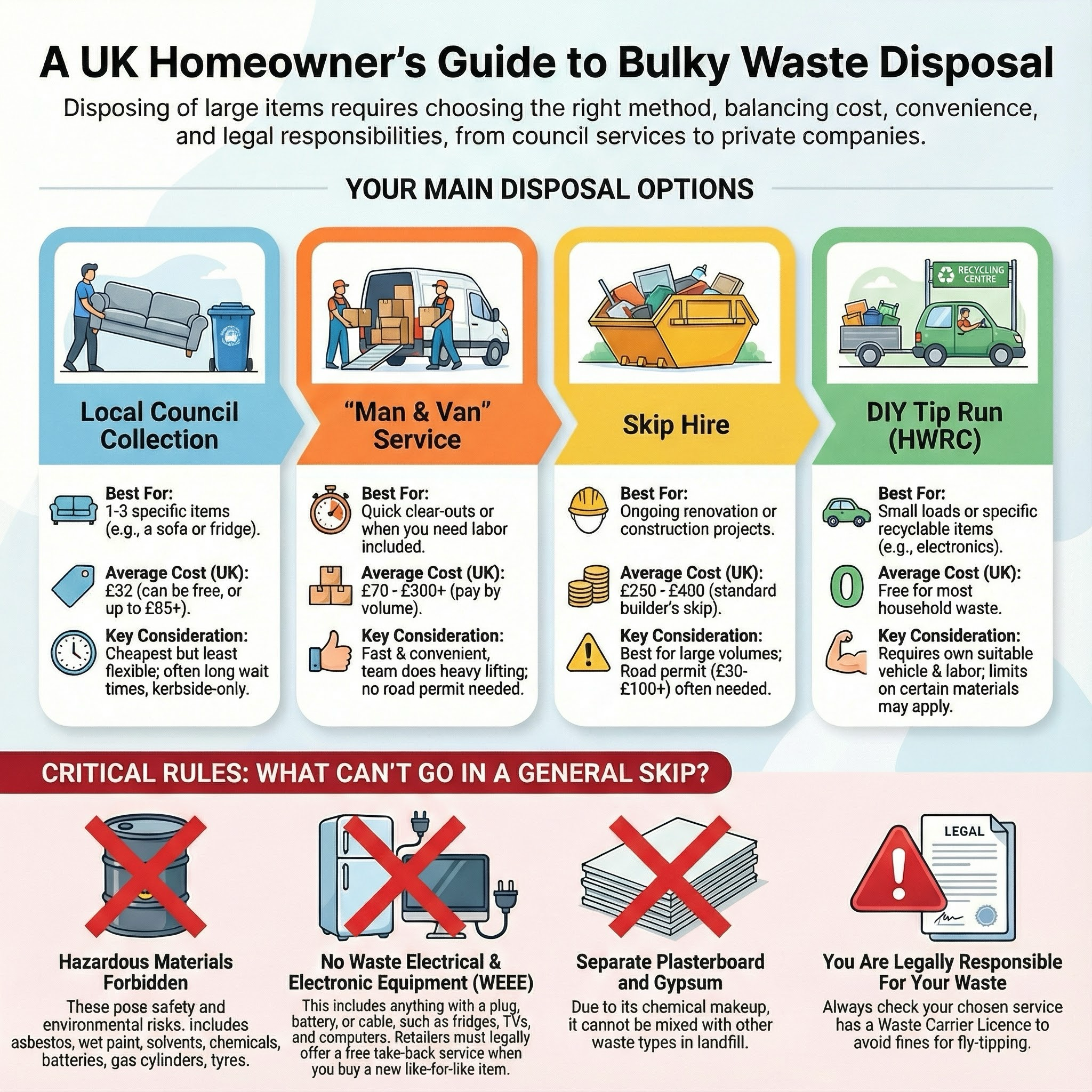
Rubbish Clearance explained
In the UK, homeowners have a legal "Duty of Care" to ensure their waste is disposed of correctly. Hiring a professional service not only saves your back from heavy lifting but also ensures that items are recycled, donated, or disposed of in compliance with strict environmental regulations.
Pricing for UK waste collection is typically based on the volume of waste (measured in cubic yards) or the weight, plus any surcharges for "controlled" items that require specialist recycling. All prices below are estimated 2025/26 averages including VAT.
| Item / Service | Low £ | High £ | Notes |
|---|---|---|---|
| Minimum Call-out (Single Item) | £70 | £110 | Small load or 1-2 bulky items. |
| 1/4 Van Load (approx. 3yd³) | £120 | £180 | Equivalent to a small garden shed's contents. |
| 1/2 Van Load (approx. 6yd³) | £200 | £280 | Roughly the capacity of a standard 6-yard skip. |
| Full Van Load (approx. 12-14yd³) | £380 | £550 | Large clearance or multiple heavy furniture items. |
| Mattress Surcharge | £25 | £50 | Per item; high recycling costs due to POPs regs. |
| Fridge/Freezer Surcharge | £40 | £90 | Based on size; requires hazardous gas removal. |
| Labour (per extra hour) | £40 | £70 | Only if loading takes longer than the standard window. |
Factors affecting the price include your location (London and the South East carry a premium), the ease of access to your property, and whether items need to be carried down multiple flights of stairs. Heavy waste like soil or rubble is usually charged by weight rather than volume.
DIY disposal is possible if you have a large vehicle and the physical strength to load it. However, many UK council tips now require permits for vans, and some charge for "DIY waste" like plasterboard or bathroom suites. Hiring a professional is often more cost-effective than skip hire, as you only pay for the space you use and don't need to worry about skip permits (which can cost £30–£100 from your local council).
Warning: If you hire an unlicensed "man with a van" and they fly-tip your waste, you can be fined up to £5,000 and receive a criminal record under the Environmental Protection Act 1990.
Questions to ask:
If the items are located outside (e.g., on a driveway), you typically do not need to be home as long as access is clear and payment has been arranged. For internal clearances, someone must be present to grant access and sign the Waste Transfer Note.
Most standard clearance companies cannot take hazardous waste. This includes asbestos, gas canisters, oil, and wet paint. You will usually need a specialist hazardous waste contractor for these items.
A skip requires you to do the heavy lifting and often requires a permit if placed on the road. A clearance service (man and van) includes the labour to load the vehicle and you only pay for the volume used, making it better for bulky furniture.
Many professional firms have partnerships with local charities. If an item is in "resaleable" condition (and has fire safety tags if it's upholstered), they will often divert it from disposal to a charity partner.
New UK regulations regarding Persistent Organic Pollutants (POPs) mean upholstered furniture can no longer be sent to landfill. It must be shredded and incinerated at specialist plants, which has significantly increased the disposal fees charged to collectors.
This guide was written with AI assistance and is intended for general information only. Prices are estimates based on UK averages and may vary by region. Always get at least three quotes and consult a qualified professional before starting any work.
Ask follow-ups in plain English. The AI explains options, sequencing and what to ask the rubbish clearance — so you walk in informed.
Disposing of an old mattress or a bulky bed frame is one of the more challenging tasks for UK homeowners. Beyond the physical strain of navigating heavy, awkwar...
READ GUIDE →GuideManaging commercial waste is a significantly different beast compared to standard residential rubbish. Whether you are a landlord clearing a shop unit, a home-b...
READ GUIDE →GuideDisposing of an old sofa or armchair in the UK has become more complex due to recent environmental legislation. Bulky furniture is difficult to move, and many i...
READ GUIDE →GuideScrapping a car in the UK is a straightforward process, but it is governed by strict environmental and legal regulations. Whether your vehicle is a non-runner, ...
READ GUIDE →GuideAccumulating black bin bags is a common headache for UK homeowners, whether it’s due to a missed council collection, a deep spring clean, or the aftermath of a ...
READ GUIDE →GuideWhether you are decommissioning a commercial suite or simply reclaiming a spare bedroom from years of "home office" clutter, a professional office clean-out is ...
READ GUIDE →