Instant
01 · Ask
Ask the AI a follow-up
Got more questions about scrap Metal Recycling Job Overview? Describe the bit you're unsure about — the AI explains options, sequencing and what to ask the rubbish clearance.

What a scrap metal recycling operator does — sorting, weighing, baling and selling.
You've read the brief on scrap Metal Recycling Job Overview. Now lean on us to find the right rubbish clearance — and stay in control of the job.
Got more questions about scrap Metal Recycling Job Overview? Describe the bit you're unsure about — the AI explains options, sequencing and what to ask the rubbish clearance.
Costs, timelines, pitfalls and the right questions to ask before any rubbish clearance starts on scrap Metal Recycling Job Overview.
Itemised quotes from up to 3 local rubbish clearances on scrap Metal Recycling Job Overview — so you can compare like-for-like, not lump sums.
Ready when you are
Enter your postcode and get free quotes from local pros.
Four moves that separate a smooth job from a nightmare.
Unlicensed "man and van" collectors may take your metal, strip the valuable parts, and dump the rest in a country lane.
Some dishonest collectors use "fixed" scales; always try to get a rough estimate of the weight before they arrive.
Dragging heavy appliances or cast iron baths can ruin floors; ensure the collector uses trolleys or floor protection.
Some collectors may claim the metal is "low grade" upon arrival and attempt to charge a disposal fee instead of paying you.
Indicative UK ranges and what affects price.
By job type
Quote spread is typically ± 18% — always get 3 quotes.
Rubbish Clearance quick-view
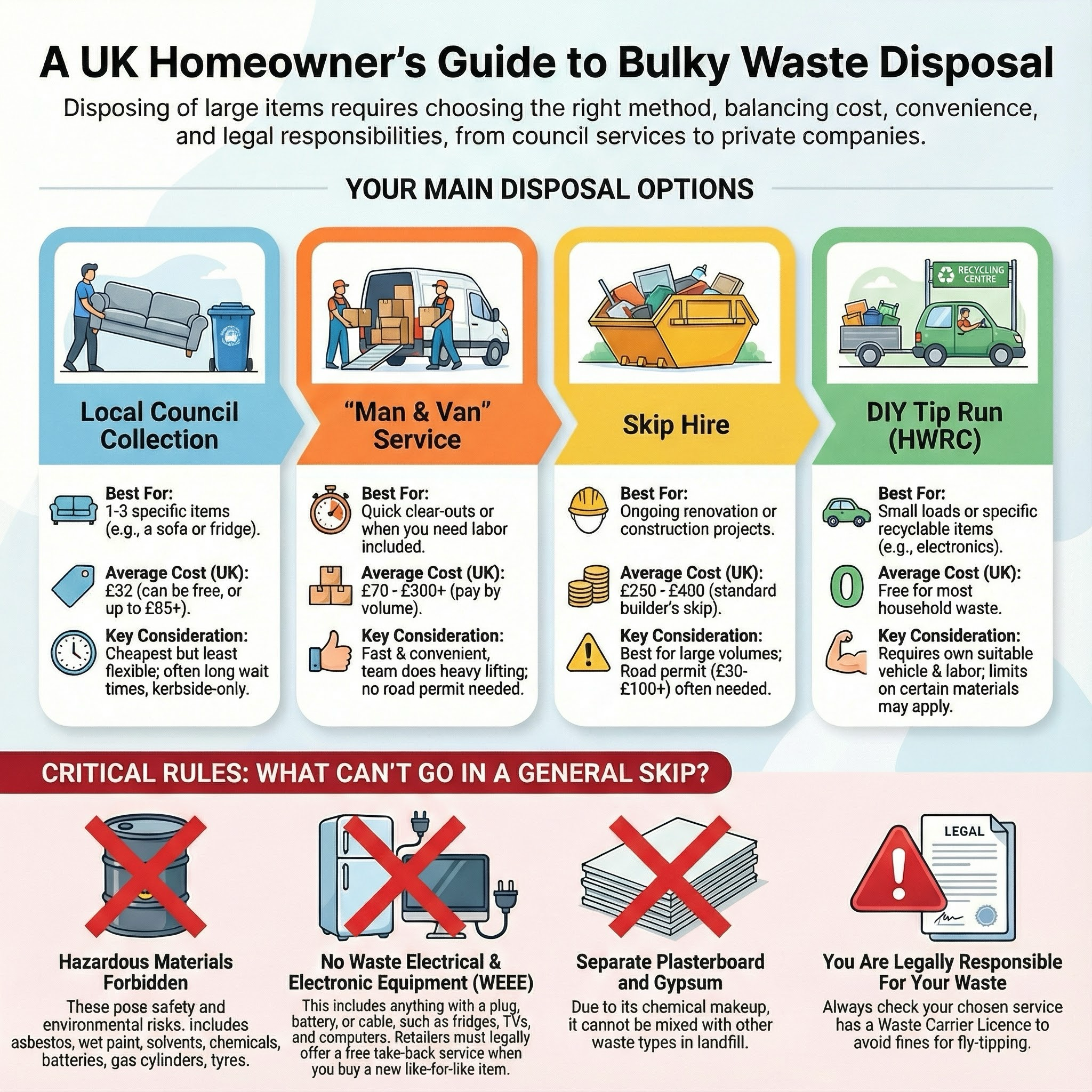
Rubbish Clearance explained
While some collectors offer free pick-ups for small amounts, larger clearances or high-value metals like copper and brass can often result in a payment back to the homeowner. Understanding how the process works and the legal requirements involved will help you get the best value and avoid "cowboy" collectors.
| Item / Service | Low £ | High £ | Notes |
|---|---|---|---|
| Small Collection Fee | £0 | £50 | Often free if metal value covers the fuel. |
| Full Garage/Shed Clearance | £150 | £400 | Depends on the volume of non-metal waste mixed in. |
| Copper (Bright Wire) | £5.50 | £7.00 | Price per kg; fluctuates daily based on market. |
| Brass / Gunmetal | £3.50 | £4.50 | Price per kg; includes taps and ornaments. |
| Aluminium (Cast) | £0.80 | £1.20 | Price per kg; includes engine parts and some frames. |
Prices for scrap metal are highly volatile and change daily based on global commodity markets. Most reputable dealers will offer a "per tonne" or "per kg" rate, but keep in mind that transport costs will be deducted from your total if the dealer is collecting from your home.
Homeowners can easily take small amounts of metal to a local Household Waste Recycling Centre (HWRC) for free, though you won't receive payment. For larger volumes or heavy items, hiring a professional is safer and more convenient.
Professional collectors have the correct lifting equipment and vehicles to handle sharp or heavy debris. Most importantly, they must hold a Waste Carrier Licence and a Scrap Metal Dealer’s Licence to operate legally in the UK.
Pro Tip: Always take a photo of the collector's vehicle and registration number. If the waste is later fly-tipped, this evidence protects you from prosecution.
No. Under the Scrap Metal Dealers Act 2013, it is illegal for any scrap metal dealer in England or Wales to pay cash. Payments must be made via electronic bank transfer or a non-transferable cheque.
Yes. You must provide a valid photocard driving licence or a passport supported by a utility bill (less than 3 months old). The dealer is required by law to keep a record of who they bought the metal from.
Most scrap collectors avoid fridges because they contain hazardous gases (CFCs) and insulating foam that require specialist disposal. You will usually have to pay a specific hazardous waste fee for fridge removal.
Ferrous metals contain iron and are magnetic (like steel and cast iron); they are generally worth very little. Non-ferrous metals (like copper, aluminium, brass, and lead) are not magnetic and have a much higher scrap value.
Yes, boilers contain a mix of copper, brass, and aluminium. However, the value is often offset by the time and labour required to strip it down. Most plumbers keep the scrap as a "perk" of the job unless you negotiate otherwise.
This guide was written with AI assistance and is intended for general information only. Prices are estimates based on UK averages and may vary by region. Always get at least three quotes and consult a qualified professional before starting any work.
Ask follow-ups in plain English. The AI explains options, sequencing and what to ask the rubbish clearance — so you walk in informed.
Disposing of an old mattress or a bulky bed frame is one of the more challenging tasks for UK homeowners. Beyond the physical strain of navigating heavy, awkwar...
READ GUIDE →GuideManaging commercial waste is a significantly different beast compared to standard residential rubbish. Whether you are a landlord clearing a shop unit, a home-b...
READ GUIDE →GuideDisposing of an old sofa or armchair in the UK has become more complex due to recent environmental legislation. Bulky furniture is difficult to move, and many i...
READ GUIDE →GuideScrapping a car in the UK is a straightforward process, but it is governed by strict environmental and legal regulations. Whether your vehicle is a non-runner, ...
READ GUIDE →GuideAccumulating black bin bags is a common headache for UK homeowners, whether it’s due to a missed council collection, a deep spring clean, or the aftermath of a ...
READ GUIDE →GuideWhether you are decommissioning a commercial suite or simply reclaiming a spare bedroom from years of "home office" clutter, a professional office clean-out is ...
READ GUIDE →