Instant
01 · Ask
Ask the AI a follow-up
Got more questions about slug entry investigation? Describe the bit you're unsure about — the AI explains options, sequencing and what to ask the rubbish clearance.

Where slugs get in — gaps, vents and drains. Found, sealed and chemically treated where appropriate.
You've read the brief on slug entry investigation. Now lean on us to find the right rubbish clearance — and stay in control of the job.
Got more questions about slug entry investigation? Describe the bit you're unsure about — the AI explains options, sequencing and what to ask the rubbish clearance.
Costs, timelines, pitfalls and the right questions to ask before any rubbish clearance starts on slug entry investigation.
Itemised quotes from up to 3 local rubbish clearances on slug entry investigation — so you can compare like-for-like, not lump sums.
Ready when you are
Enter your postcode and get free quotes from local pros.
Four moves that separate a smooth job from a nightmare.
Sealing air bricks completely to stop slugs will cause damp and dry rot; always use fine stainless steel mesh instead.
Failing to address "slug hotels" like piles of rotting leaves or old timber near the house wall means the pressure on the building remains high.
Slugs can squeeze through gaps as thin as a few millimetres; missing even one small pipe entry renders the rest of the work ineffective.
Using pellets indoors without fixing the damp issue that attracted the slugs in the first place.
Indicative UK ranges and what affects price.
By job type
Quote spread is typically ± 18% — always get 3 quotes.
Rubbish Clearance quick-view
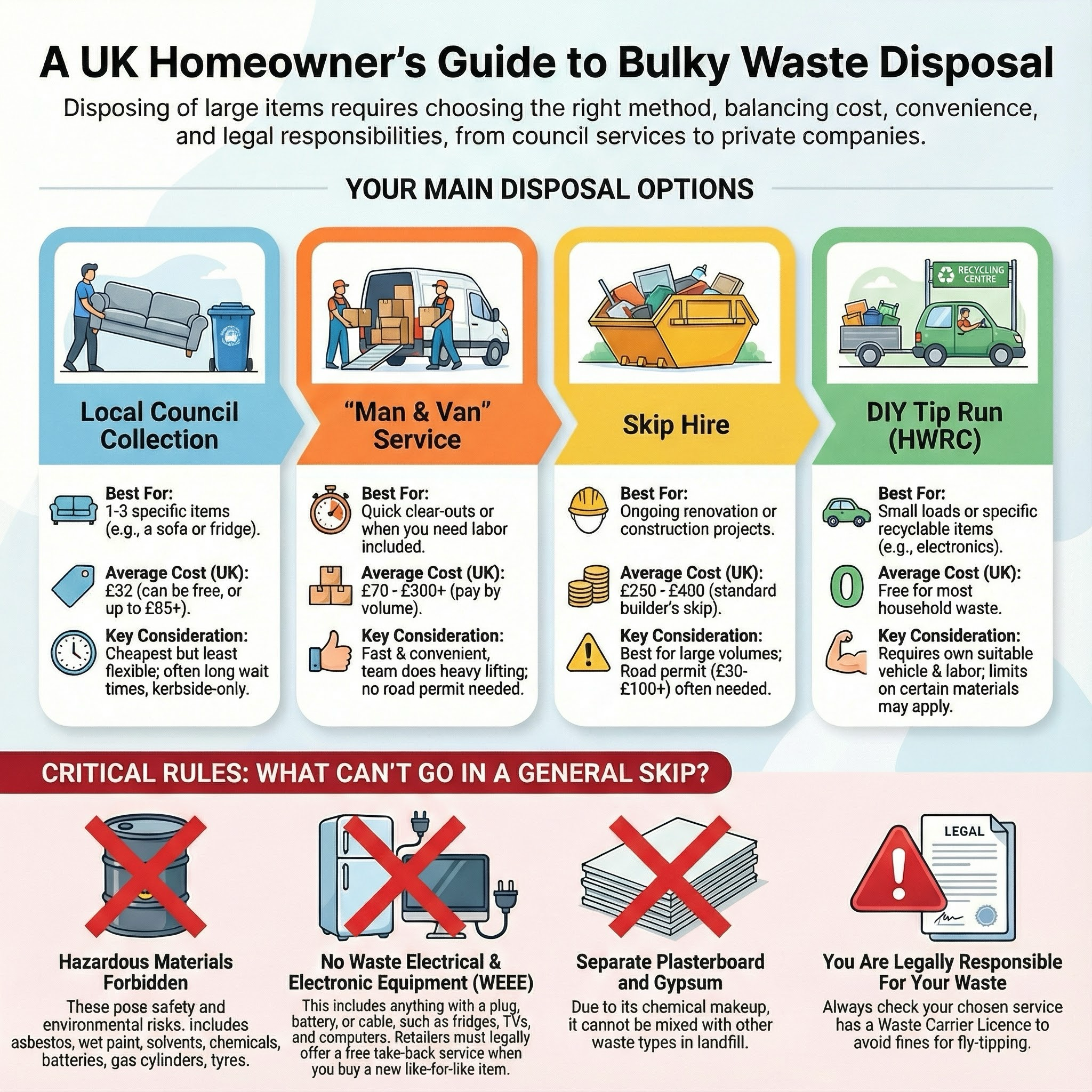
Rubbish Clearance explained
A professional slug entry investigation goes beyond simply laying pellets. It is a forensic approach to identifying the precise "highways" these gastropods use to enter your property, prioritising long-term exclusion over temporary chemical fixes.
| Item | Low £ | High £ | Notes |
|---|---|---|---|
| Initial Investigation / Call-out | £85 | £150 | Covers the first hour and basic report. |
| Hourly Labour Rate | £50 | £95 | For complex properties or detailed proofing work. |
| Proofing Materials | £20 | £120 | Expanding foam, mesh, sealant, or copper strips. |
| Specialist Equipment Hire | £40 | £200 | Endoscope cameras or high-reach ladders/scaffolding. |
| Follow-up Monitoring Visit | £60 | £100 | Checking the effectiveness of exclusion measures. |
Prices generally include VAT and depend heavily on your location in the UK, with London and the South East commanding higher rates. The total cost for a standard semi-detached home usually falls between £180 and £550 depending on the extent of the proofing required.
Homeowners can often identify basic entry points, but professional investigators use specialised tools like endoscopes and moisture meters to find hidden routes under floors or behind walls. Professionals also understand the "slug-safe" application of sealants—blocking the wrong hole can sometimes lead to ventilation issues and subsequent timber rot.
Note: If the investigation involves applying professional-grade biocides or pesticides, the technician must be qualified. Always ensure any structural repairs comply with UK Building Regulations regarding sub-floor ventilation.
Slugs are primarily nocturnal and very sensitive to light and dry air. They often emerge late at night when the humidity is high and retreat into wall cavities or under floorboards before sunrise, leaving only their dried mucus trails behind.
Most modern pellets use ferric phosphate, which is safer than older chemicals, but they should still be used with caution around pets and children. A professional investigation focuses on physical exclusion (proofing) so that pellets aren't necessary indoors.
Yes, slugs are highly attracted to the moisture in drains and can easily navigate U-bends and waste pipes. They often enter through faulty seals around washing machine outlets or bathroom overflows.
Copper creates a tiny natural electric charge that deters slugs. While effective for pots and small barriers, it is rarely a total solution for a whole house and should be used as part of a wider proofing strategy.
No. Salt is temporary, messy, and can damage floor finishes or stone. It does not address the entry point or the moisture issue, and it will dissolve quickly in the damp environments that slugs prefer.
This guide was written with AI assistance and is intended for general information only. Prices are estimates based on UK averages and may vary by region. Always get at least three quotes and consult a qualified professional before starting any work.
Ask follow-ups in plain English. The AI explains options, sequencing and what to ask the rubbish clearance — so you walk in informed.
Disposing of an old mattress or a bulky bed frame is one of the more challenging tasks for UK homeowners. Beyond the physical strain of navigating heavy, awkwar...
READ GUIDE →GuideManaging commercial waste is a significantly different beast compared to standard residential rubbish. Whether you are a landlord clearing a shop unit, a home-b...
READ GUIDE →GuideDisposing of an old sofa or armchair in the UK has become more complex due to recent environmental legislation. Bulky furniture is difficult to move, and many i...
READ GUIDE →GuideScrapping a car in the UK is a straightforward process, but it is governed by strict environmental and legal regulations. Whether your vehicle is a non-runner, ...
READ GUIDE →GuideAccumulating black bin bags is a common headache for UK homeowners, whether it’s due to a missed council collection, a deep spring clean, or the aftermath of a ...
READ GUIDE →GuideWhether you are decommissioning a commercial suite or simply reclaiming a spare bedroom from years of "home office" clutter, a professional office clean-out is ...
READ GUIDE →