Instant
01 · Ask
Ask the AI a follow-up
Got more questions about sofa collection clearance? Describe the bit you're unsure about — the AI explains options, sequencing and what to ask the rubbish clearance.

Old sofa collected for recycling or licensed disposal — same-day pickup available.
You've read the brief on sofa collection clearance. Now lean on us to find the right rubbish clearance — and stay in control of the job.
Got more questions about sofa collection clearance? Describe the bit you're unsure about — the AI explains options, sequencing and what to ask the rubbish clearance.
Costs, timelines, pitfalls and the right questions to ask before any rubbish clearance starts on sofa collection clearance.
Itemised quotes from up to 3 local rubbish clearances on sofa collection clearance — so you can compare like-for-like, not lump sums.
Ready when you are
Enter your postcode and get free quotes from local pros.
Four moves that separate a smooth job from a nightmare.
Failing to measure the sofa against the doorway. If it won't fit, the team may charge extra for disassembly or a "wasted journey" fee.
Cheap "man with a van" services often dump sofas in laybys. If the item is traced back to you, you could face an unlimited fine or a criminal record.
Scuffed walls or torn carpets are common with inexperienced lifters. Always ensure the route is clear and breakables are removed.
Some firms quote a low "collection fee" but add significant "disposal fees" or "weight taxes" once the item is loaded. Always get an all-in price.
Indicative UK ranges and what affects price.
By job type
Quote spread is typically ± 18% — always get 3 quotes.
Rubbish Clearance quick-view
Rubbish Clearance explained
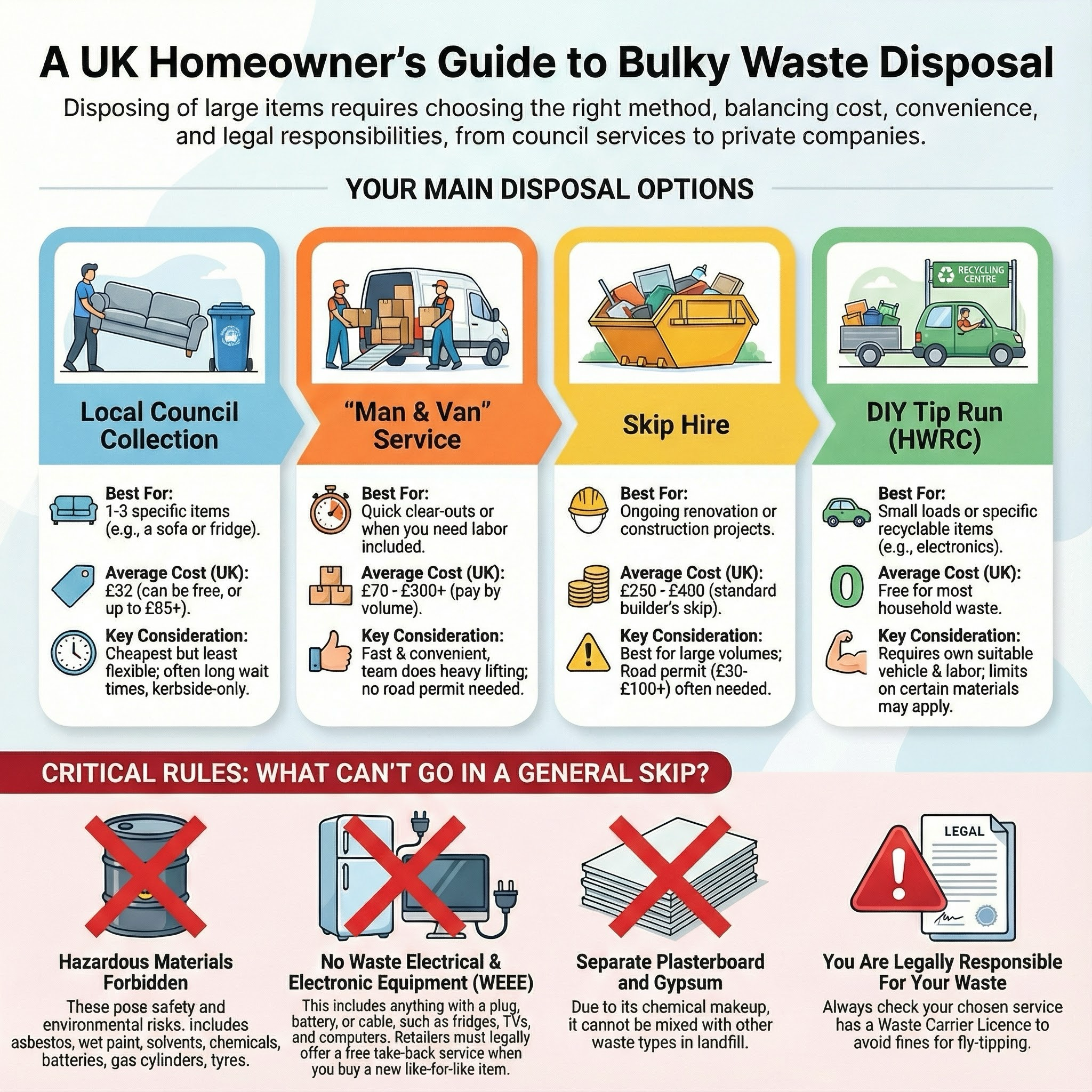
Whether you are clearing out a rental property, upgrading your living room, or managing a deceased estate, hiring a licensed waste carrier is the safest way to ensure your furniture doesn't end up fly-tipped. This guide covers everything from current UK disposal legislation to the typical costs you can expect to pay this year.
| Item / Service | Low £ | High £ | Notes |
|---|---|---|---|
| Single Armchair | £60 | £90 | Minimum load charge often applies. |
| 2-3 Seater Sofa | £90 | £160 | Standard size; easy access. |
| Large Corner / Recliner | £150 | £280 | Heavier items require more labour/space. |
| Sofa Bed | £120 | £200 | Significant weight due to metal frame. |
| POPs Surcharge | £20 | £50 | Extra fee for specialist incineration. |
| Total Average Job | £110 | £350 | Includes labour, transport, and VAT. |
Prices are influenced primarily by the size of the item and the complexity of the removal. Since the introduction of POPs legislation, disposal centres charge higher "gate fees" for upholstered furniture because it must be incinerated rather than sent to landfill, which is reflected in the final quote.
While you can take a sofa to a Household Waste Recycling Centre (HWRC) yourself, you will need a vehicle large enough to transport it without obstructing your view. Many councils now require you to book a specific "upholstered furniture" slot due to POPs regulations, and some charge residents for bulky waste. Hiring a professional eliminates the risk of personal injury from heavy lifting and ensures you receive a Waste Transfer Note, which is your legal "get out of jail free" card if the waste is later found fly-tipped.
Note: If you are hiring a van to do it yourself, check if your local tip requires a permit for commercial-style vehicles, even for domestic waste.
You should only do this if you have a confirmed booking with the council or a private firm and they have specifically requested it. Leaving furniture on the pavement without a scheduled pickup is technically fly-tipping and can result in a Fixed Penalty Notice from your local council.
Persistent Organic Pollutants are chemicals formerly used in foam and fabric flame retardants. They do not break down in the environment. New UK laws require these items to be incinerated at high temperatures rather than buried in landfill, which is a more costly process for waste companies.
Yes, but you must disclose this upfront. Contaminated items require the crew to wear PPE and often involve wrapping the item in plastic to prevent the spread of spores or ash within their vehicle. This usually incurs an additional "hazardous waste" surcharge.
Only if it has a valid fire safety label permanently attached and is in "resaleable" condition (no rips, heavy stains, or broken springs). Most UK charities will refuse any upholstered item without a visible fire label due to legal safety requirements.
It is a legal document that tracks the movement of waste. It must include a description of the waste, the EWC (European Waste Catalogue) code, the address it was collected from, and the licence number of the carrier. Keep this for at least two years.
This guide was written with AI assistance and is intended for general information only. Prices are estimates based on UK averages and may vary by region. Always get at least three quotes and consult a qualified professional before starting any work.
Ask follow-ups in plain English. The AI explains options, sequencing and what to ask the rubbish clearance — so you walk in informed.
Disposing of an old mattress or a bulky bed frame is one of the more challenging tasks for UK homeowners. Beyond the physical strain of navigating heavy, awkwar...
READ GUIDE →GuideManaging commercial waste is a significantly different beast compared to standard residential rubbish. Whether you are a landlord clearing a shop unit, a home-b...
READ GUIDE →GuideDisposing of an old sofa or armchair in the UK has become more complex due to recent environmental legislation. Bulky furniture is difficult to move, and many i...
READ GUIDE →GuideScrapping a car in the UK is a straightforward process, but it is governed by strict environmental and legal regulations. Whether your vehicle is a non-runner, ...
READ GUIDE →GuideAccumulating black bin bags is a common headache for UK homeowners, whether it’s due to a missed council collection, a deep spring clean, or the aftermath of a ...
READ GUIDE →GuideWhether you are decommissioning a commercial suite or simply reclaiming a spare bedroom from years of "home office" clutter, a professional office clean-out is ...
READ GUIDE →