Instant
01 · Ask
Ask the AI a follow-up
Got more questions about tree reshaping? Describe the bit you're unsure about — the AI explains options, sequencing and what to ask the rubbish clearance.

Tree shaping, crown reduction or lift — by a qualified tree surgeon.
You've read the brief on tree reshaping. Now lean on us to find the right rubbish clearance — and stay in control of the job.
Got more questions about tree reshaping? Describe the bit you're unsure about — the AI explains options, sequencing and what to ask the rubbish clearance.
Costs, timelines, pitfalls and the right questions to ask before any rubbish clearance starts on tree reshaping.
Itemised quotes from up to 3 local rubbish clearances on tree reshaping — so you can compare like-for-like, not lump sums.
Ready when you are
Enter your postcode and get free quotes from local pros.
Four moves that separate a smooth job from a nightmare.
Removing more than 30% of the canopy can starve the tree and lead to rapid, weak regrowth.
Certain species, like Cherry or Plum trees, should only be pruned in summer to avoid Silver Leaf disease, while others prefer winter.
Reshaping may reveal internal rot that makes the tree unsafe, potentially changing the scope of work mid-job.
If a chipper cannot get close to the tree, labour costs will rise as technicians must drag heavy "brash" long distances.
Indicative UK ranges and what affects price.
By job type
Quote spread is typically ± 18% — always get 3 quotes.
Rubbish Clearance quick-view
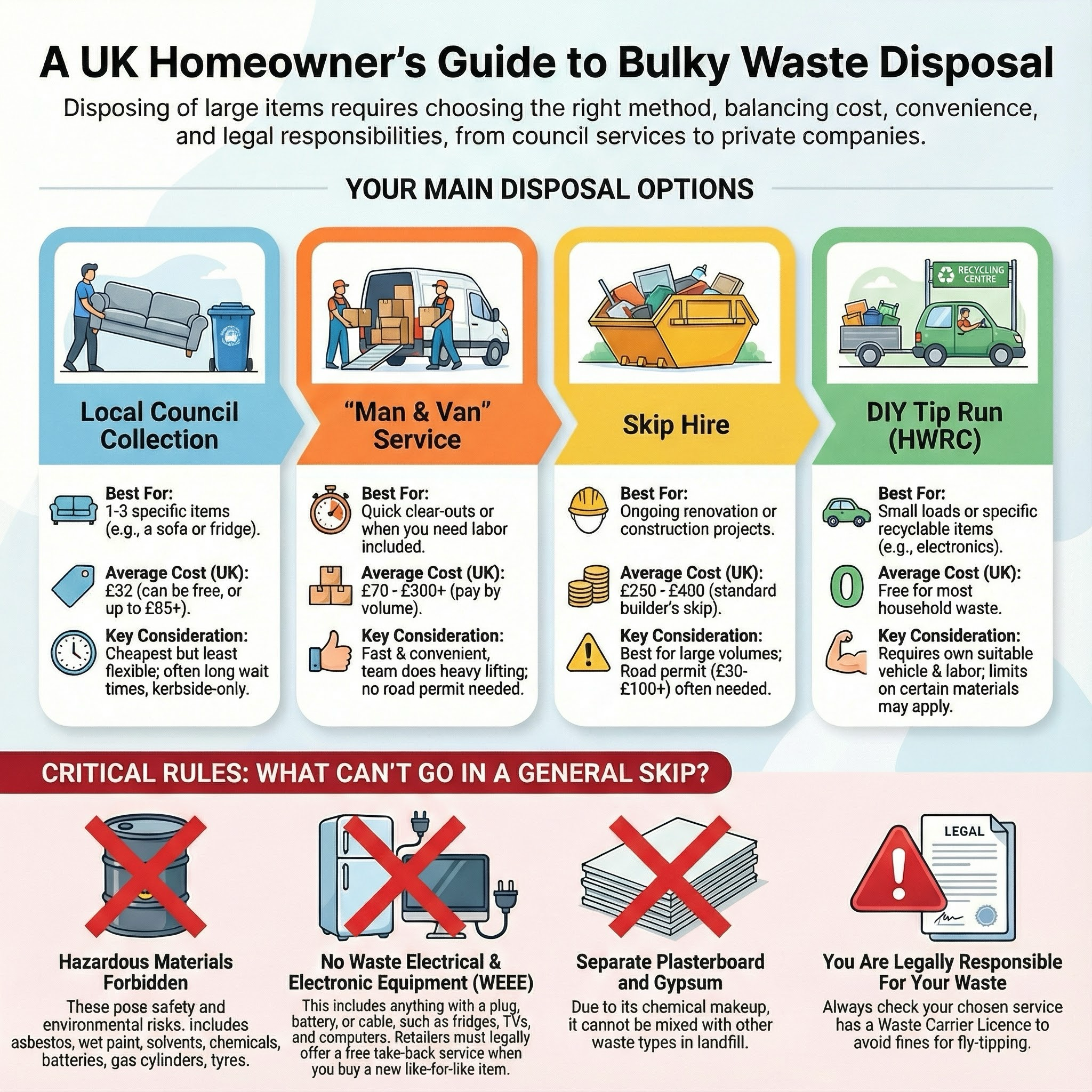
Rubbish Clearance explained
For UK homeowners, professional reshaping is often a necessity to manage overgrown specimens that may interfere with power lines, block sunlight, or pose a risk during winter storms. It also ensures your outdoor space remains tidy and well-managed, preventing trees from becoming a nuisance to neighbours.
| Item | Low £ | High £ | Notes |
|---|---|---|---|
| Call-out / Site Visit | £100 | £180 | Often deducted from the final bill if work proceeds. |
| Small Tree (e.g. Fruit Tree) | £250 | £450 | Basic reshaping and thinning; minimal waste. |
| Medium Tree (e.g. Silver Birch) | £450 | £850 | Full crown reduction and waste removal. |
| Large Tree (e.g. Oak/Beech) | £900 | £2,500+ | Requires climbing teams and significant waste disposal. |
| Waste Disposal Fee | £60 | £300 | Depends on volume and if a chipper is used. |
| TPO Application Fee | £0 | £150 | Some arborists include this; others charge for the paperwork. |
Prices vary significantly based on the tree's location and accessibility. If a "cherry picker" (MEWP) is required due to safety concerns or poor limb strength, expect to add £400–£600 to the total cost for daily hire.
Tree reshaping is not a DIY job for anything larger than a small garden shrub. Working at height with chainsaws is inherently dangerous and requires specialist training and safety equipment.
Professional arborists carry specific insurance that covers damage to your property and public liability—standard home insurance rarely covers DIY tree-felling accidents.
Furthermore, poor pruning techniques can "shock" a tree, leading to disease, fungal infections, or unstable "epicormic" regrowth. Professionals follow BS3998:2010 standards to ensure the long-term health of the specimen.
Questions to ask:
If the tree's trunk is on your land, you own it and can reshape it. If branches overhang from a neighbour's tree, you have a common-law right to prune them back to the boundary line, provided the tree is not protected and the work doesn't kill the tree.
Topping involves cutting the main vertical stem (leader) and large upper branches, which is harmful and creates ugly, weak growth. Reshaping (reduction) uses selective cuts to reduce size while maintaining the tree's natural form and health.
Most professional quotes include "arisings removal." This involves chipping branches and removing logs. If you want to keep the wood for a log burner, let them know beforehand, as it may reduce the price slightly.
For most deciduous trees, late autumn or winter is best while the tree is dormant. However, species like Maples and Birches should be pruned in late summer to prevent "bleeding" sap.
This depends on the species and growth rate. Fast-growing trees like Willows may need attention every 2–3 years, while slower species like Oak may only need reshaping every 5–10 years.
This guide was written with AI assistance and is intended for general information only. Prices are estimates based on UK averages and may vary by region. Always get at least three quotes and consult a qualified professional before starting any work.
Ask follow-ups in plain English. The AI explains options, sequencing and what to ask the rubbish clearance — so you walk in informed.
Disposing of an old mattress or a bulky bed frame is one of the more challenging tasks for UK homeowners. Beyond the physical strain of navigating heavy, awkwar...
READ GUIDE →GuideManaging commercial waste is a significantly different beast compared to standard residential rubbish. Whether you are a landlord clearing a shop unit, a home-b...
READ GUIDE →GuideDisposing of an old sofa or armchair in the UK has become more complex due to recent environmental legislation. Bulky furniture is difficult to move, and many i...
READ GUIDE →GuideScrapping a car in the UK is a straightforward process, but it is governed by strict environmental and legal regulations. Whether your vehicle is a non-runner, ...
READ GUIDE →GuideAccumulating black bin bags is a common headache for UK homeowners, whether it’s due to a missed council collection, a deep spring clean, or the aftermath of a ...
READ GUIDE →GuideWhether you are decommissioning a commercial suite or simply reclaiming a spare bedroom from years of "home office" clutter, a professional office clean-out is ...
READ GUIDE →