Instant
01 · Ask
Ask the AI a follow-up
Got more questions about washing machine recycling? Describe the bit you're unsure about — the AI explains options, sequencing and what to ask the rubbish clearance.

Old washer collected — WEEE-compliant recycling at a licensed facility.
You've read the brief on washing machine recycling. Now lean on us to find the right rubbish clearance — and stay in control of the job.
Got more questions about washing machine recycling? Describe the bit you're unsure about — the AI explains options, sequencing and what to ask the rubbish clearance.
Costs, timelines, pitfalls and the right questions to ask before any rubbish clearance starts on washing machine recycling.
Itemised quotes from up to 3 local rubbish clearances on washing machine recycling — so you can compare like-for-like, not lump sums.
Ready when you are
Enter your postcode and get free quotes from local pros.
Four moves that separate a smooth job from a nightmare.
Washing machine "feet" can easily gouge lino or scratch wood floors when the machine is pulled out; professionals use air-skates or sliders.
Failing to properly cap the waste pipe or turn off the isolation valve can lead to immediate water damage.
Limescale build-up often seizes the plastic nuts on water hoses, requiring professional tools to remove without snapping the valves.
Using an unverified collector increases the risk of your machine being fly-tipped in a local hedgerow.
Indicative UK ranges and what affects price.
By job type
Quote spread is typically ± 18% — always get 3 quotes.
Rubbish Clearance quick-view
Rubbish Clearance explained
Professional recycling services ensure that hazardous components are handled safely and that valuable metals and plastics are recovered. For UK homeowners, hiring a registered waste carrier provides peace of mind that the appliance will be processed at an authorised facility rather than contributing to the UK's fly-tipping problem.
The cost of washing machine recycling varies depending on whether you require a standalone collection or if it is part of a larger house clearance. Prices in 2025 reflect increased fuel costs and stricter environmental processing fees.
| Item / Service | Low £ | High £ | Notes |
|---|---|---|---|
| Single Item Collection | £45 | £85 | Standard kerbside or ground floor pickup. |
| Disconnection Service | £15 | £30 | If the machine is still plumbed in. |
| Stair Carry Surcharge | £10 | £25 | Applies to flats without lifts or basement removals. |
| WEEE Processing Fee | £0 | £20 | Often included in the base collection price. |
| Total Project Cost | £60 | £140 | Typical range for a full-service removal. |
Factors affecting the final price include your geographical location (London and the South East typically command higher rates) and the ease of access to your property. If the tradesperson has to pay for parking or ULEZ/Congestion charges, these will likely be passed on to the customer.
While you can technically take a washing machine to a local Household Waste Recycling Centre (HWRC) yourself, it is rarely a one-person job. These units typically weigh between 60kg and 100kg due to the concrete weights used for stability, posing a significant risk of back injury or damage to your vehicle's interior.
Expert Tip: If you choose the DIY route, never tip a washing machine on its side without securing the drum, as this can snap the internal suspension springs.
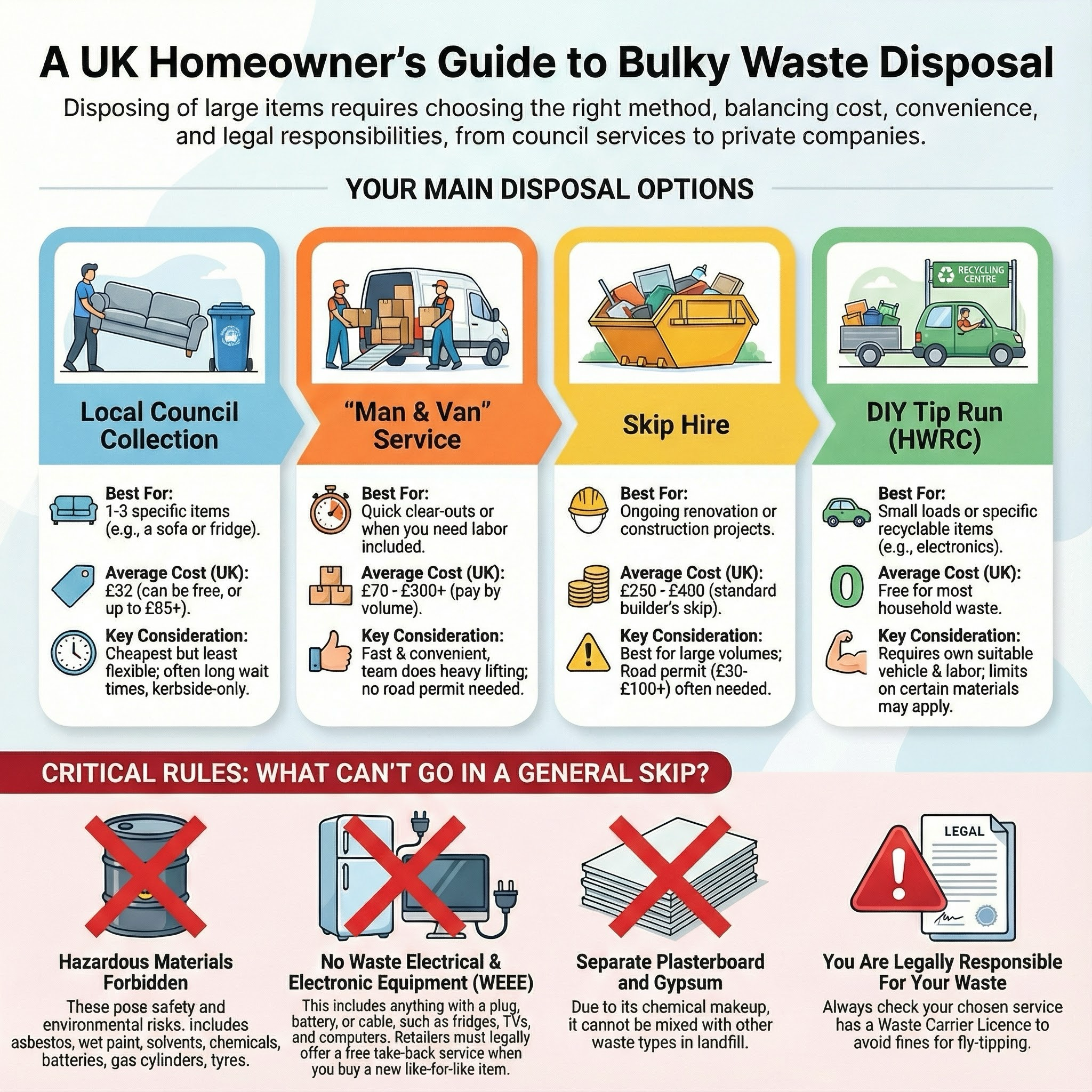
Hiring a professional ensures the appliance is handled under "Duty of Care" regulations. If a "man with a van" fly-tips your machine and it is traced back to you, you could face a significant fine under UK law, regardless of who dumped it.
Most skip hire companies do not allow "white goods" like washing machines in general skips due to WEEE regulations. You must usually pay a specific surcharge or arrange a separate collection for electrical items.
It is helpful but not strictly necessary for short trips to a recycling centre. However, if the machine is being moved a long distance or sold for refurbishment, transit bolts are essential to prevent the drum from damaging the outer casing.
Most UK local authorities offer a "Bulky Waste Collection" service for a fee (usually £20–£50). Note that they often require the machine to be left outside the property, as many council teams are not insured to enter your home.
The machine is shredded and separated into steel, copper, aluminium, and plastics. The concrete weights are crushed for use in the construction industry, and the electronic boards are processed to recover gold, silver, and palladium.
This is technically considered fly-tipping and can result in a fine from your local council. Furthermore, you have no way of verifying if the collector is licensed or if the machine will be disposed of legally.
This guide was written with AI assistance and is intended for general information only. Prices are estimates based on UK averages and may vary by region. Always get at least three quotes and consult a qualified professional before starting any work.
Ask follow-ups in plain English. The AI explains options, sequencing and what to ask the rubbish clearance — so you walk in informed.
Disposing of an old mattress or a bulky bed frame is one of the more challenging tasks for UK homeowners. Beyond the physical strain of navigating heavy, awkwar...
READ GUIDE →GuideManaging commercial waste is a significantly different beast compared to standard residential rubbish. Whether you are a landlord clearing a shop unit, a home-b...
READ GUIDE →GuideDisposing of an old sofa or armchair in the UK has become more complex due to recent environmental legislation. Bulky furniture is difficult to move, and many i...
READ GUIDE →GuideScrapping a car in the UK is a straightforward process, but it is governed by strict environmental and legal regulations. Whether your vehicle is a non-runner, ...
READ GUIDE →GuideAccumulating black bin bags is a common headache for UK homeowners, whether it’s due to a missed council collection, a deep spring clean, or the aftermath of a ...
READ GUIDE →GuideWhether you are decommissioning a commercial suite or simply reclaiming a spare bedroom from years of "home office" clutter, a professional office clean-out is ...
READ GUIDE →