Instant
01 · Ask
Ask the AI a follow-up
Got more questions about white goods removal? Describe the bit you're unsure about — the AI explains options, sequencing and what to ask the rubbish clearance.

Fridge, washer, dryer, dishwasher — WEEE-compliant recycling collected from your home.
You've read the brief on white goods removal. Now lean on us to find the right rubbish clearance — and stay in control of the job.
Got more questions about white goods removal? Describe the bit you're unsure about — the AI explains options, sequencing and what to ask the rubbish clearance.
Costs, timelines, pitfalls and the right questions to ask before any rubbish clearance starts on white goods removal.
Itemised quotes from up to 3 local rubbish clearances on white goods removal — so you can compare like-for-like, not lump sums.
Ready when you are
Enter your postcode and get free quotes from local pros.
Four moves that separate a smooth job from a nightmare.
Washing machines and dishwashers often contain residual water. If not drained properly, they can ruin carpets or laminate flooring during removal.
Dragging heavy items can permanently gouge wooden floors or tear lino. Always ensure the team uses "air glides" or rubber-wheeled trolleys.
Refrigerators must be defrosted at least 24 hours before removal to prevent messy leaks and foul odours in the transit vehicle.
Modern "American style" fridges often require doors to be removed to fit through standard UK doorways. Failing to mention this can lead to aborted collections.
Indicative UK ranges and what affects price.
By job type
Quote spread is typically ± 18% — always get 3 quotes.
Rubbish Clearance quick-view
Rubbish Clearance explained
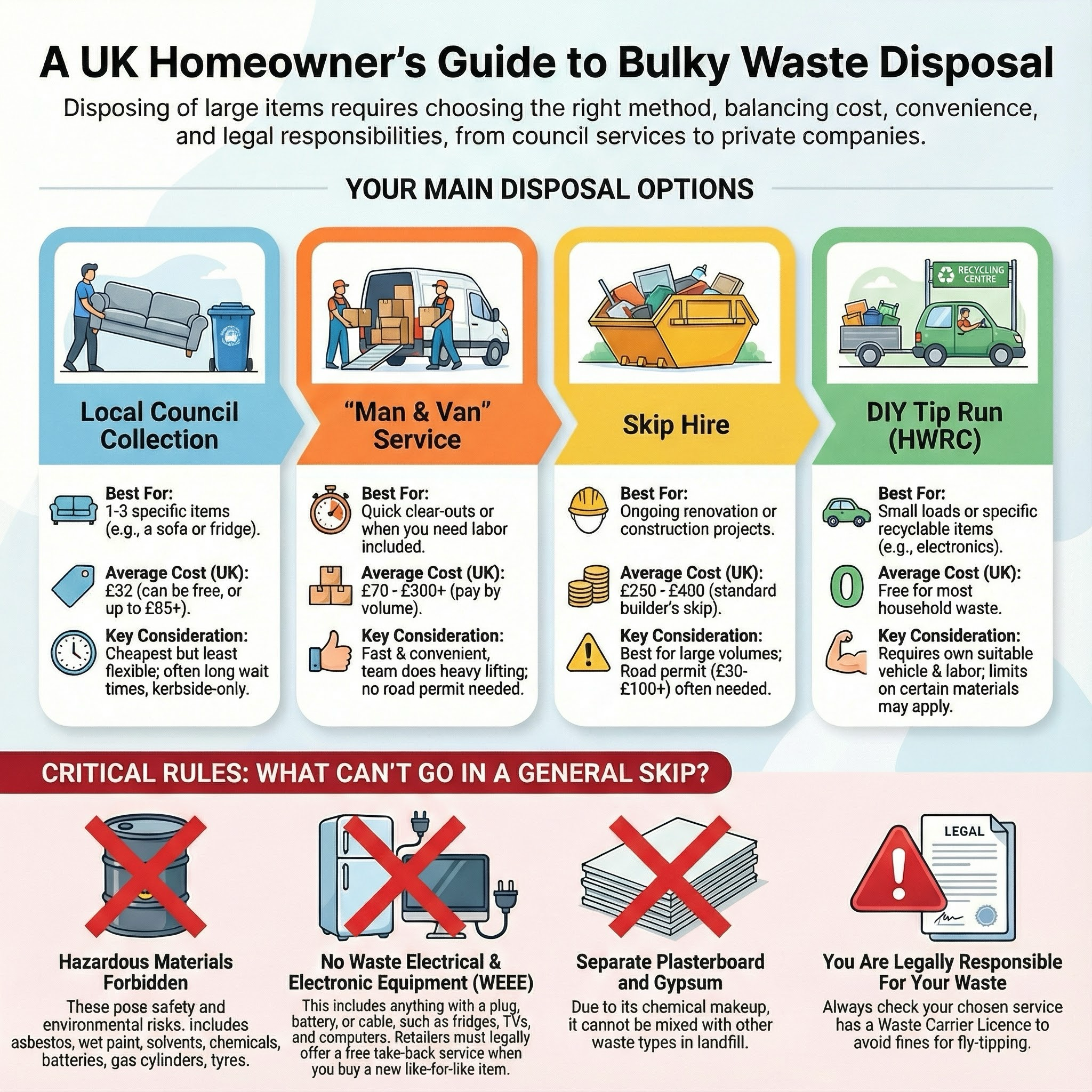
Professional white goods removal ensures that your old appliances are handled safely, preventing damage to your property and ensuring that hazardous components are processed at authorised facilities. Whether you are upgrading your kitchen or clearing out a rental property, hiring a licensed specialist is the most reliable way to meet your legal "Duty of Care" as a waste producer.
| Item / Service | Low £ | High £ | Notes |
|---|---|---|---|
| Single Appliance (Standard) | £60 | £95 | Washing machine, dryer, or dishwasher. |
| Fridge or Freezer (Small/Medium) | £80 | £130 | Higher cost due to hazardous gas processing fees. |
| American Style Fridge-Freezer | £120 | £200 | Requires two-person lift and specialist transport. |
| Full Kitchen Suite (4-5 items) | £250 | £450 | Discounted rate for multiple items in one visit. |
| Labour Surcharge (Stairs/Access) | £20 | £60 | Applicable for flats without lifts or narrow access. |
| Gas Disconnection Fee | £50 | £100 | Must be performed by a Gas Safe registered engineer. |
Pricing is primarily influenced by the type of appliance and the complexity of the removal. Refrigeration units attract higher fees because they contain ozone-depleting substances or flammable gases that require specialist recovery under UK law.
Always ensure the quoted price includes the "gate fee" charged by recycling centres, as some rogue traders may add this as a hidden extra later.
While you can technically move white goods yourself, the risks often outweigh the savings. Domestic appliances are notoriously heavy; a standard washing machine can weigh over 70kg, posing a significant risk of back injury or damage to your flooring.
Furthermore, UK regulations require specific handling for hazardous waste. If you hire an unlicensed "man with a van" and your fridge ends up fly-tipped, you—the homeowner—can be held legally responsible and fined. Professionals carry the correct Waste Carrier Licences and have the equipment to move items safely.
Note: If you are removing a gas cooker, you must hire a Gas Safe registered engineer to disconnect it. It is illegal and dangerous to do this yourself.
Questions to ask:
Generally, no. Most skip hire companies prohibit white goods—especially fridges and freezers—due to the hazardous materials they contain. If they do accept them, they will charge a significant "per item" surcharge.
Most UK councils offer a "Bulky Waste Collection" service, but it is rarely free. Fees typically range from £20 to £60. However, they usually only collect from the kerbside, meaning you must move the heavy appliance outside yourself.
It is taken to a specialist facility where it is dismantled. Metals, plastics, and glass are recovered for recycling. Hazardous components, like lead, mercury, and refrigerant gases, are safely extracted and treated.
Yes, ideally 24 to 48 hours in advance. A freezer full of melting ice is heavy, messy, and can cause the removal team to slip, potentially leading to accidents or damage to your home.
Only if they are Gas Safe registered. Most general waste clearance teams are not. You should check their credentials or hire a separate plumber to cap off the gas line before the removal team arrives.
It is a legal document describing the waste, the producer (you), and the carrier. If your waste is found fly-tipped, this note is your only proof that you handed it over to a legitimate professional, protecting you from prosecution.
This guide was written with AI assistance and is intended for general information only. Prices are estimates based on UK averages and may vary by region. Always get at least three quotes and consult a qualified professional before starting any work.
Ask follow-ups in plain English. The AI explains options, sequencing and what to ask the rubbish clearance — so you walk in informed.
Disposing of an old mattress or a bulky bed frame is one of the more challenging tasks for UK homeowners. Beyond the physical strain of navigating heavy, awkwar...
READ GUIDE →GuideManaging commercial waste is a significantly different beast compared to standard residential rubbish. Whether you are a landlord clearing a shop unit, a home-b...
READ GUIDE →GuideDisposing of an old sofa or armchair in the UK has become more complex due to recent environmental legislation. Bulky furniture is difficult to move, and many i...
READ GUIDE →GuideScrapping a car in the UK is a straightforward process, but it is governed by strict environmental and legal regulations. Whether your vehicle is a non-runner, ...
READ GUIDE →GuideAccumulating black bin bags is a common headache for UK homeowners, whether it’s due to a missed council collection, a deep spring clean, or the aftermath of a ...
READ GUIDE →GuideWhether you are decommissioning a commercial suite or simply reclaiming a spare bedroom from years of "home office" clutter, a professional office clean-out is ...
READ GUIDE →