Instant
01 · Ask
Ask the AI a follow-up
Got more questions about artisanal Tile Fitting? Describe the bit you're unsure about — the AI explains options, sequencing and what to ask the tiler.

Hand-made, encaustic or terracotta tiles — laid by a tiler experienced with non-standard products.
You've read the brief on artisanal Tile Fitting. Now lean on us to find the right tiler — and stay in control of the job.
Got more questions about artisanal Tile Fitting? Describe the bit you're unsure about — the AI explains options, sequencing and what to ask the tiler.
Costs, timelines, pitfalls and the right questions to ask before any tiler starts on artisanal Tile Fitting.
Itemised quotes from up to 3 local tilers on artisanal Tile Fitting — so you can compare like-for-like, not lump sums.
Ready when you are
Enter your postcode and get free quotes from local pros.
Four moves that separate a smooth job from a nightmare.
Occurs when porous tiles (like encaustic cement) aren't sealed before grouting, leaving a permanent "haze" on the surface.
If the floor isn't perfectly level, handmade tiles will highlight every bump, leading to dangerous trip hazards and "hollow" sounding tiles.
Using standard plastic spacers on handmade tiles often looks wrong; professionals usually "eye" the joints to maintain a natural aesthetic.
Using standard grey adhesive behind light-coloured translucent tiles (like some hand-glazed Zellige) can dull the colour from behind.
Indicative UK ranges and what affects price.
By job type
Quote spread is typically ± 18% — always get 3 quotes.
Tiler quick-view
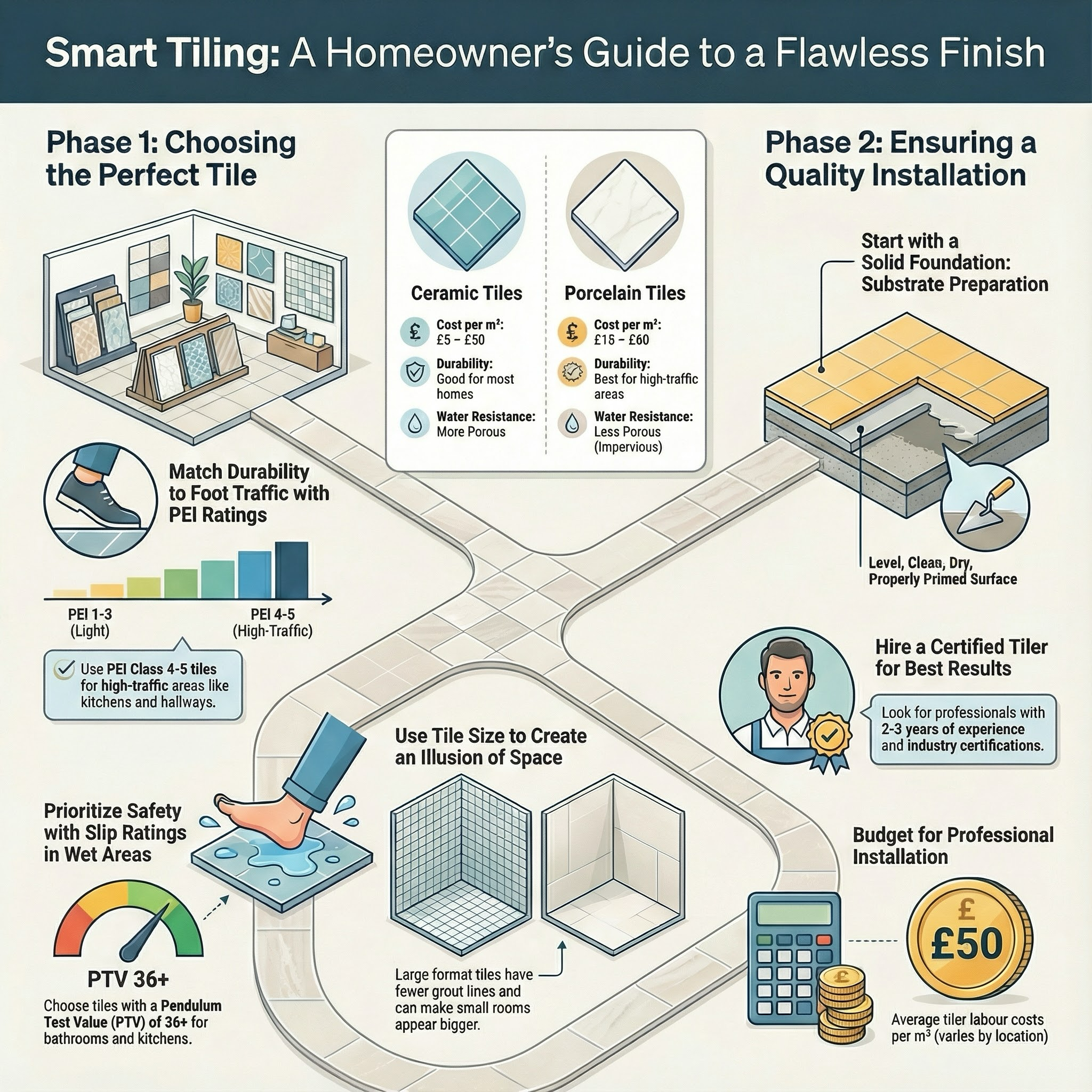
Tiler explained
For UK homeowners, investing in artisanal tiles adds significant character and value to a property. However, because these materials are often delicate or irregularly shaped, the installation process is more complex than standard tiling and demands a high level of technical skill.
Artisanal tiling is priced higher than standard installations due to the time required for layout and the care needed when handling expensive, often fragile materials. Prices below include VAT and reflect 2025/26 UK market averages.
| Item | Low £ | High £ | Notes |
|---|---|---|---|
| Labour (per m²) | £60 | £120 | Higher for intricate patterns like herringbone. |
| Artisanal Tiles (per m²) | £50 | £250+ | Varies by material (e.g., Zellige vs. Marble). |
| Adhesives & Grout | £15 | £30 | Per m²; specialist sealants add cost. |
| Surface Prep/Levelling | £20 | £40 | Per m²; depends on subfloor condition. |
| Day Rate (Small Jobs) | £250 | £450 | Minimum charge for splashbacks or repairs. |
Factors affecting the final quote include the size of the tile (smaller tiles take longer), the complexity of the room layout, and whether the tiles require pre-sealing before they are even laid.
While standard ceramic tiling is a common DIY project, artisanal tiles are notoriously unforgiving. Handmade tiles often have "lippage" (uneven heights) and irregular edges that require a professional eye to "cheat" the lines so they look straight to the eye. Furthermore, many artisanal materials are porous and can be permanently stained by the wrong grout or adhesive if not handled correctly. Professionals will also ensure work complies with British Standard BS 5385.
Ask your tiler: "How do you plan to manage the colour variation across the batch?" A good pro will always suggest mixing tiles from multiple boxes.
Most do. Natural stone, terracotta, and encaustic cement are porous and will absorb liquids and oils, leading to stains. High-gloss glazed tiles like Zellige usually don't need sealing on the face, but the grout lines always should be.
This is a hallmark of artisanal production. Variations in the kiln temperature or the hand-moulding process mean no two tiles are identical. A skilled tiler will accommodate these differences by varying the grout joint width slightly.
Yes, but you must use a de-coupling membrane (like Ditra matting) and flexible adhesive. This allows the tiles and the subfloor to expand and contract at different rates without the tiles cracking.
Lippage is when the edge of one tile is higher than the adjacent one. With handmade tiles, a small amount of lippage is expected and adds to the rustic charm, but it should never be enough to cause a trip hazard.
Avoid harsh chemicals, bleach, or acidic cleaners (like lemon or vinegar), especially on stone or cement. Use a pH-neutral cleaner specifically designed for natural surfaces to preserve the sealant and the tile finish.
Artisanal tiles require "dry-laying" to mix shades, more complex cuts, and often multiple stages of sealing. A job that takes two days with ceramic tiles can easily take four or five days with artisanal materials.
This guide was written with AI assistance and is intended for general information only. Prices are estimates based on UK averages and may vary by region. Always get at least three quotes and consult a qualified professional before starting any work.
Ask follow-ups in plain English. The AI explains options, sequencing and what to ask the tiler — so you walk in informed.
Updating wall tiles is one of the most effective ways to modernise a UK kitchen or bathroom without a full renovation. Beyond the aesthetic lift, professional t...
READ GUIDE →GuideMosaic tiling is the ultimate way to add texture, colour, and a bespoke feel to your UK home. Whether it’s a kitchen splashback, a wet room floor, or a decorati...
READ GUIDE →GuideVictorian geometric and encaustic tiles are a quintessential feature of British period properties, from London townhouses to seaside villas. These intricate pat...
READ GUIDE →GuideOrdering tiles is more than just picking a pattern you like. For UK homeowners, it involves calculating precise quantities, accounting for wastage, and ensuring...
READ GUIDE →GuideTiling a bathroom wall while incorporating an access hatch is a practical necessity for many UK homes. It allows for seamless aesthetics while providing vital a...
READ GUIDE →GuideBrick tiling, often referred to as "brick slips," has become a staple of UK interior design. Whether you are looking to create an industrial-style feature wall ...
READ GUIDE →