Instant
01 · Ask
Ask the AI a follow-up
Got more questions about tile Order Cost & Work? Describe the bit you're unsure about — the AI explains options, sequencing and what to ask the tiler.

How much tile to order — including offcuts, breakages and pattern matching. Get it right first time.
You've read the brief on tile Order Cost & Work. Now lean on us to find the right tiler — and stay in control of the job.
Got more questions about tile Order Cost & Work? Describe the bit you're unsure about — the AI explains options, sequencing and what to ask the tiler.
Costs, timelines, pitfalls and the right questions to ask before any tiler starts on tile Order Cost & Work.
Itemised quotes from up to 3 local tilers on tile Order Cost & Work — so you can compare like-for-like, not lump sums.
Ready when you are
Enter your postcode and get free quotes from local pros.
Four moves that separate a smooth job from a nightmare.
Ordering extra tiles later only to find the new batch is a slightly different shade or 1mm smaller.
Tiles cracking because the wooden subfloor wasn't properly braced or over-boarded with cement boards.
Most tile deliveries are "kerbside only," meaning the driver won't carry 500kg of tiles into your hallway or upstairs flat.
Running out of tiles two days before completion, leading to project stalls and potential batch issues.
Indicative UK ranges and what affects price.
By job type
Quote spread is typically ± 18% — always get 3 quotes.
Tiler quick-view
Tiler explained
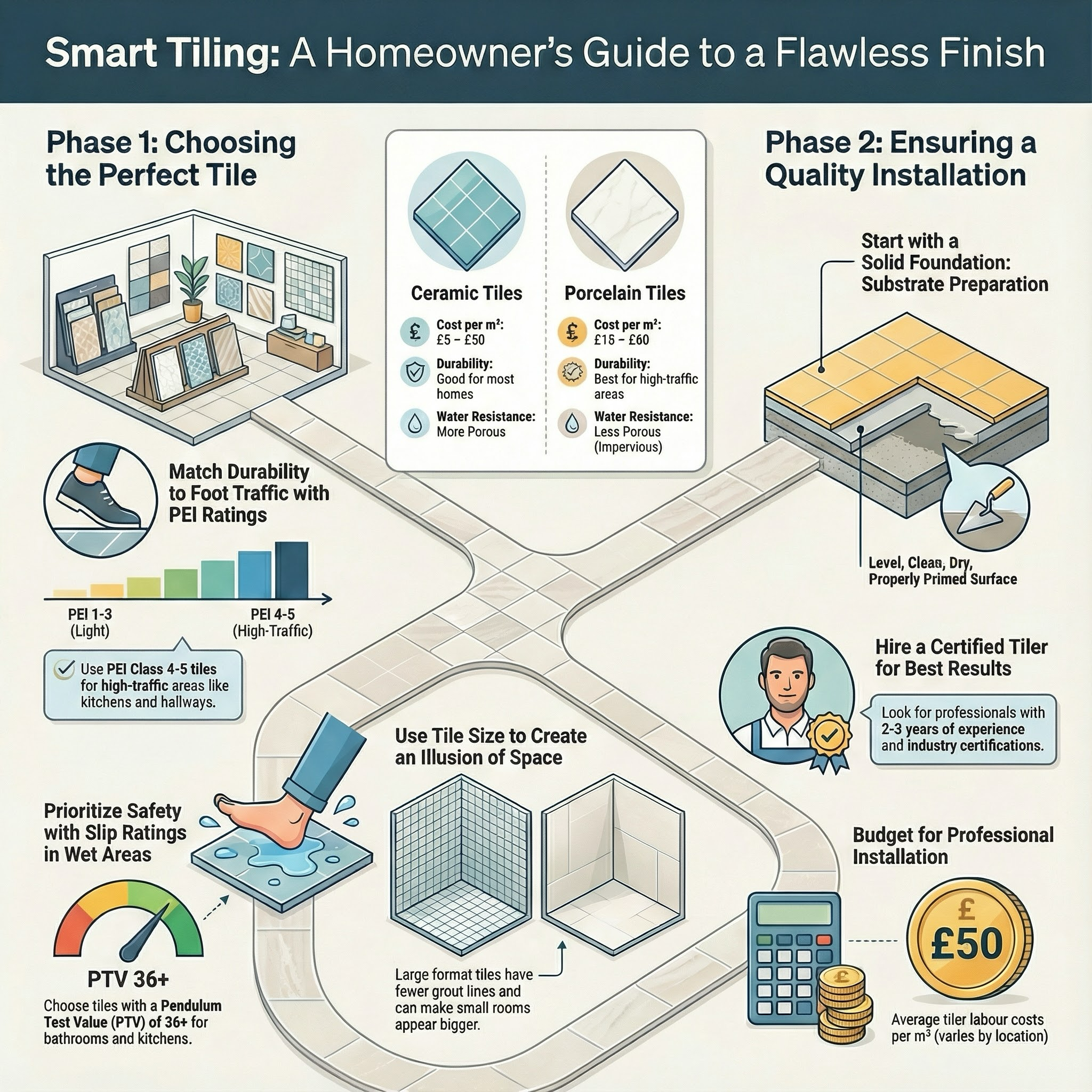
Getting the order right the first time prevents costly delays and ensures your tiler has a consistent "batch" to work with. This guide covers everything from material costs and slip ratings to the logistics of delivery and professional oversight.
Prices for tiles in the UK vary significantly based on material quality and origin. All prices below include VAT and reflect 2025/26 market rates.
| Item | Low £ | High £ | Notes |
|---|---|---|---|
| Standard Ceramic Tiles (per m²) | £15 | £35 | Best for walls; easier to cut. |
| Porcelain Tiles (per m²) | £30 | £75 | Highly durable; suitable for floors. |
| Natural Stone (per m²) | £50 | £150+ | Includes marble, slate, or limestone. |
| Victorian Geometric / Encaustic | £80 | £250 | Intricate designs; high labour cost. |
| Adhesive & Grout (per m²) | £5 | £12 | Flexible options for underfloor heating. |
| Pallet Delivery Fee | £40 | £100 | Standard kerbside delivery charge. |
The primary factors affecting your total spend are the material type and the complexity of the layout. Large-format tiles or intricate herringbone patterns often require more wastage (up to 20%), increasing the initial order cost.
While many homeowners enjoy choosing the aesthetic, the technical side of ordering is best handled—or at least double-checked—by a professional tiler. A pro will identify if your floor needs specific "anti-fracture" matting or if the chosen tile is too heavy for your wall type (wall loading limits).
Note: If you are installing tiles in a bathroom, ensure your tiler follows Part P of the Building Regulations if they are moving any electrical points, and ensure the substrate is properly waterproofed (tanked).
Questions to ask:
Standard practice is 10% for straight-lay patterns and 15% for diagonal or herringbone patterns. For very small rooms with many cuts, 20% is safer.
Porcelain is fired at higher temperatures, making it denser and less porous than ceramic. It is much more durable for floors and is frost-proof for outdoor use.
It is possible (known as "tile-on-tile"), but only if the original tiles are perfectly bonded and the floor height/weight limits allow it. Generally, it is better to strip back to the substrate.
Natural stone (marble, slate, travertine) and some unglazed porcelain always require sealing to prevent staining. Most glazed ceramic and porcelain tiles do not.
Tiles are produced in runs. Even with modern technology, different runs can have tiny variations in colour (shade) and size (calibre). Mixing batches on one wall can be very noticeable.
This guide was written with AI assistance and is intended for general information only. Prices are estimates based on UK averages and may vary by region. Always get at least three quotes and consult a qualified professional before starting any work.
Ask follow-ups in plain English. The AI explains options, sequencing and what to ask the tiler — so you walk in informed.
Updating wall tiles is one of the most effective ways to modernise a UK kitchen or bathroom without a full renovation. Beyond the aesthetic lift, professional t...
READ GUIDE →GuideMosaic tiling is the ultimate way to add texture, colour, and a bespoke feel to your UK home. Whether it’s a kitchen splashback, a wet room floor, or a decorati...
READ GUIDE →GuideVictorian geometric and encaustic tiles are a quintessential feature of British period properties, from London townhouses to seaside villas. These intricate pat...
READ GUIDE →GuideTiling a bathroom wall while incorporating an access hatch is a practical necessity for many UK homes. It allows for seamless aesthetics while providing vital a...
READ GUIDE →GuideBrick tiling, often referred to as "brick slips," has become a staple of UK interior design. Whether you are looking to create an industrial-style feature wall ...
READ GUIDE →GuideBathroom Wall Work Costs Scope of Works Survey & moisture reading – locate damp, loose plaster, failed grout or mould patches. Strip‑out & prep – remove...
READ GUIDE →