Instant
01 · Ask
Ask the AI a follow-up
Got more questions about bathroom wall tiling with access hatch? Describe the bit you're unsure about — the AI explains options, sequencing and what to ask the tiler.

Bathroom wall tiling with concealed access hatch — for boxing-in pipes while keeping serviceable access.
You've read the brief on bathroom wall tiling with access hatch. Now lean on us to find the right tiler — and stay in control of the job.
Got more questions about bathroom wall tiling with access hatch? Describe the bit you're unsure about — the AI explains options, sequencing and what to ask the tiler.
Costs, timelines, pitfalls and the right questions to ask before any tiler starts on bathroom wall tiling with access hatch.
Itemised quotes from up to 3 local tilers on bathroom wall tiling with access hatch — so you can compare like-for-like, not lump sums.
Ready when you are
Enter your postcode and get free quotes from local pros.
Four moves that separate a smooth job from a nightmare.
Tiles on the hatch sitting higher or lower than the wall tiles, creating a trip or snag hazard.
Poorly sealed hatches in showers allowing water to seep behind the tiles, causing rot.
Using standard grout instead of flexible silicone around the hatch, leading to cracks when the hatch is opened.
Using heavy large-format tiles on a hatch frame not rated for the weight, causing the hatch to sag.
Indicative UK ranges and what affects price.
By job type
Quote spread is typically ± 18% — always get 3 quotes.
Tiler quick-view
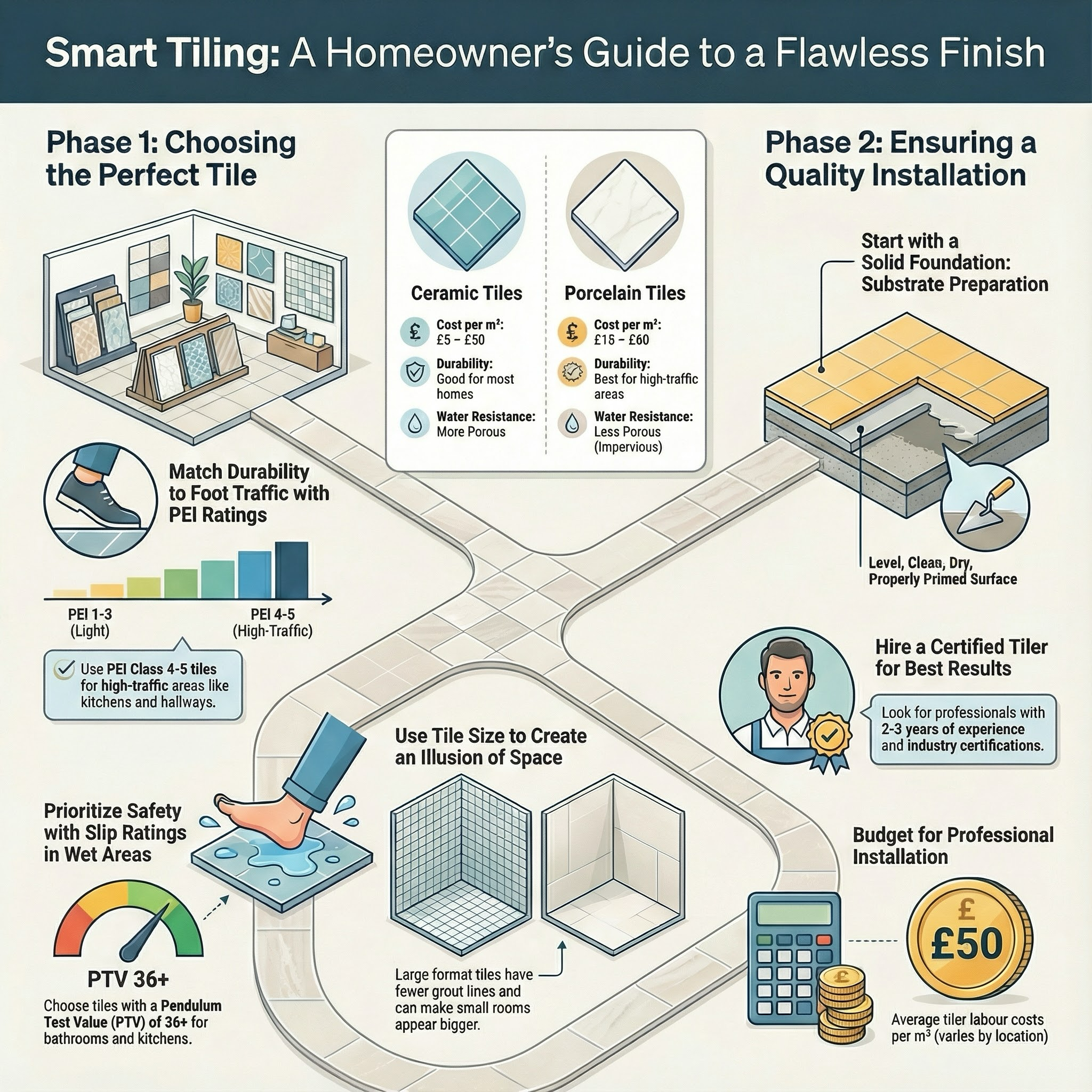
Tiler explained
Whether you are renovating a full suite or simply boxing in a new pipe run, ensuring the hatch is flush and the wall is fully waterproofed is essential for a long-lasting, professional finish.
Prices vary based on the size of the area, the type of tiles (porcelain is harder to cut than ceramic), and the complexity of the hatch mechanism. These estimates include VAT and 2025/26 UK market rates.
| Item | Low £ | High £ | Notes |
|---|---|---|---|
| Labour (per day) | £200 | £350 | Rates are higher in London and the SE. |
| Tile-in Access Hatch | £40 | £120 | Depends on size and weight capacity. |
| Materials (Adhesive/Grout/Tanking) | £80 | £200 | Premium waterproof kits cost more. |
| Waste Disposal | £0 | £100 | Small amounts can go in domestic waste. |
| Total Small Project | £450 | £1,200 | Includes minor wall prep and tiling. |
While a confident DIYer can tile a flat wall, installing a flush access hatch requires high levels of precision. If the hatch is slightly off-level, the entire tile grid will look crooked.
Professional installation is strongly recommended for wet areas like showers. A pro will ensure the tanking (waterproofing) remains continuous around the hatch, preventing dampness from reaching the studwork or the room below.
Yes, but it must be a specialist waterproof, tile-in hatch. The frame must be integrated into the tanking system to ensure no water reaches the wall cavity.
It is a frame designed to have tiles glued directly onto the door. When closed, only a slim 2mm gap (matching your grout lines) is visible, making it almost invisible.
Most tilers prefer you to choose the tiles, but they can often source the correct professional-grade hatch and adhesive. Always confirm this during the quoting stage.
The damaged substrate must be replaced with moisture-resistant board before any tiling begins. This will usually incur an additional labour and material charge.
Most modern hatches use a "touch-latch" (push to open) or a small suction cup tool to pull the panel forward, avoiding the need for handles.
This guide was written with AI assistance and is intended for general information only. Prices are estimates based on UK averages and may vary by region. Always get at least three quotes and consult a qualified professional before starting any work.
Ask follow-ups in plain English. The AI explains options, sequencing and what to ask the tiler — so you walk in informed.
Updating wall tiles is one of the most effective ways to modernise a UK kitchen or bathroom without a full renovation. Beyond the aesthetic lift, professional t...
READ GUIDE →GuideMosaic tiling is the ultimate way to add texture, colour, and a bespoke feel to your UK home. Whether it’s a kitchen splashback, a wet room floor, or a decorati...
READ GUIDE →GuideVictorian geometric and encaustic tiles are a quintessential feature of British period properties, from London townhouses to seaside villas. These intricate pat...
READ GUIDE →GuideOrdering tiles is more than just picking a pattern you like. For UK homeowners, it involves calculating precise quantities, accounting for wastage, and ensuring...
READ GUIDE →GuideBrick tiling, often referred to as "brick slips," has become a staple of UK interior design. Whether you are looking to create an industrial-style feature wall ...
READ GUIDE →GuideBathroom Wall Work Costs Scope of Works Survey & moisture reading – locate damp, loose plaster, failed grout or mould patches. Strip‑out & prep – remove...
READ GUIDE →