Instant
01 · Ask
Ask the AI a follow-up
Got more questions about bathroom wall tiling? Describe the bit you're unsure about — the AI explains options, sequencing and what to ask the tiler.

Ceramic, porcelain or natural stone wall tiles — measured, set out clean, grouted and silicone-sealed.
You've read the brief on bathroom wall tiling. Now lean on us to find the right tiler — and stay in control of the job.
Got more questions about bathroom wall tiling? Describe the bit you're unsure about — the AI explains options, sequencing and what to ask the tiler.
Costs, timelines, pitfalls and the right questions to ask before any tiler starts on bathroom wall tiling.
Itemised quotes from up to 3 local tilers on bathroom wall tiling — so you can compare like-for-like, not lump sums.
Ready when you are
Enter your postcode and get free quotes from local pros.
Four moves that separate a smooth job from a nightmare.
When tiles are not perfectly level with each other, creating a "lip" that catches the light and looks unprofessional.
Skipping the waterproofing stage in a shower is the most common cause of long-term failure and damp issues.
Using "ready-mixed" tub adhesive for large-format porcelain tiles; these require cement-based powder adhesives to set properly.
Starting with a full tile in one corner and ending with a tiny, difficult-to-cut sliver in the most visible area.
Indicative UK ranges and what affects price.
By job type
Quote spread is typically ± 18% — always get 3 quotes.
Tiler quick-view
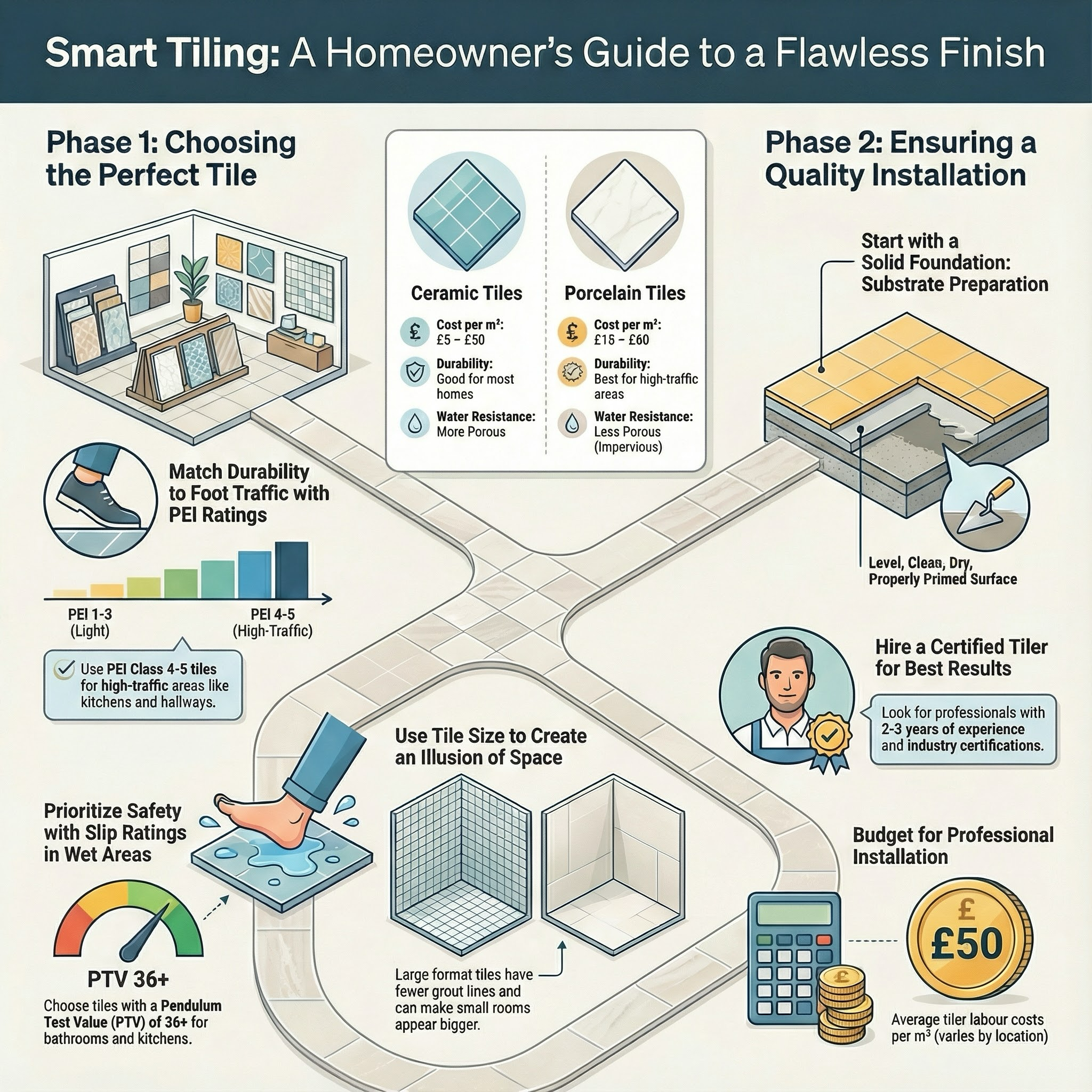
Tiler explained
Whether you are refreshing a small cloakroom or installing a high-end wet room, the success of the project relies heavily on the preparation of the walls and the precision of the finish. Professional tiling ensures your bathroom remains leak-free and aesthetically pleasing for decades.
The cost of bathroom tiling is primarily driven by the condition of the existing walls and the type of tile chosen. Large-format porcelain or natural stone requires more labour and specialist adhesive than standard ceramic tiles.
| Item | Low £ | High £ | Notes | |
|---|---|---|---|---|
| Labour (per m²) | £40 | £75 | Includes VAT; varies by region and tile complexity. | |
| Day Rate | £250 | £450 | Standard rate for a skilled UK tiler. | |
| Materials (Adhesive/Grout) | £15 | £30 | Per m²; premium waterproof products cost more. | |
| Tanking Kit | £70 | £130 | Essential for shower areas (covers approx. 5m²). | |
| Waste Disposal | £50 | £150 | Skip hire or waste removal for old tiles and debris. |
Pro Tip: Always allow for 10-15% "wastage" when ordering tiles to account for cuts, breakages, and future repairs.
While DIY tiling is popular for small splashbacks, full bathroom walls—especially in wet areas—are best left to professionals. Incorrectly installed tiles in a shower can lead to catastrophic water damage that may not be visible until the joists have rotted.
Professionals have the specialist equipment needed for clean cuts in hard porcelain and the expertise to ensure walls are perfectly plumb. If your project involves moving an electric shower or adding new lighting, you must use a Part P registered electrician to comply with UK Building Regulations.
While possible (known as "tile-on-tile"), it is generally discouraged. It adds significant weight to the wall, increases the thickness (which can mess up trim and fixtures), and relies entirely on the bond of the old tiles. It is always better to strip back to the substrate.
Ceramic tiles are generally cheaper and easier to cut but are more porous. Porcelain tiles are denser, harder, and almost entirely waterproof, making them ideal for bathrooms, though they require specialist diamond tools to cut.
Yes. Grout and adhesive are water-resistant but not 100% waterproof. Over time, moisture can seep through to the plasterboard or masonry behind. Tanking creates an impenetrable barrier that protects your home's structure.
You should typically wait at least 24 hours after grouting before using the shower. However, check the specific manufacturer's instructions on the silicone sealant and grout, as some may require 48 hours to fully cure.
Cracking usually indicates movement in the substrate (the wall itself) or that the adhesive wasn't fully set before grouting. In corners, grout often cracks because silicone sealant should have been used instead to allow for natural expansion.
This guide was written with AI assistance and is intended for general information only. Prices are estimates based on UK averages and may vary by region. Always get at least three quotes and consult a qualified professional before starting any work.
Ask follow-ups in plain English. The AI explains options, sequencing and what to ask the tiler — so you walk in informed.
Updating wall tiles is one of the most effective ways to modernise a UK kitchen or bathroom without a full renovation. Beyond the aesthetic lift, professional t...
READ GUIDE →GuideMosaic tiling is the ultimate way to add texture, colour, and a bespoke feel to your UK home. Whether it’s a kitchen splashback, a wet room floor, or a decorati...
READ GUIDE →GuideVictorian geometric and encaustic tiles are a quintessential feature of British period properties, from London townhouses to seaside villas. These intricate pat...
READ GUIDE →GuideOrdering tiles is more than just picking a pattern you like. For UK homeowners, it involves calculating precise quantities, accounting for wastage, and ensuring...
READ GUIDE →GuideTiling a bathroom wall while incorporating an access hatch is a practical necessity for many UK homes. It allows for seamless aesthetics while providing vital a...
READ GUIDE →GuideBrick tiling, often referred to as "brick slips," has become a staple of UK interior design. Whether you are looking to create an industrial-style feature wall ...
READ GUIDE →