Instant
01 · Ask
Wet room or splashback?
Different skills and adhesives for floors, walls, wet rooms and large-format tiles. Describe the job and the AI tells you what to ask for.

Tiling, plastering, painting, panelling — what bathroom wall surface work actually costs.
Read the brief on adhesives, tanking and layout — then let Three local tilers quote on the spec.
Different skills and adhesives for floors, walls, wet rooms and large-format tiles. Describe the job and the AI tells you what to ask for.
C1 vs C2 adhesive, tanking membranes, grout colours, edge profiles, dry-lay rules. The lingo that separates a 5-year job from a 25-year one.
Three local tilers quote on the same spec — adhesive grade, grout, edges, prep — so you can pick craft, not just price.
Ready when you are
Enter your postcode and get free quotes from local pros.
Four moves that separate a smooth job from a nightmare.
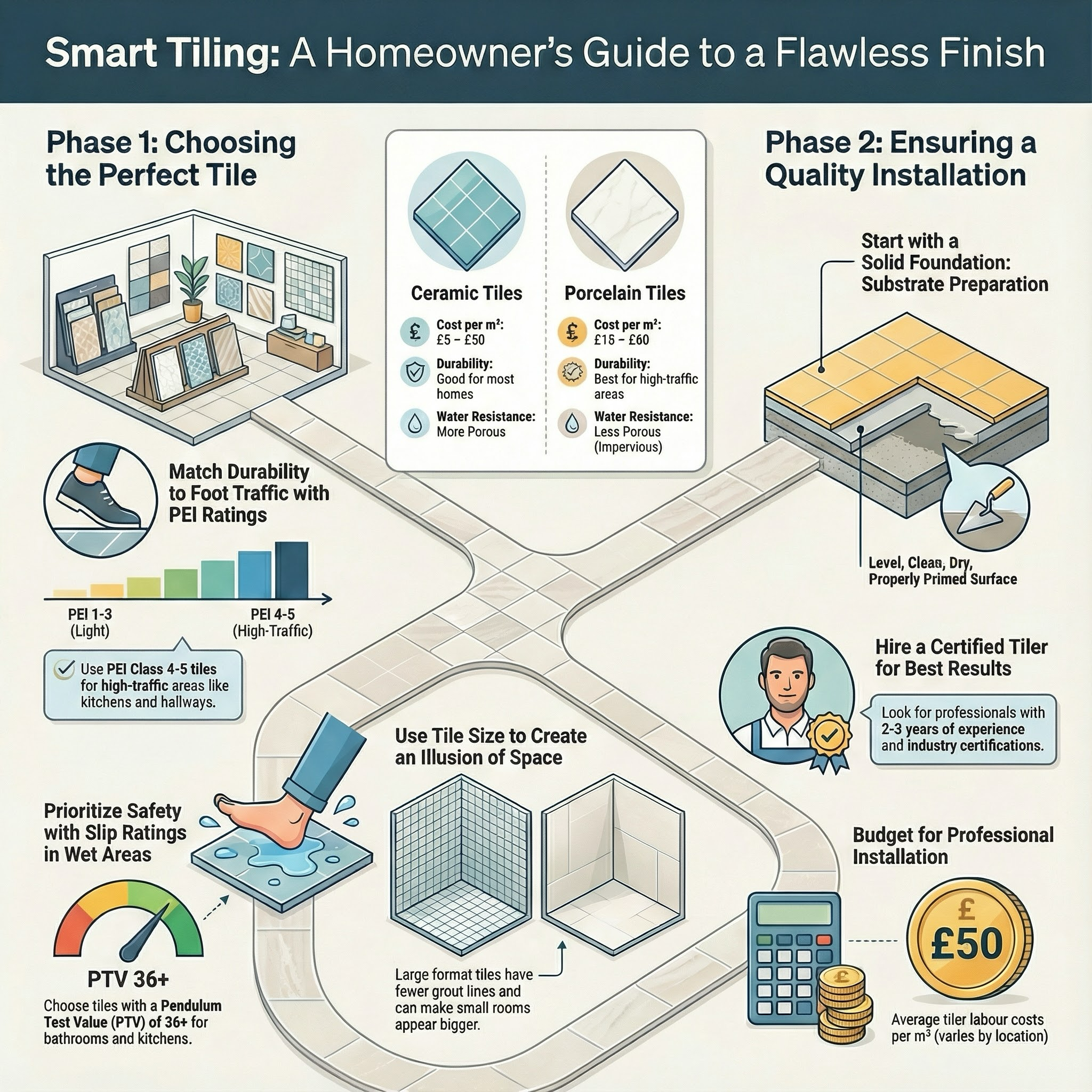
Wet rooms need flexible C2 adhesive. Wall tiles need different adhesive to floor tiles. Cheap rapid-set on a power shower wall is how tiles fall off in 18 months.
If it's a wet room or walk-in shower, the substrate must be tanked (waterproof membrane) before tiles. Skip this and the tile job is a slow leak in waiting.
Tiles should be laid so cuts are even on opposite walls — not full tiles on one side and 20mm slivers on the other. Insist on a dry lay first.
Dark grout on a white tile = stark, grid-like, hides dirt. Pale grout on the same tile = soft, hides mistakes, stains horribly. Choose the grout before you tile.
Indicative UK ranges and what affects price.
By job type
Quote spread is typically ± 18% — always get 3 quotes.
Tiler quick-view
Tiler explained
Bathroom wall tiling in the UK typically costs £40–£90 per m² for tiling labour, plus tiles (£20-£200/m² depending on tile choice). A typical UK bathroom (15-25 m² of wall tiling) totals £900–£3,500 for tiles + labour combined. Premium designs (large-format porcelain, marble, designer tiles) can run £4,500-£9,000+.
The tiling labour rate is the constant; the tile choice drives total cost. £30/m² ceramic tiles vs £180/m² designer porcelain dramatically changes the project budget without changing labour cost.
| Item | Typical price |
|---|---|
| Tiling labour (per m²) | £40–£90 |
| Tiles — high street ceramic | £15–£40 per m² |
| Tiles — porcelain mid-range | £35–£80 per m² |
| Tiles — premium / designer | £80–£200+ per m² |
| Tiles — natural stone | £60–£250+ per m² |
| Mosaic feature tiles | £40–£200+ per m² |
| Adhesive, grout, spacers | £60–£200 per project |
| Tile removal (existing tiles) | £15–£35 per m² |
| Wall preparation / replastering | £20–£60 per m² |
| Total typical bathroom (with mid-range tiles) | £900–£2,500 |
Typical UK bathroom (15-25 m² wall area + floor): £900-£3,500 with mid-range tiles. £4,500-£9,000+ with premium designer tiles. Includes labour, materials, and basic prep.
Single bathroom (typical UK): 4-7 working days. Day 1: removal and prep. Day 2-3: tile main areas. Day 4: detail areas, cuts. Day 5: grout. Day 6-7: silicone sealing, snagging. Adjust for tile complexity.
Modern UK trend: yes, floor-to-ceiling tiling provides a clean look, easy maintenance, and can make small bathrooms feel larger. Cost: ~30% more than waist-high tiling.
Possible if existing tiles are sound, well-bonded, and even. Wall thickness increases. Many tilers prefer to remove existing for cleaner finish. Discuss with the tiler.
Glazed porcelain — non-porous, easy to clean, scratch-resistant. Less maintenance than ceramic (slightly porous) or natural stone (needs sealing).
Quality porcelain installation: 25+ years. Ceramic: 10-15 years. Natural stone: 30+ years if sealed. Most failures are grout (regrout every 7-10 years) or silicone (replace every 2-4 years), not the tiles themselves.
Want a local pro to handle this? A specialist tiler with bathroom experience handles wet-area waterproofing, awkward cuts, and clean finishes. Worth comparing 2-3 quotes; tiling labour rates vary considerably even within local area.
This guide was written with AI assistance and is intended for general information only. Prices are estimates based on UK averages and may vary by region. Always get at least three quotes and consult a qualified professional before starting any work.
Ask follow-ups in plain English. The AI explains options, sequencing and what to ask the tiler — so you walk in informed.
Updating wall tiles is one of the most effective ways to modernise a UK kitchen or bathroom without a full renovation. Beyond the aesthetic lift, professional t...
READ GUIDE →GuideMosaic tiling is the ultimate way to add texture, colour, and a bespoke feel to your UK home. Whether it’s a kitchen splashback, a wet room floor, or a decorati...
READ GUIDE →GuideVictorian geometric and encaustic tiles are a quintessential feature of British period properties, from London townhouses to seaside villas. These intricate pat...
READ GUIDE →GuideOrdering tiles is more than just picking a pattern you like. For UK homeowners, it involves calculating precise quantities, accounting for wastage, and ensuring...
READ GUIDE →GuideTiling a bathroom wall while incorporating an access hatch is a practical necessity for many UK homes. It allows for seamless aesthetics while providing vital a...
READ GUIDE →GuideBrick tiling, often referred to as "brick slips," has become a staple of UK interior design. Whether you are looking to create an industrial-style feature wall ...
READ GUIDE →