Instant
01 · Ask
Ask the AI a follow-up
Got more questions about decorative Wall Tiling? Describe the bit you're unsure about — the AI explains options, sequencing and what to ask the tiler.

Feature wall tiling — encaustic, metro, fish-scale or designer tiles. Laid in pattern by a specialist.
You've read the brief on decorative Wall Tiling. Now lean on us to find the right tiler — and stay in control of the job.
Got more questions about decorative Wall Tiling? Describe the bit you're unsure about — the AI explains options, sequencing and what to ask the tiler.
Costs, timelines, pitfalls and the right questions to ask before any tiler starts on decorative Wall Tiling.
Itemised quotes from up to 3 local tilers on decorative Wall Tiling — so you can compare like-for-like, not lump sums.
Ready when you are
Enter your postcode and get free quotes from local pros.
Four moves that separate a smooth job from a nightmare.
When tiles are not perfectly flush with one another, creating a "lip" that catches the light and looks amateurish.
Failing to centre the pattern, resulting in tiny, ugly slivers of tile in the corners or at the ceiling line.
Using "ready-mixed" tub adhesive for large format or porcelain tiles; these often require cement-based powder adhesive to bond correctly.
Tiling "tight" into corners without leaving a gap for silicone can cause tiles to crack or "pop" when the house naturally settles.
Indicative UK ranges and what affects price.
By job type
Quote spread is typically ± 18% — always get 3 quotes.
Tiler quick-view
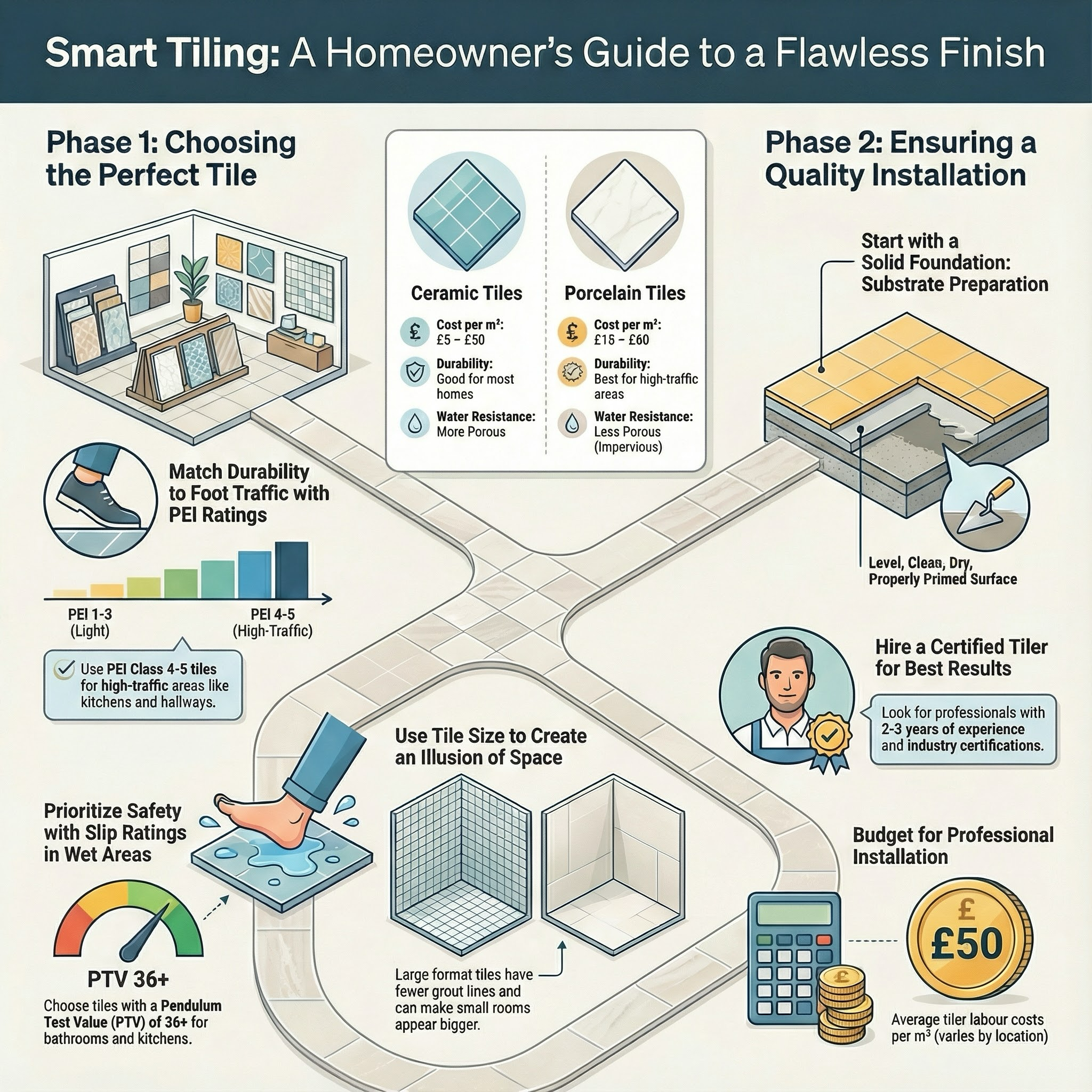
Tiler explained
For UK homeowners, investing in professional decorative tiling not only elevates the aesthetic of a property but also ensures the longevity of the installation. A well-executed job prevents moisture ingress and ensures the substrate can support the weight of the chosen materials, protecting your home's structure and your investment.
| Item | Low £ | High £ | Notes |
|---|---|---|---|
| Labour (per m2) | £45 | £90 | Higher rates for intricate patterns like herringbone. |
| Materials (Adhesive/Grout) | £15 | £25 | Per m2; includes high-flex adhesive and epoxy grout. |
| Surface Preparation | £150 | £400 | Includes priming and minor levelling/plastering. |
| Minimum Call-out Fee | £150 | £250 | Standard for small splashbacks or repair work. |
Several factors will influence your final quote, primarily the complexity of the pattern and the type of tile. Intricate mosaics or natural stone tiles take significantly longer to install than standard ceramic tiles, and waste margins are typically higher (15% vs 10%) for decorative layouts.
While basic tiling is a common DIY task, decorative tiling is significantly more challenging. Mistakes in the "setting out" phase can lead to lopsided patterns that are impossible to fix once the adhesive sets.
Professional tilers carry the expensive wet saws required for clean cuts in porcelain or stone and understand the British Standards for substrate preparation. If your project involves wet rooms or heavy tiles, a professional is essential to ensure the installation is waterproof and safe. Note that any electrical work around your tiling (like moving sockets) must be handled by a Part P certified electrician.
Professional decorative tiling is 90% preparation and 10% fixing. If the layout isn't perfect on paper, it won't be perfect on the wall.
While possible ("tile-on-tile"), it is rarely recommended for decorative work. It adds significant weight to the wall, increases the depth (which affects socket fittings), and relies entirely on the bond of the old tiles. For a premium finish, always strip back to the substrate.
Herringbone patterns require significantly more cuts and a much longer "setting out" period. The tiler must constantly check for squareness, as a 1mm error at the start can become a 10mm gap by the end of the wall.
In a standard kitchen, "tanking" isn't usually necessary unless the area is prone to heavy splashing. However, using a high-quality epoxy grout can provide a water-resistant and stain-proof finish that is much easier to clean.
Ceramic is softer and easier to cut, making it cheaper to install. Porcelain is denser, harder-wearing, and moisture-resistant, but requires specialist diamond-tipped tools and specific adhesives, which increases labour costs.
Calculate the square meterage (height x width) and add 10% for standard layouts. For decorative patterns like herringbone or diagonal layouts, add 15-20% to account for the increased number of cuts and potential breakages.
This guide was written with AI assistance and is intended for general information only. Prices are estimates based on UK averages and may vary by region. Always get at least three quotes and consult a qualified professional before starting any work.
Ask follow-ups in plain English. The AI explains options, sequencing and what to ask the tiler — so you walk in informed.
Updating wall tiles is one of the most effective ways to modernise a UK kitchen or bathroom without a full renovation. Beyond the aesthetic lift, professional t...
READ GUIDE →GuideMosaic tiling is the ultimate way to add texture, colour, and a bespoke feel to your UK home. Whether it’s a kitchen splashback, a wet room floor, or a decorati...
READ GUIDE →GuideVictorian geometric and encaustic tiles are a quintessential feature of British period properties, from London townhouses to seaside villas. These intricate pat...
READ GUIDE →GuideOrdering tiles is more than just picking a pattern you like. For UK homeowners, it involves calculating precise quantities, accounting for wastage, and ensuring...
READ GUIDE →GuideTiling a bathroom wall while incorporating an access hatch is a practical necessity for many UK homes. It allows for seamless aesthetics while providing vital a...
READ GUIDE →GuideBrick tiling, often referred to as "brick slips," has become a staple of UK interior design. Whether you are looking to create an industrial-style feature wall ...
READ GUIDE →