Instant
01 · Ask
Ask the AI a follow-up
Got more questions about floor Tile Installation? Describe the bit you're unsure about — the AI explains options, sequencing and what to ask the tiler.

Porcelain, ceramic or natural stone floor tiles — laid on a prepped sub-floor, grouted and sealed.
You've read the brief on floor Tile Installation. Now lean on us to find the right tiler — and stay in control of the job.
Got more questions about floor Tile Installation? Describe the bit you're unsure about — the AI explains options, sequencing and what to ask the tiler.
Costs, timelines, pitfalls and the right questions to ask before any tiler starts on floor Tile Installation.
Itemised quotes from up to 3 local tilers on floor Tile Installation — so you can compare like-for-like, not lump sums.
Ready when you are
Enter your postcode and get free quotes from local pros.
Four moves that separate a smooth job from a nightmare.
When one tile edge sits higher than its neighbour, creating a trip hazard and an unsightly finish. Often caused by uneven subfloors or poor technique.
Usually occurs on timber floors where there is too much "bounce" or flex. This is avoided by using flexible adhesive and over-boarding with cement sheets.
A "cowboy" technique where adhesive is only put on corners. This leaves voids under the tile, making them incredibly easy to crack if something is dropped.
Ending up with a tiny "sliver" of tile against a prominent wall because the room wasn't measured from the centre.
Indicative UK ranges and what affects price.
By job type
Quote spread is typically ± 18% — always get 3 quotes.
Tiler quick-view
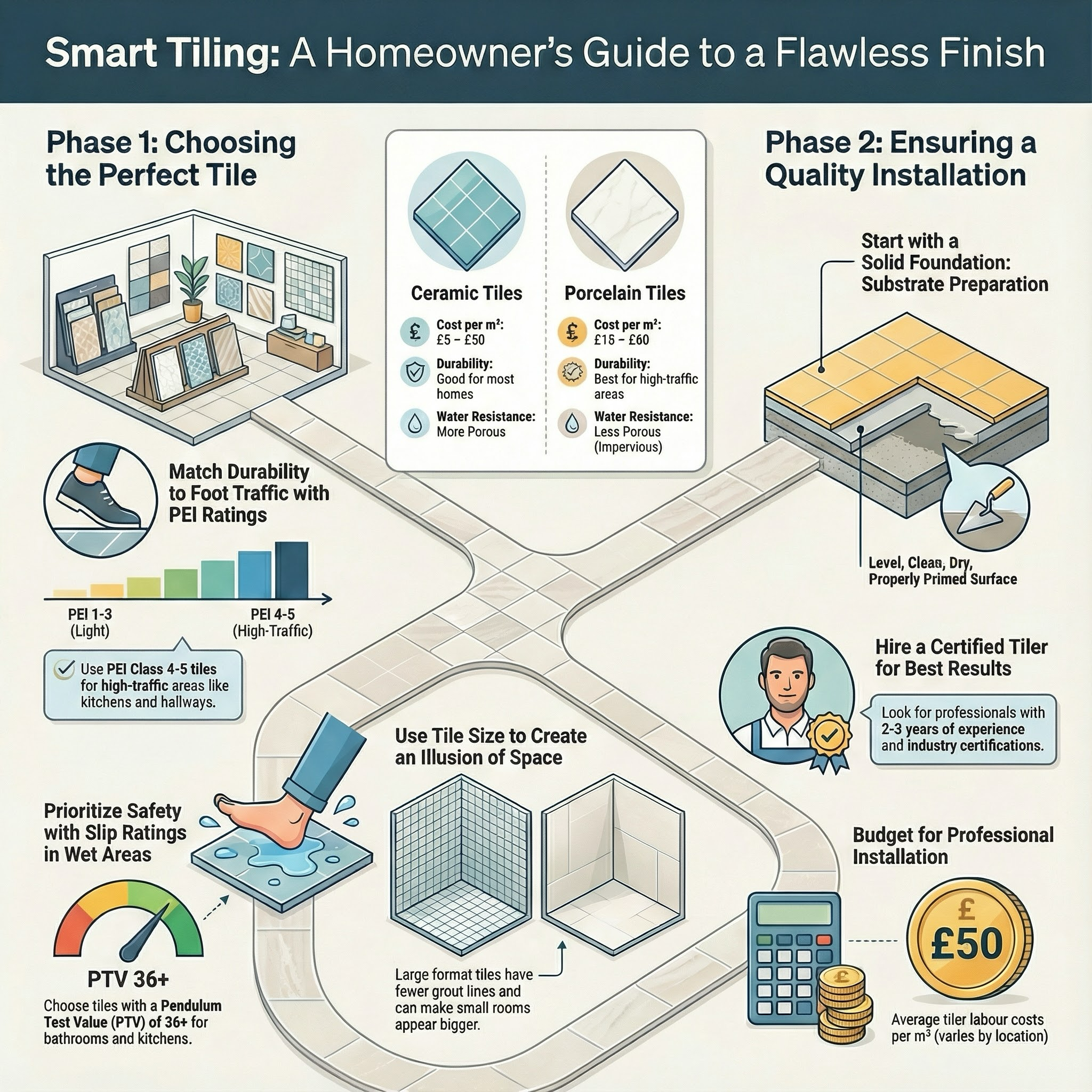
Tiler explained
However, the success of a tiling project relies heavily on what lies beneath the surface. From ensuring the subfloor is perfectly level to selecting the right adhesive for your specific tile type, professional installation prevents common issues like cracking, "lippage" (uneven edges), and grout failure.
The cost of tiling in the UK is usually calculated per square metre, though many tilers have a minimum day rate for smaller rooms like downstairs WCs. Prices vary based on your location and the complexity of the tile material (natural stone is more expensive to lay than ceramic).
| Item | Low £ | High £ | Notes |
|---|---|---|---|
| Labour (per m²) | £35 | £65 | Higher for herringbone or Victorian patterns. |
| Materials (Adhesive & Grout) | £10 | £20 | Per m², depends on joint width and brand. |
| Subfloor Prep (Self-levelling) | £15 | £30 | Per m², including primer and compound. |
| Standard Ceramic Tiles | £15 | £40 | Per m², budget to mid-range options. |
| Premium Porcelain/Stone | £45 | £120+ | Per m², natural stone requires sealing. |
| Minimum Call-out Fee | £150 | £250 | Common for very small porch or cloakroom jobs. |
Factors affecting the final quote include the size of the tiles (large format tiles require two-man lifting and more prep), the need for decoupling membranes on wooden floors, and whether old tiles need to be removed and disposed of.
While DIY tiling is popular, it is physically demanding and leaves no room for error. Professional tilers have the expensive wet saws required for clean cuts in hard porcelain and the expertise to ensure a floor is "flat" rather than just "level." In the UK, if you are installing electric underfloor heating (UFH) beneath your tiles, a qualified electrician must sign off the final connections to comply with Part P Building Regulations.
Poorly laid tiles are prone to "blown" joints and cracking if the subfloor flexes. Hiring a pro is often cheaper than replacing ruined expensive tiles and starting again.
No, you should never tile directly onto standard floorboards. The wood expands and contracts, which will cause tiles to crack and grout to pop out. You must first overboard the floor with 6mm-12mm cement backer boards or a decoupling membrane.
Porcelain is fired at higher temperatures, making it denser, harder, and less porous than ceramic. It is much more durable for high-traffic floor areas but is harder to cut and requires a specialist tiler.
It isn't strictly necessary, but removing them allows the tiler to lay tiles closer to the wall for a much neater finish. If you leave them on, the tiler will have to use "beading" or silicone to cover the expansion gap, which can look less professional.
The standard rule is to order 10% more than the measured area to account for cuts and breakages. If you are laying a complex pattern like herringbone, increase this to 15%.
Technically yes ("tile-on-tile"), provided the original tiles are perfectly flat and firmly bonded. However, it raises the floor height, which can cause issues with door clearances and creates a potential point of failure if the bottom layer lifts.
Most standard adhesives require 24 hours to set. "Rapid set" adhesives can be walked on in 3-4 hours, but you should always wait until the grout is fully cured before moving heavy furniture back into the room.
This guide was written with AI assistance and is intended for general information only. Prices are estimates based on UK averages and may vary by region. Always get at least three quotes and consult a qualified professional before starting any work.
Ask follow-ups in plain English. The AI explains options, sequencing and what to ask the tiler — so you walk in informed.
Updating wall tiles is one of the most effective ways to modernise a UK kitchen or bathroom without a full renovation. Beyond the aesthetic lift, professional t...
READ GUIDE →GuideMosaic tiling is the ultimate way to add texture, colour, and a bespoke feel to your UK home. Whether it’s a kitchen splashback, a wet room floor, or a decorati...
READ GUIDE →GuideVictorian geometric and encaustic tiles are a quintessential feature of British period properties, from London townhouses to seaside villas. These intricate pat...
READ GUIDE →GuideOrdering tiles is more than just picking a pattern you like. For UK homeowners, it involves calculating precise quantities, accounting for wastage, and ensuring...
READ GUIDE →GuideTiling a bathroom wall while incorporating an access hatch is a practical necessity for many UK homes. It allows for seamless aesthetics while providing vital a...
READ GUIDE →GuideBrick tiling, often referred to as "brick slips," has become a staple of UK interior design. Whether you are looking to create an industrial-style feature wall ...
READ GUIDE →