Instant
01 · Ask
Ask the AI a follow-up
Got more questions about natural Stone Tiling Process? Describe the bit you're unsure about — the AI explains options, sequencing and what to ask the tiler.

Marble, slate, travertine or limestone — laid with proper bedding, grouted, sealed.
You've read the brief on natural Stone Tiling Process. Now lean on us to find the right tiler — and stay in control of the job.
Got more questions about natural Stone Tiling Process? Describe the bit you're unsure about — the AI explains options, sequencing and what to ask the tiler.
Costs, timelines, pitfalls and the right questions to ask before any tiler starts on natural Stone Tiling Process.
Itemised quotes from up to 3 local tilers on natural Stone Tiling Process — so you can compare like-for-like, not lump sums.
Ready when you are
Enter your postcode and get free quotes from local pros.
Four moves that separate a smooth job from a nightmare.
Uneven tile edges caused by poor levelling or failing to account for varying tile thicknesses.
White powdery salts rising to the surface, often due to moisture trapped behind the stone during installation.
A dark border around the edge of the tile caused by using the wrong adhesive or grout on unsealed stone.
Usually caused by "deflection" (bounce) in timber floors that haven't been properly braced or over-boarded.
Indicative UK ranges and what affects price.
By job type
Quote spread is typically ± 18% — always get 3 quotes.
Tiler quick-view
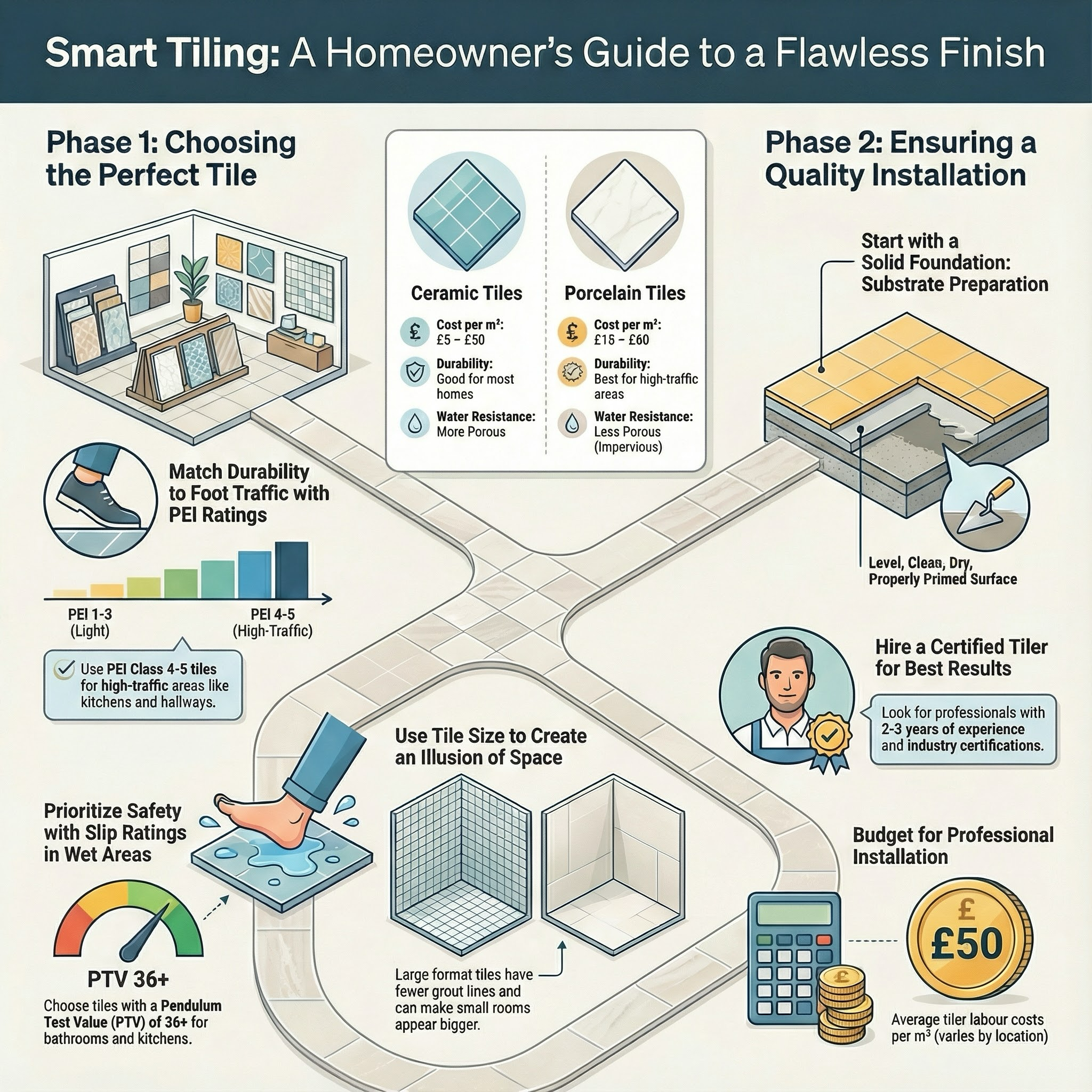
Tiler explained
However, natural stone is a "live" material that is porous, heavy, and often varies in thickness. Professional installation is essential to ensure the substrate can support the weight and that the stone is properly sealed against moisture and stains.
The cost of natural stone tiling varies significantly based on the stone type and the complexity of the room. Expect to pay a premium for labour compared to standard ceramic tiling due to the extra weight and sealing requirements.
| Item | Low £ | High £ | Notes |
|---|---|---|---|
| Labour (per m²) | £50 | £95 | Includes prep, fixing, and sealing. |
| Natural Stone Tiles (per m²) | £35 | £160+ | Slate is cheaper; Marble/Travertine is higher. |
| Adhesives & Grout (per m²) | £15 | £25 | Must be stone-specific (white or grey). |
| Specialist Sealer (per litre) | £25 | £55 | Covers approx. 10–15m² per coat. |
Prices generally include VAT. Costs will rise if the subfloor requires significant reinforcement or if you opt for intricate patterns like herringbone or Versailles modular layouts.
While DIY is possible for experienced renovators, natural stone is notoriously unforgiving. It is heavy, expensive, and easily ruined by the wrong adhesive or poor sealing. Professional installation is strongly recommended for stone to ensure the finish doesn't crack due to subfloor movement or stain during the grouting process.
Natural stone requires "white" rapid-set adhesives for lighter stones like Carrara marble; using standard grey adhesive can cause permanent staining through the stone's surface.
Ideally, yes. Applying a "pre-sealer" or "grout protector" before fixing or grouting prevents the stone from absorbing the pigments in the grout, which can lead to permanent staining.
Yes, natural stone is an excellent conductor of heat. However, you must use a flexible adhesive and grout, and an "uncoupling membrane" (like Ditra matting) to prevent the stone from cracking during thermal expansion.
In high-traffic areas like kitchens or wet rooms, you should typically re-seal every 12–24 months. You can test this by dropping water on the tile; if it beads, the seal is intact. If it soaks in, it’s time to re-seal.
Stone is porous and absorbs moisture from the adhesive. It should return to its original colour once fully dry, but if "grey" adhesive was used on light stone, it may be permanently darkened.
Never use acidic or "bleach-based" supermarket cleaners, as these eat away at the stone and the sealant. Use a pH-neutral stone soap specifically designed for natural materials.
This guide was written with AI assistance and is intended for general information only. Prices are estimates based on UK averages and may vary by region. Always get at least three quotes and consult a qualified professional before starting any work.
Ask follow-ups in plain English. The AI explains options, sequencing and what to ask the tiler — so you walk in informed.
Updating wall tiles is one of the most effective ways to modernise a UK kitchen or bathroom without a full renovation. Beyond the aesthetic lift, professional t...
READ GUIDE →GuideMosaic tiling is the ultimate way to add texture, colour, and a bespoke feel to your UK home. Whether it’s a kitchen splashback, a wet room floor, or a decorati...
READ GUIDE →GuideVictorian geometric and encaustic tiles are a quintessential feature of British period properties, from London townhouses to seaside villas. These intricate pat...
READ GUIDE →GuideOrdering tiles is more than just picking a pattern you like. For UK homeowners, it involves calculating precise quantities, accounting for wastage, and ensuring...
READ GUIDE →GuideTiling a bathroom wall while incorporating an access hatch is a practical necessity for many UK homes. It allows for seamless aesthetics while providing vital a...
READ GUIDE →GuideBrick tiling, often referred to as "brick slips," has become a staple of UK interior design. Whether you are looking to create an industrial-style feature wall ...
READ GUIDE →