Instant
01 · Ask
Ask the AI a follow-up
Got more questions about plain Tile Installation? Describe the bit you're unsure about — the AI explains options, sequencing and what to ask the tiler.

Standard ceramic or porcelain tiles on a wall or floor — set out from centre, grouted and finished.
You've read the brief on plain Tile Installation. Now lean on us to find the right tiler — and stay in control of the job.
Got more questions about plain Tile Installation? Describe the bit you're unsure about — the AI explains options, sequencing and what to ask the tiler.
Costs, timelines, pitfalls and the right questions to ask before any tiler starts on plain Tile Installation.
Itemised quotes from up to 3 local tilers on plain Tile Installation — so you can compare like-for-like, not lump sums.
Ready when you are
Enter your postcode and get free quotes from local pros.
Four moves that separate a smooth job from a nightmare.
When one tile edge sits higher than its neighbour, creating a trip hazard and a poor look. This is usually caused by an unlevel subfloor.
Often caused by movement in the subfloor. Using a decoupling membrane or flexible adhesive can prevent this.
A white salty residue that can appear on grout lines, often due to moisture trapped behind the tiles during installation.
Using the wrong adhesive for the substrate (e.g., using standard adhesive on a calcium sulphate screed without priming).
Indicative UK ranges and what affects price.
By job type
Quote spread is typically ± 18% — always get 3 quotes.
Tiler quick-view
Tiler explained
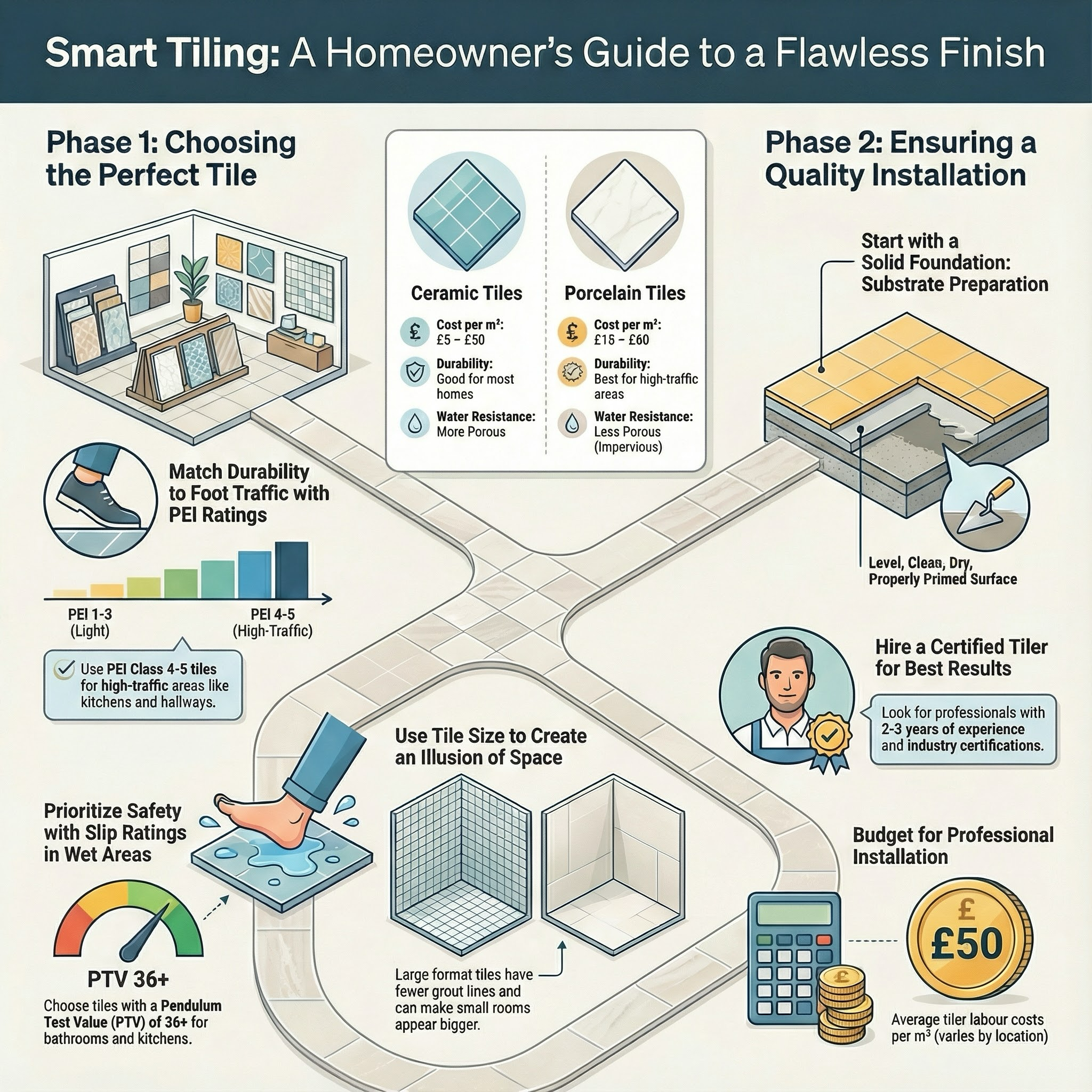
Investing in professional installation ensures your surfaces are not only aesthetically pleasing but also fully waterproof and durable. This guide covers everything from current UK market rates to the technical standards your tiler should follow.
Prices for tile installation in the UK vary based on your location and the type of tile being used. Porcelain is generally more expensive to install than ceramic due to its hardness and the need for specialist diamond drill bits and blades.
| Item | Low £ | High £ | Notes |
|---|---|---|---|
| Labour (per m²) | £35 | £65 | Depends on tile size and pattern complexity. |
| Adhesive & Grout (per m²) | £10 | £20 | Higher for epoxy grout or flexible adhesives. |
| Self-Levelling Compound | £15 | £25 | Per m²; essential for uneven floors. |
| Minimum Call-out Fee | £150 | £250 | Covers small repairs or splashbacks. |
| Surface Priming/Prep | £5 | £10 | Per m² to ensure proper adhesion. |
Factors that increase the price include the use of large-format tiles (which require two-man lifting), intricate "herringbone" or "brick-bond" layouts, and the need for extensive tanking (waterproofing) in wet rooms.
While a confident DIYer can handle a small, flat splashback, floor tiling is significantly more challenging. Incorrectly prepared floors can lead to "lippage" (uneven tile edges) or cracked grout within months.
Professional tilers use specialist equipment like wet saws and laser levels that ensure a finish DIY tools simply cannot match, especially with large-format plain tiles where errors are obvious.
If you are working in a bathroom, professional installation is vital to ensure the area is 100% watertight. Failure to follow British Standard BS 5385 can lead to leaks that damage the structural timber of your home.
3 Questions to ask your tiler:
While possible ("tile-on-tile"), it is rarely recommended. It adds weight to the wall, increases the floor height, and relies on the bond of the old tiles being perfect. It is almost always better to strip back to the substrate.
Standard glazed ceramic and porcelain tiles do not require sealing. However, unglazed porcelain, encaustic tiles, and natural stone must be sealed to prevent staining and moisture absorption.
A decoupling membrane (like Schluter-DITRA) is a layer placed between the floor and the tiles. It allows for lateral movement, preventing the tiles from cracking if the house settles or the underfloor heating expands. It is highly recommended for all floor installations.
Most standard adhesives require 24 hours to set before you can walk on them or apply grout. Rapid-set adhesives can be ready in as little as 3 hours, but your tiler will advise based on the specific products used.
Porcelain is much denser and harder than ceramic. It requires specialist diamond-tipped tools to cut and drill, which takes more time and wears out equipment faster, leading to a higher labour rate.
This guide was written with AI assistance and is intended for general information only. Prices are estimates based on UK averages and may vary by region. Always get at least three quotes and consult a qualified professional before starting any work.
Ask follow-ups in plain English. The AI explains options, sequencing and what to ask the tiler — so you walk in informed.
Updating wall tiles is one of the most effective ways to modernise a UK kitchen or bathroom without a full renovation. Beyond the aesthetic lift, professional t...
READ GUIDE →GuideMosaic tiling is the ultimate way to add texture, colour, and a bespoke feel to your UK home. Whether it’s a kitchen splashback, a wet room floor, or a decorati...
READ GUIDE →GuideVictorian geometric and encaustic tiles are a quintessential feature of British period properties, from London townhouses to seaside villas. These intricate pat...
READ GUIDE →GuideOrdering tiles is more than just picking a pattern you like. For UK homeowners, it involves calculating precise quantities, accounting for wastage, and ensuring...
READ GUIDE →GuideTiling a bathroom wall while incorporating an access hatch is a practical necessity for many UK homes. It allows for seamless aesthetics while providing vital a...
READ GUIDE →GuideBrick tiling, often referred to as "brick slips," has become a staple of UK interior design. Whether you are looking to create an industrial-style feature wall ...
READ GUIDE →