Instant
01 · Ask
Ask the AI a follow-up
Got more questions about pub floor tiling? Describe the bit you're unsure about — the AI explains options, sequencing and what to ask the tiler.

Commercial pub or restaurant floor tiling — porcelain or anti-slip stone for high-traffic, food-safe areas.
You've read the brief on pub floor tiling. Now lean on us to find the right tiler — and stay in control of the job.
Got more questions about pub floor tiling? Describe the bit you're unsure about — the AI explains options, sequencing and what to ask the tiler.
Costs, timelines, pitfalls and the right questions to ask before any tiler starts on pub floor tiling.
Itemised quotes from up to 3 local tilers on pub floor tiling — so you can compare like-for-like, not lump sums.
Ready when you are
Enter your postcode and get free quotes from local pros.
Four moves that separate a smooth job from a nightmare.
When one tile edge is higher than its neighbour, creating a trip hazard. This is common with large-format tiles on uneven subfloors.
Using standard domestic grout which is slowly eaten away by acidic drinks and harsh industrial floor scrubbers.
Failing to install expansion joints in large areas, leading to tiles "tented" or cracking as the building settles or temperatures change.
Incorrectly pitched tiles in bar or kitchen areas that allow water to pool rather than flow toward drains.
Indicative UK ranges and what affects price.
By job type
Quote spread is typically ± 18% — always get 3 quotes.
Tiler quick-view
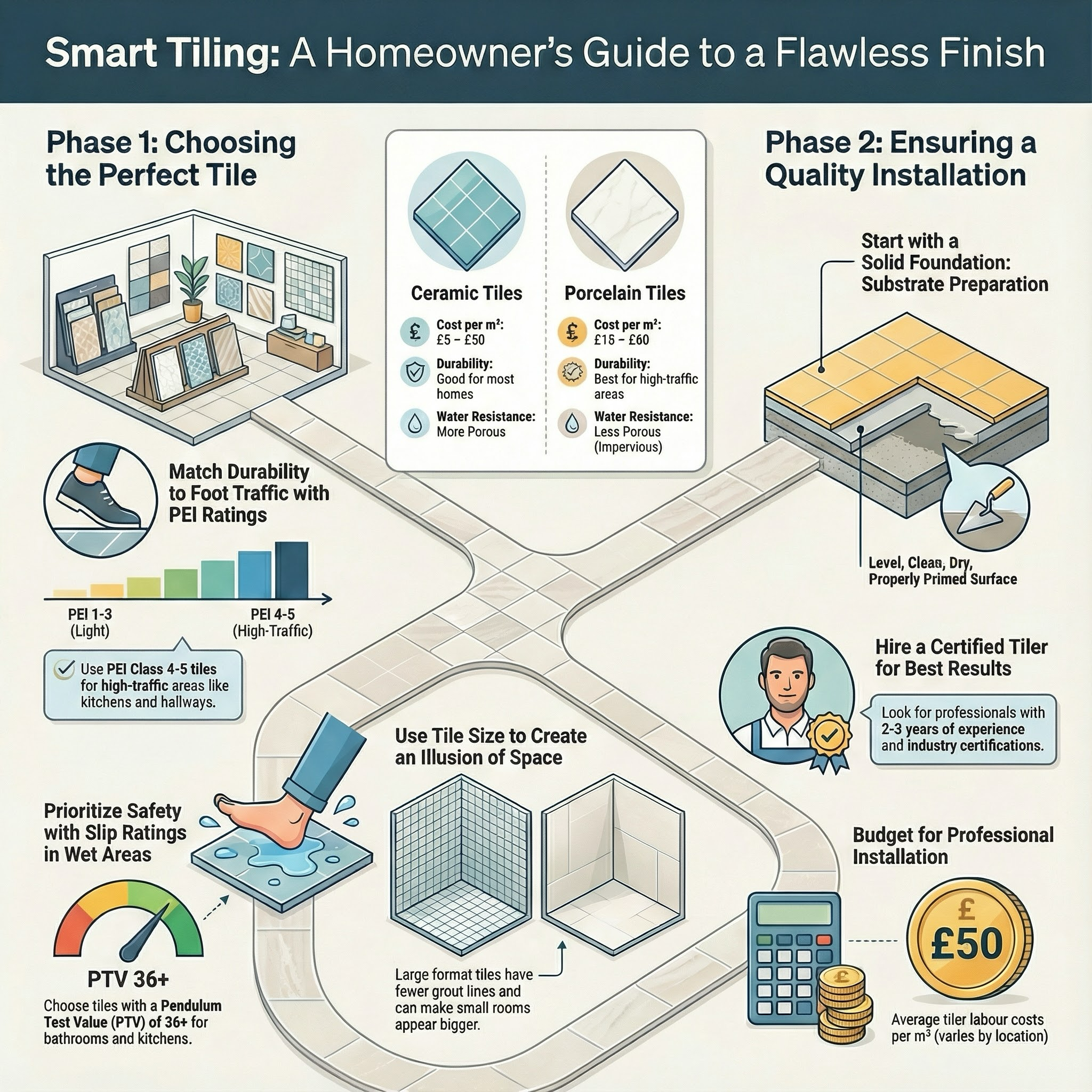
Tiler explained
For UK pub owners, a floor isn't just about aesthetics; it is a vital safety component. Choosing the right commercial-grade tiling ensures you meet Health and Safety Executive (HSE) requirements while providing a durable, easy-to-clean surface that can withstand the rigours of a busy hospitality environment.
Pricing for pub tiling is generally higher than residential work due to the requirement for higher-spec materials and the often-unsociable hours required to avoid closing the business. All prices below include VAT at 20%.
| Item | Low £ | High £ | Notes |
|---|---|---|---|
| Minimum Charge / Call-out | £150 | £250 | Small repairs or initial site assessments. |
| Labour (per m²) | £45 | £85 | Higher rates for intricate patterns or night shifts. |
| Commercial Tiles (per m²) | £35 | £110 | Must meet R11 or R12 slip resistance ratings. |
| Subfloor Prep & Screed | £20 | £45 | Includes grinding and self-levelling compounds. |
| Waste Disposal | £120 | £500 | Skips and commercial waste transfer notes. |
| Out-of-Hours Premium | +20% | +50% | Additional cost for overnight or weekend work. |
Total project costs are heavily influenced by the condition of the existing subfloor and the "slip rating" of the tiles selected. High-traffic areas near bars and kitchens often require specialist epoxy grouts which, while more expensive, prevent liquid penetration and odours.
Pub tiling is strictly a professional-only task. Residential tiling skills do not translate to the high-pressure environment of a commercial pub for several reasons.
Firstly, the liability involved is significant. If a customer slips and your floor does not meet the Pendulum Test Value (PTV) requirements, your insurance may be void. Professionals use specific mechanical preparation tools and commercial adhesives that ensure the tiles do not "de-bond" under heavy keg trolleys or high-heeled shoes. Furthermore, a professional tiler can work through the night to ensure your business remains open during peak trading hours.
Key Questions to Ask: "Do you use a dust-extraction system during the grinding phase?" and "Can you provide a written guarantee that the grout used is resistant to beer and acidic cleaners?"
While possible if the existing tiles are perfectly bonded, it is rarely recommended in a pub. It raises the floor height, creating trip hazards at door frames, and you cannot guarantee the integrity of the old adhesive under commercial loads.
Full-bodied porcelain tiles are the industry standard. Unlike ceramic tiles, the colour goes all the way through, so chips are less visible. Ensure they have a minimum R11 slip rating for public areas.
Most commercial tilers specialising in hospitality will offer "out-of-hours" shifts. This usually incurs a premium of 20-50% on labour costs but prevents the loss of trading revenue.
Avoid wax-based cleaners which create a slippery film. Use a pH-neutral commercial detergent and a deck brush or scrubber-dryer machine to ensure grease is removed from the tile's texture.
Epoxy grout is made from resins and fillers. It is waterproof, stain-proof, and chemical-resistant. In a pub, it prevents beer and milk from soaking into the grout lines and smelling over time.
Usually, no. Fixed bars stay in place, but moveable tables and chairs must be cleared by the pub staff before the tiler arrives. Always clarify this in your initial quote to avoid delays.
This guide was written with AI assistance and is intended for general information only. Prices are estimates based on UK averages and may vary by region. Always get at least three quotes and consult a qualified professional before starting any work.
Ask follow-ups in plain English. The AI explains options, sequencing and what to ask the tiler — so you walk in informed.
Updating wall tiles is one of the most effective ways to modernise a UK kitchen or bathroom without a full renovation. Beyond the aesthetic lift, professional t...
READ GUIDE →GuideMosaic tiling is the ultimate way to add texture, colour, and a bespoke feel to your UK home. Whether it’s a kitchen splashback, a wet room floor, or a decorati...
READ GUIDE →GuideVictorian geometric and encaustic tiles are a quintessential feature of British period properties, from London townhouses to seaside villas. These intricate pat...
READ GUIDE →GuideOrdering tiles is more than just picking a pattern you like. For UK homeowners, it involves calculating precise quantities, accounting for wastage, and ensuring...
READ GUIDE →GuideTiling a bathroom wall while incorporating an access hatch is a practical necessity for many UK homes. It allows for seamless aesthetics while providing vital a...
READ GUIDE →GuideBrick tiling, often referred to as "brick slips," has become a staple of UK interior design. Whether you are looking to create an industrial-style feature wall ...
READ GUIDE →