Instant
01 · Ask
Ask the AI a follow-up
Got more questions about quartz Tile Installation? Describe the bit you're unsure about — the AI explains options, sequencing and what to ask the tiler.

Premium engineered quartz tiles — uniform colour, high-density. For modern luxury kitchens and bathrooms.
You've read the brief on quartz Tile Installation. Now lean on us to find the right tiler — and stay in control of the job.
Got more questions about quartz Tile Installation? Describe the bit you're unsure about — the AI explains options, sequencing and what to ask the tiler.
Costs, timelines, pitfalls and the right questions to ask before any tiler starts on quartz Tile Installation.
Itemised quotes from up to 3 local tilers on quartz Tile Installation — so you can compare like-for-like, not lump sums.
Ready when you are
Enter your postcode and get free quotes from local pros.
Four moves that separate a smooth job from a nightmare.
Caused by using water-based adhesives that react with the resin in the tile.
Uneven edges between tiles, often caused by poor substrate preparation or failing to use a levelling system.
Using the wrong grout or failing to clean the tile surface properly during installation can lead to permanent resin staining.
Cracking caused by turning on underfloor heating too high or too soon after installation.
Indicative UK ranges and what affects price.
By job type
Quote spread is typically ± 18% — always get 3 quotes.
Tiler quick-view
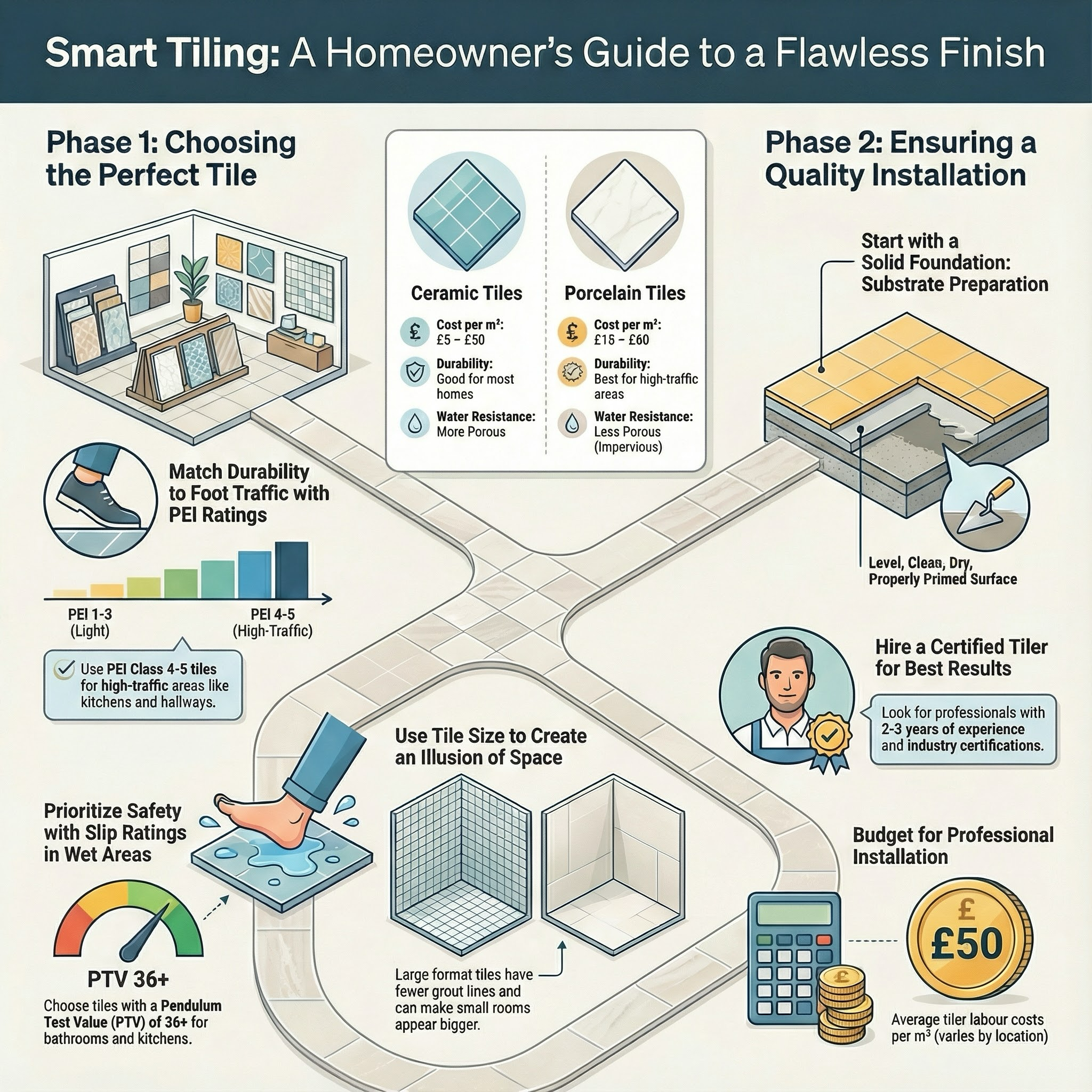
Tiler explained
However, quartz tile installation is a specialist task. Because of their resin content, these tiles are sensitive to temperature changes and specific chemicals, meaning standard tiling methods can often lead to failure. Getting the installation right ensures a lifetime of service and maintains the manufacturer's warranty.
The cost of installing quartz tiles is generally higher than ceramic or porcelain due to the weight of the material and the specialist adhesives required. Prices vary based on your location in the UK, with London and the South East typically seeing a 15-20% premium.
| Item | Low £ | High £ | Notes |
|---|---|---|---|
| Labour (per m²) | £40 | £75 | Includes setting out and fixing. |
| Specialist Adhesive & Grout | £15 | £25 | Must be low-water/rapid-set (per m²). |
| Substrate Preparation | £150 | £400 | Levelling compound and priming (average room). |
| Quartz Tiles (Materials only) | £35 | £120 | Price per m² depending on brand/sparkle. |
Factors affecting the final quote include the size of the tiles (large format tiles require two people to handle), the complexity of the room shape, and whether old flooring needs to be uplifted and disposed of.
Quartz tile installation is not recommended for DIYers. These tiles are notoriously temperamental; using a standard "slow-set" adhesive can cause the tiles to absorb water, leading to "bowing" or "curling" that cannot be fixed once set. Furthermore, quartz is exceptionally heavy and requires professional-grade wet saws for a clean finish. A professional tiler will understand the requirements of BS 5385 and ensure the correct movement joints are installed.
Top Tip: Ask your tiler which adhesive they plan to use. If they suggest a standard slow-set bucket-mix without mentioning moisture sensitivity, they may not be experienced with quartz.
Questions to ask:
Yes, but with caution. The heating must be restricted to a maximum of 27°C, as excessive heat can cause the resin in the tiles to soften or expand, leading to de-bonding or cracking. Always use a decoupling membrane.
Most quartz tiles are polished and relatively non-porous, but many manufacturers recommend a specialist stone sealer to protect the grout lines and the resin-stone bond from staining, especially in kitchens.
It is generally not recommended. The resin in quartz tiles can react to constant moisture and high-alkaline soaps, potentially leading to discolouration or warping over time. Porcelain is a safer alternative for wet zones.
They require more expensive, specialist adhesives and diamond-tipped cutting tools. They are also significantly heavier, making the labour more physically demanding and slower.
No. Quartz tiles are not UV-stable. Exposure to direct sunlight will cause the resin to fade, discolour, and eventually become brittle and crack.
This guide was written with AI assistance and is intended for general information only. Prices are estimates based on UK averages and may vary by region. Always get at least three quotes and consult a qualified professional before starting any work.
Ask follow-ups in plain English. The AI explains options, sequencing and what to ask the tiler — so you walk in informed.
Updating wall tiles is one of the most effective ways to modernise a UK kitchen or bathroom without a full renovation. Beyond the aesthetic lift, professional t...
READ GUIDE →GuideMosaic tiling is the ultimate way to add texture, colour, and a bespoke feel to your UK home. Whether it’s a kitchen splashback, a wet room floor, or a decorati...
READ GUIDE →GuideVictorian geometric and encaustic tiles are a quintessential feature of British period properties, from London townhouses to seaside villas. These intricate pat...
READ GUIDE →GuideOrdering tiles is more than just picking a pattern you like. For UK homeowners, it involves calculating precise quantities, accounting for wastage, and ensuring...
READ GUIDE →GuideTiling a bathroom wall while incorporating an access hatch is a practical necessity for many UK homes. It allows for seamless aesthetics while providing vital a...
READ GUIDE →GuideBrick tiling, often referred to as "brick slips," has become a staple of UK interior design. Whether you are looking to create an industrial-style feature wall ...
READ GUIDE →