Instant
01 · Ask
Ask the AI a follow-up
Got more questions about slate hearth installation? Describe the bit you're unsure about — the AI explains options, sequencing and what to ask the tiler.

Slate hearth for wood-burner or open fire — measured, cut, polished-edge and installed.
You've read the brief on slate hearth installation. Now lean on us to find the right tiler — and stay in control of the job.
Got more questions about slate hearth installation? Describe the bit you're unsure about — the AI explains options, sequencing and what to ask the tiler.
Costs, timelines, pitfalls and the right questions to ask before any tiler starts on slate hearth installation.
Itemised quotes from up to 3 local tilers on slate hearth installation — so you can compare like-for-like, not lump sums.
Ready when you are
Enter your postcode and get free quotes from local pros.
Four moves that separate a smooth job from a nightmare.
Usually caused by "dot and dab" fixing. If there are air gaps under the slate, the weight of a heavy stove will eventually snap the stone.
Slate is porous. If it isn't sealed immediately after installation, soot, ash, and even water can leave permanent marks.
Gaps between the slate and the wall can look unsightly; these should be minimal and filled with a matching heat-resistant grout or silicone.
White powdery salts can rise through the stone if the wrong mortar mix is used on a damp subfloor.
Indicative UK ranges and what affects price.
By job type
Quote spread is typically ± 18% — always get 3 quotes.
Tiler quick-view
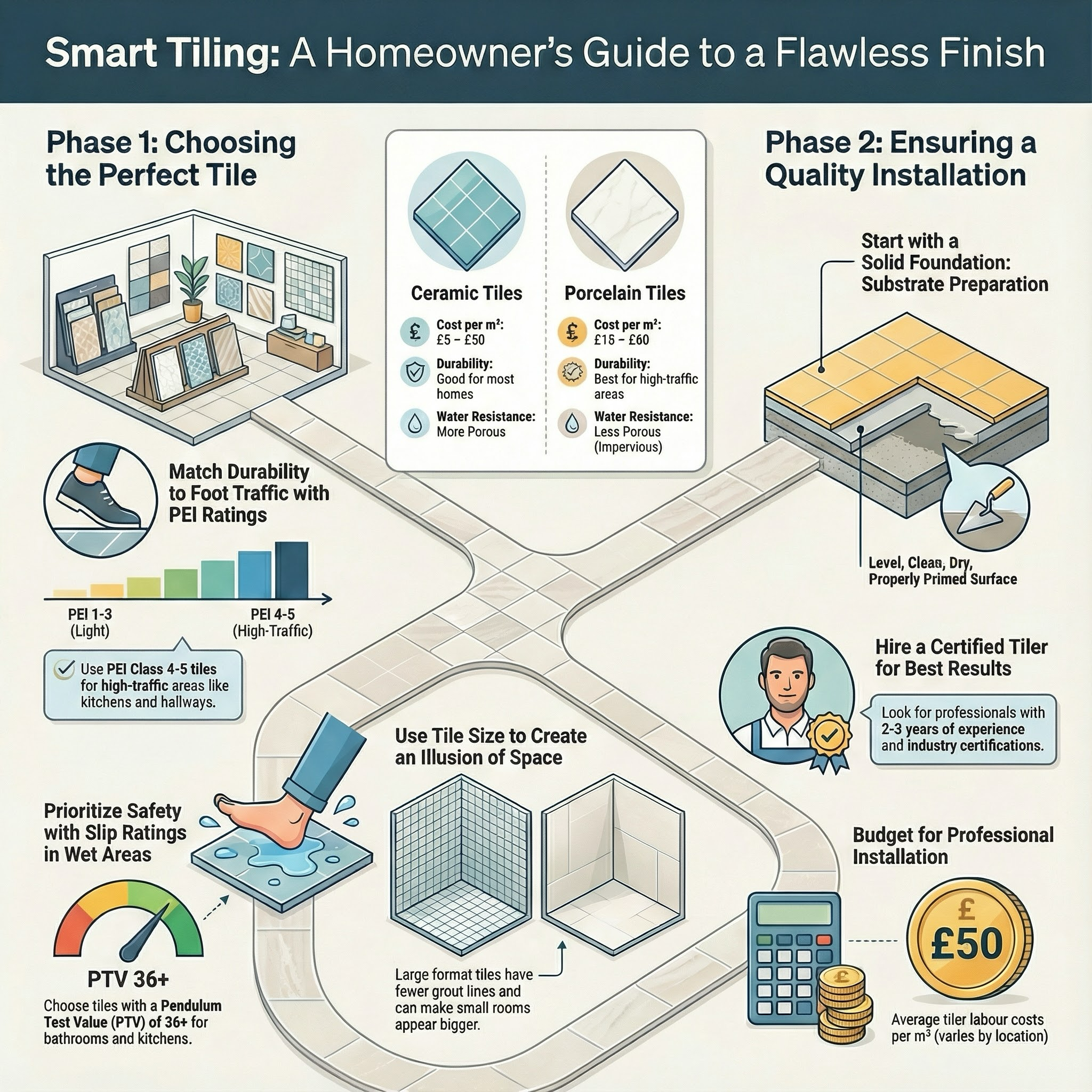
Tiler explained
Whether you are opting for a traditional riven finish or a sleek, honed contemporary look, the installation requires precision. Because natural slate is heavy and prone to chipping if mishandled, professional fitting ensures the hearth meets strict UK Building Regulations while providing a perfectly level surface for your appliance.
The cost of a slate hearth installation depends largely on whether you choose a single-piece "T-shape" slab or multiple tiles, and the thickness of the stone required.
| Item | Low £ | High £ | Notes |
|---|---|---|---|
| Labour (Daily Rate) | £250 | £450 | Dependent on location and complexity. |
| Natural Slate Slab | £150 | £500 | Bespoke 20mm–30mm thick slabs cost more. |
| Adhesives & Sealers | £40 | £80 | High-temperature flexible adhesives. |
| Waste Disposal | £30 | £100 | Removal of old concrete or stone hearth. |
| Total Project | £470 | £1,130 | Typical 2025/26 UK average. |
Prices will increase if the subfloor requires significant structural reinforcement or if you opt for premium Italian or Welsh slate over Brazilian imports. Always ensure the quote includes the final sealing of the stone.
While a confident DIYer can lay slate tiles, installing a solid slate slab is a specialist task. The weight of the stone makes it difficult to manoeuvre without cracking, and precise cuts around a chimney breast require professional masonry tools. Furthermore, if you are installing a heat-producing appliance, the hearth must comply with Document J of the Building Regulations. A professional installer will ensure your home insurance remains valid by adhering to these safety clearances and thickness requirements.
Note: If your stove installation is being signed off by a HETAS or Gas Safe engineer, they will often require proof that the hearth meets the minimum non-combustible depth.
Look for a tiler or a specialist fireplace fitter with specific experience in natural stone. Slate behaves differently than ceramic or porcelain; it is more brittle and requires different sealing techniques.
Fireplace installations are governed by strict safety standards to prevent house fires. Your installer should be familiar with the following:
Yes. Natural slate is porous and will absorb oils and soot. A dedicated slate sealer or "colour intensifier" protects the surface and makes it much easier to wipe clean.
You cannot lay slate directly onto bouncy floorboards. You must first install a non-combustible backer board or a concrete screed to provide a rigid, fireproof base.
Riven slate has a natural, textured, and slightly uneven surface. Honed slate has been ground flat and polished for a smooth, matte finish that looks more contemporary.
If the slate is high quality and installed on a full, level bed of adhesive, it is very unlikely to crack. Cracks are almost always caused by structural movement or voids beneath the stone rather than the heat itself.
Avoid harsh chemicals or bleach. Use a soft brush to remove ash and a damp cloth with mild soap for marks. Re-apply sealer every 1–2 years to maintain protection.
This guide was written with AI assistance and is intended for general information only. Prices are estimates based on UK averages and may vary by region. Always get at least three quotes and consult a qualified professional before starting any work.
Ask follow-ups in plain English. The AI explains options, sequencing and what to ask the tiler — so you walk in informed.
Updating wall tiles is one of the most effective ways to modernise a UK kitchen or bathroom without a full renovation. Beyond the aesthetic lift, professional t...
READ GUIDE →GuideMosaic tiling is the ultimate way to add texture, colour, and a bespoke feel to your UK home. Whether it’s a kitchen splashback, a wet room floor, or a decorati...
READ GUIDE →GuideVictorian geometric and encaustic tiles are a quintessential feature of British period properties, from London townhouses to seaside villas. These intricate pat...
READ GUIDE →GuideOrdering tiles is more than just picking a pattern you like. For UK homeowners, it involves calculating precise quantities, accounting for wastage, and ensuring...
READ GUIDE →GuideTiling a bathroom wall while incorporating an access hatch is a practical necessity for many UK homes. It allows for seamless aesthetics while providing vital a...
READ GUIDE →GuideBrick tiling, often referred to as "brick slips," has become a staple of UK interior design. Whether you are looking to create an industrial-style feature wall ...
READ GUIDE →