Instant
01 · Ask
Ask the AI a follow-up
Got more questions about consultancy for Conservatory Installation? Describe the bit you're unsure about — the AI explains options, sequencing and what to ask the windows.

On-site consultation for new conservatory or orangery — plan, spec, cost and supplier recommendations.
You've read the brief on consultancy for Conservatory Installation. Now lean on us to find the right windows — and stay in control of the job.
Got more questions about consultancy for Conservatory Installation? Describe the bit you're unsure about — the AI explains options, sequencing and what to ask the windows.
Costs, timelines, pitfalls and the right questions to ask before any windows starts on consultancy for Conservatory Installation.
Itemised quotes from up to 3 local windowss on consultancy for Conservatory Installation — so you can compare like-for-like, not lump sums.
Ready when you are
Enter your postcode and get free quotes from local pros.
Four moves that separate a smooth job from a nightmare.
Using cheap polycarbonate roofing often leads to a room that is unusable for six months of the year.
Standard 600mm trenches may be insufficient if there are nearby trees or clay soil, leading to structural cracking.
Building over manholes without proper access or "build-over" agreements can lead to legal and maintenance nightmares.
Lack of adequate roof vents or "trickle vents" in windows often results in severe condensation and mould growth.
Indicative UK ranges and what affects price.
By job type
Quote spread is typically ± 18% — always get 3 quotes.
Windows quick-view
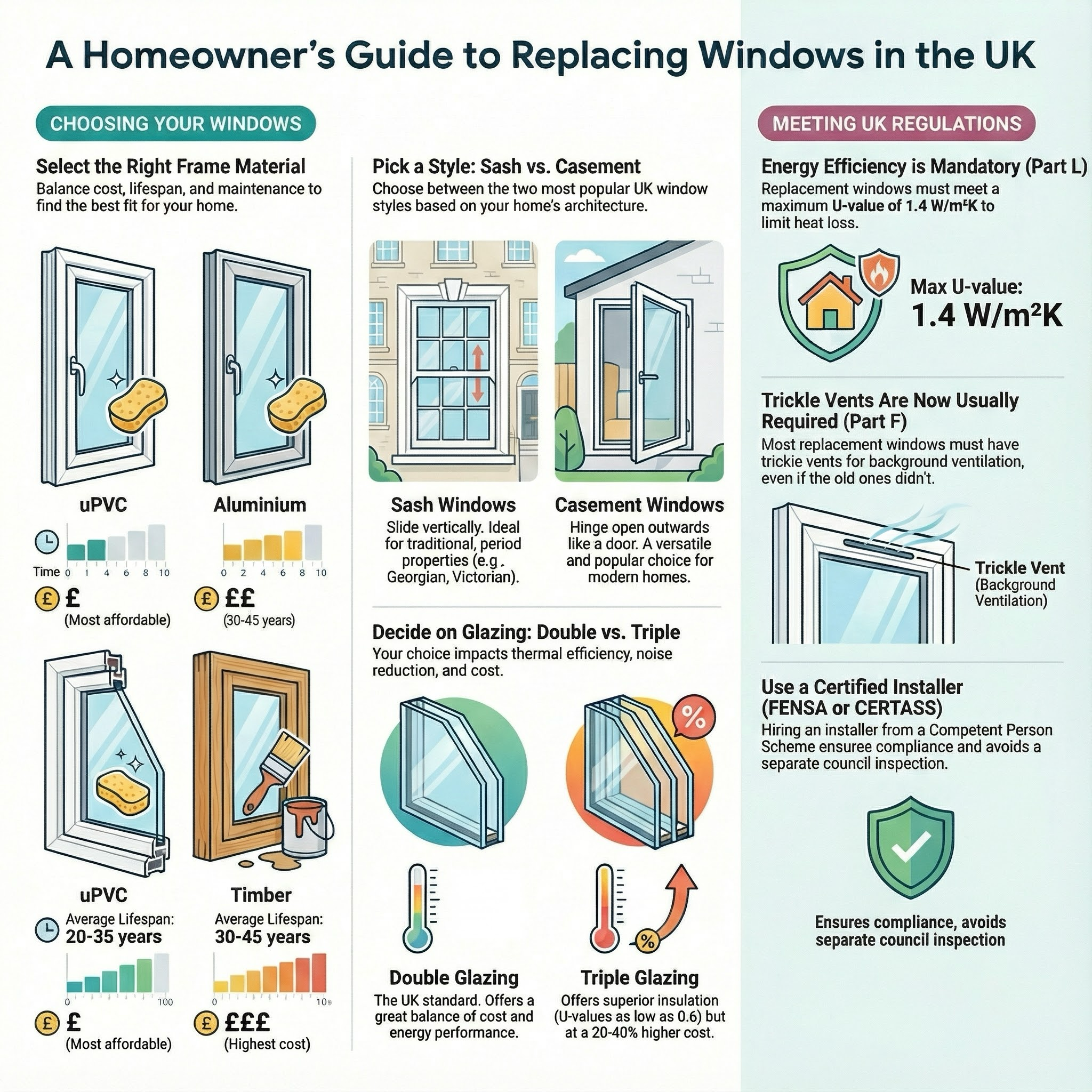
Windows explained
A professional conservatory consultancy service ensures your new room is more than just a "glass box." Expert advice helps you choose the right materials and design to ensure the space remains usable year-round, avoiding the common pitfalls of poor temperature control and planning disputes.
| Service Item | Low £ | High £ | Notes |
|---|---|---|---|
| Initial Site Consultation | £150 | £350 | General advice and feasibility study. |
| Detailed Design & CAD Drawings | £450 | £950 | Required for planning or complex builds. |
| Planning Permission Management | £300 | £600 | Excludes local authority application fees. |
| Building Regs Specification | £250 | £500 | Technical details for structural compliance. |
| Total Average Project Fee | £1,150 | £2,400 | For a full end-to-end consultancy package. |
Prices vary significantly based on your location in the UK and the complexity of the design. While some installation companies offer "free" consultations, these are often sales-focused; independent consultants charge a fee but provide unbiased structural and regulatory advice.
While a confident DIYer might manage the construction of a small "kit" conservatory, the consultancy and design phase should always be professional. In the UK, failing to adhere to Building Regulations or Planning Permission can result in an enforcement notice requiring you to demolish the structure.
Professional consultants ensure your conservatory meets Part L (Thermal Efficiency) and Part A (Structural Safety) of the Building Regulations, which is essential when you eventually come to sell your home.
In many cases, no. Under Permitted Development rights, you can often build a conservatory without full planning permission, provided it doesn't exceed height limits or cover more than half your garden. However, listed buildings and homes in Conservation Areas always require permission.
A conservatory is primarily made of glass with a translucent roof. An orangery features more brickwork (pillars), a perimeter roof (lantern style), and is designed to look more like a natural extension of the original house.
Glass roofs provide more light but can lead to temperature fluctuations. Solid or "warm" roofs offer much better insulation and make the room feel like a permanent extension, though they usually require Building Regulations approval due to the added weight.
On average, a well-designed and high-quality conservatory can add between 5% and 10% to the value of a property, provided it is built to a high standard and has the necessary paperwork.
Only if the conservatory meets the same strict insulation standards as a standard house extension. If you remove the thermal barrier (the external doors), the conservatory must comply fully with Building Regulations, which usually requires upgraded glazing and floor insulation.
This guide was written with AI assistance and is intended for general information only. Prices are estimates based on UK averages and may vary by region. Always get at least three quotes and consult a qualified professional before starting any work.
Ask follow-ups in plain English. The AI explains options, sequencing and what to ask the windows — so you walk in informed.
Roof windows, often referred to by the popular brand name Velux, are a brilliant way to transform dark lofts and extensions into bright, airy living spaces. How...
READ GUIDE →GuideSash windows are a defining feature of British period properties, offering timeless aesthetic appeal and vital ventilation. However, whether due to a stray foot...
READ GUIDE →GuideUpgrading to a modern uPVC door is one of the most effective ways for UK homeowners to improve property security and thermal efficiency. Modern uPVC (unplastici...
READ GUIDE →GuideAdding a roof window is one of the most effective ways to transform a dark, cramped attic or extension into a bright and airy living space. Beyond the aesthetic...
READ GUIDE →GuideReplacing a door is one of the most effective ways to improve your home’s security, energy efficiency, and aesthetic appeal. Whether you are upgrading an old dr...
READ GUIDE →GuideWhether you are converting a former high-street shop into a modern residence or installing expansive, commercial-grade glazing in a contemporary home extension,...
READ GUIDE →