Instant
01 · Ask
Ask the AI a follow-up
Got more questions about door installation? Describe the bit you're unsure about — the AI explains options, sequencing and what to ask the windows.

Internal or external door — supplied, hung and finished with hardware. By a door fitter.
You've read the brief on door installation. Now lean on us to find the right windows — and stay in control of the job.
Got more questions about door installation? Describe the bit you're unsure about — the AI explains options, sequencing and what to ask the windows.
Costs, timelines, pitfalls and the right questions to ask before any windows starts on door installation.
Itemised quotes from up to 3 local windowss on door installation — so you can compare like-for-like, not lump sums.
Ready when you are
Enter your postcode and get free quotes from local pros.
Four moves that separate a smooth job from a nightmare.
Often caused by seasonal humidity changes or the door being hung before the house has "settled" after new plastering.
Usually the result of poor compression on the weather seals or an unlevel threshold.
Multi-point locks on composite doors can become difficult to engage if the frame isn't perfectly plumb.
Heavy solid wood or composite doors require three high-quality hinges to prevent the door from sagging over time.
Indicative UK ranges and what affects price.
By job type
Quote spread is typically ± 18% — always get 3 quotes.
Windows quick-view
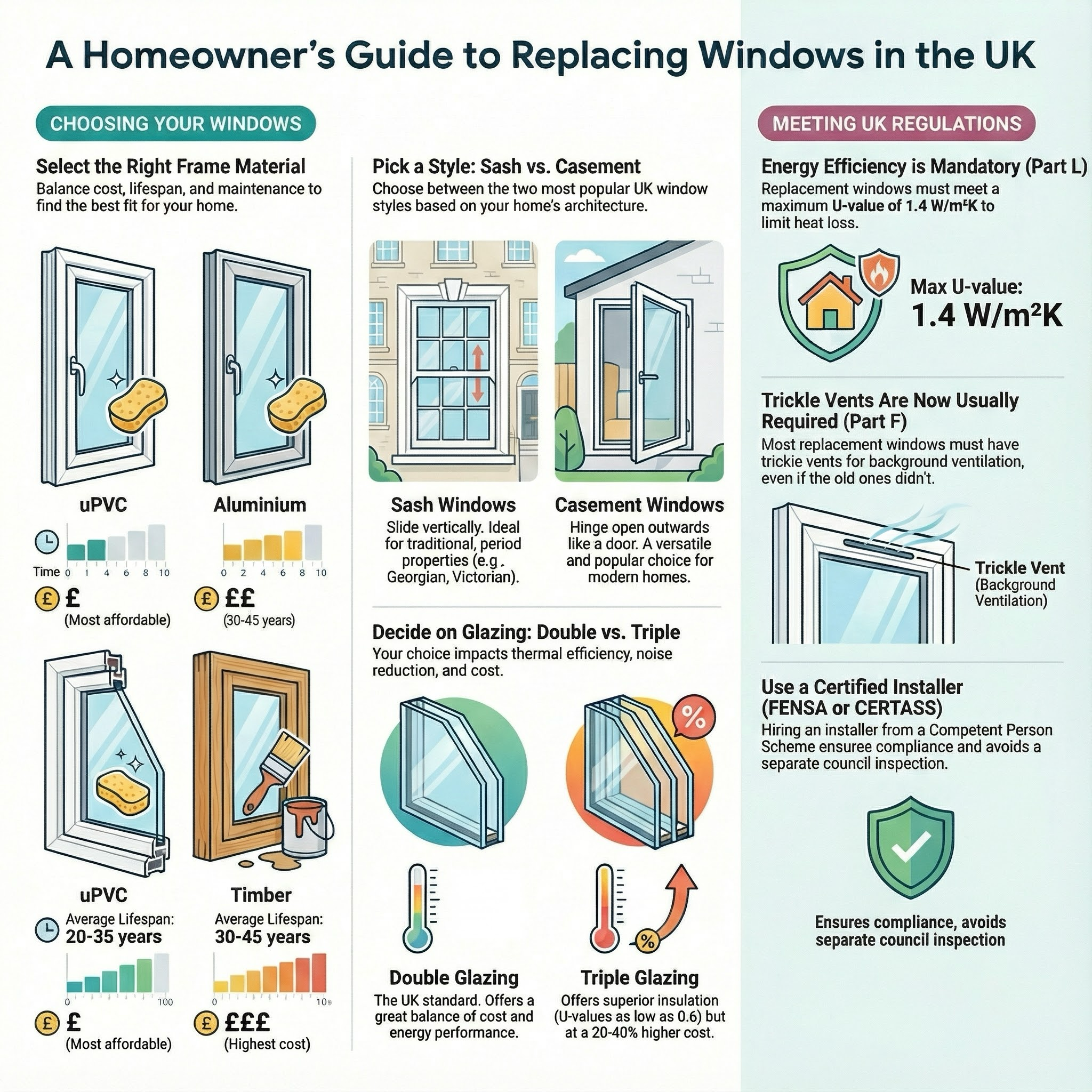
Windows explained
In the UK, external door replacements are governed by specific building regulations regarding thermal performance and security. Hiring a specialist ensures these standards are met, providing peace of mind and protecting your property's value.
Prices vary significantly based on the material (uPVC vs. Composite vs. Solid Timber) and whether the frame also needs replacing. The following 2025/26 estimates include VAT and standard labour rates.
| Item | Low £ | High £ | Notes |
|---|---|---|---|
| Internal Door (Supply & Fit) | £180 | £450 | Standard hollow-core or oak veneer. |
| uPVC External Door | £700 | £1,300 | Includes frame and multi-point locks. |
| Composite Front Door | £1,100 | £2,400 | High security, various colours/styles. |
| Solid Timber Front Door | £1,500 | £3,500+ | Bespoke joinery, hardwood (Oak/Accoya). |
| Labour Only (Per Door) | £100 | £250 | Depending on complexity and location. |
| Disposal Fee | £30 | £70 | Includes removal of old door and debris. |
Factors that increase the price include structural alterations to the brickwork, custom glazing requirements, and the need for scaffolding if working on a first-floor balcony or flat. Regional variations also apply, with London and the South East typically seeing 20-30% higher labour costs.
Hanging a door is a classic "deceptively difficult" task. While a confident DIYer can trim and hang a lightweight internal door, external doors require a professional touch. External installations must comply with Part L of the Building Regulations regarding thermal heat loss.
Professional installers can provide FENSA or CERTASS certification, which is essential when selling your home to prove the door meets UK safety and energy standards.
Not always, but it is highly recommended. Modern composite and uPVC doors are designed to be "pre-hung" in their own frames for maximum security and weatherproofing. Fitting a new door into an old, warped frame often leads to draughts and security vulnerabilities.
uPVC doors are made primarily of plastic and are the most budget-friendly option. Composite doors are made from a mix of materials (timber, foam, and GRP), making them thicker, stronger, more thermally efficient, and available in more realistic wood-grain finishes.
In a standard single-family home, fire doors are not typically required for kitchens. However, they are mandatory for doors leading from an integral garage into the house, and for all habitable rooms in a house with three or more storeys (loft conversions).
This usually happens if the door or frame has shifted slightly. For composite doors, you should always "throw" the handle upwards when closing to engage the multi-point locks; this prevents the door from warping over time.
Yes, but it requires specialist uPVC paint or "spraying." While this improves the look, it won't fix issues with draughts, security, or thermal efficiency. If the door is over 15 years old, replacement is usually a better investment.
This guide was written with AI assistance and is intended for general information only. Prices are estimates based on UK averages and may vary by region. Always get at least three quotes and consult a qualified professional before starting any work.
Ask follow-ups in plain English. The AI explains options, sequencing and what to ask the windows — so you walk in informed.
Roof windows, often referred to by the popular brand name Velux, are a brilliant way to transform dark lofts and extensions into bright, airy living spaces. How...
READ GUIDE →GuideSash windows are a defining feature of British period properties, offering timeless aesthetic appeal and vital ventilation. However, whether due to a stray foot...
READ GUIDE →GuideUpgrading to a modern uPVC door is one of the most effective ways for UK homeowners to improve property security and thermal efficiency. Modern uPVC (unplastici...
READ GUIDE →GuideAdding a roof window is one of the most effective ways to transform a dark, cramped attic or extension into a bright and airy living space. Beyond the aesthetic...
READ GUIDE →GuideWhether you are converting a former high-street shop into a modern residence or installing expansive, commercial-grade glazing in a contemporary home extension,...
READ GUIDE →GuideA new door is one of the most effective ways to improve your home’s security, thermal efficiency, and kerb appeal. Whether you are replacing a drafty front door...
READ GUIDE →