Instant
01 · Ask
Ask the AI a follow-up
Got more questions about uPVC Door Installation? Describe the bit you're unsure about — the AI explains options, sequencing and what to ask the windows.

uPVC front, back or patio door — supplied, fitted with multi-point lock and weather-sealed.
You've read the brief on uPVC Door Installation. Now lean on us to find the right windows — and stay in control of the job.
Got more questions about uPVC Door Installation? Describe the bit you're unsure about — the AI explains options, sequencing and what to ask the windows.
Costs, timelines, pitfalls and the right questions to ask before any windows starts on uPVC Door Installation.
Itemised quotes from up to 3 local windowss on uPVC Door Installation — so you can compare like-for-like, not lump sums.
Ready when you are
Enter your postcode and get free quotes from local pros.
Four moves that separate a smooth job from a nightmare.
If the door scrapes the bottom of the frame, it usually means the glass wasn't "toe and heeled" correctly during installation.
Dark-coloured uPVC (like Anthracite Grey) can expand in direct sunlight, causing the door to stick; a professional leaves "expansion gaps" to prevent this.
If water pools in the bottom track, the internal drainage holes may be blocked with debris or incorrectly drilled.
Poor quality rubber seals can shrink over time, leading to whistling draughts and water ingress.
Indicative UK ranges and what affects price.
By job type
Quote spread is typically ± 18% — always get 3 quotes.
Windows quick-view
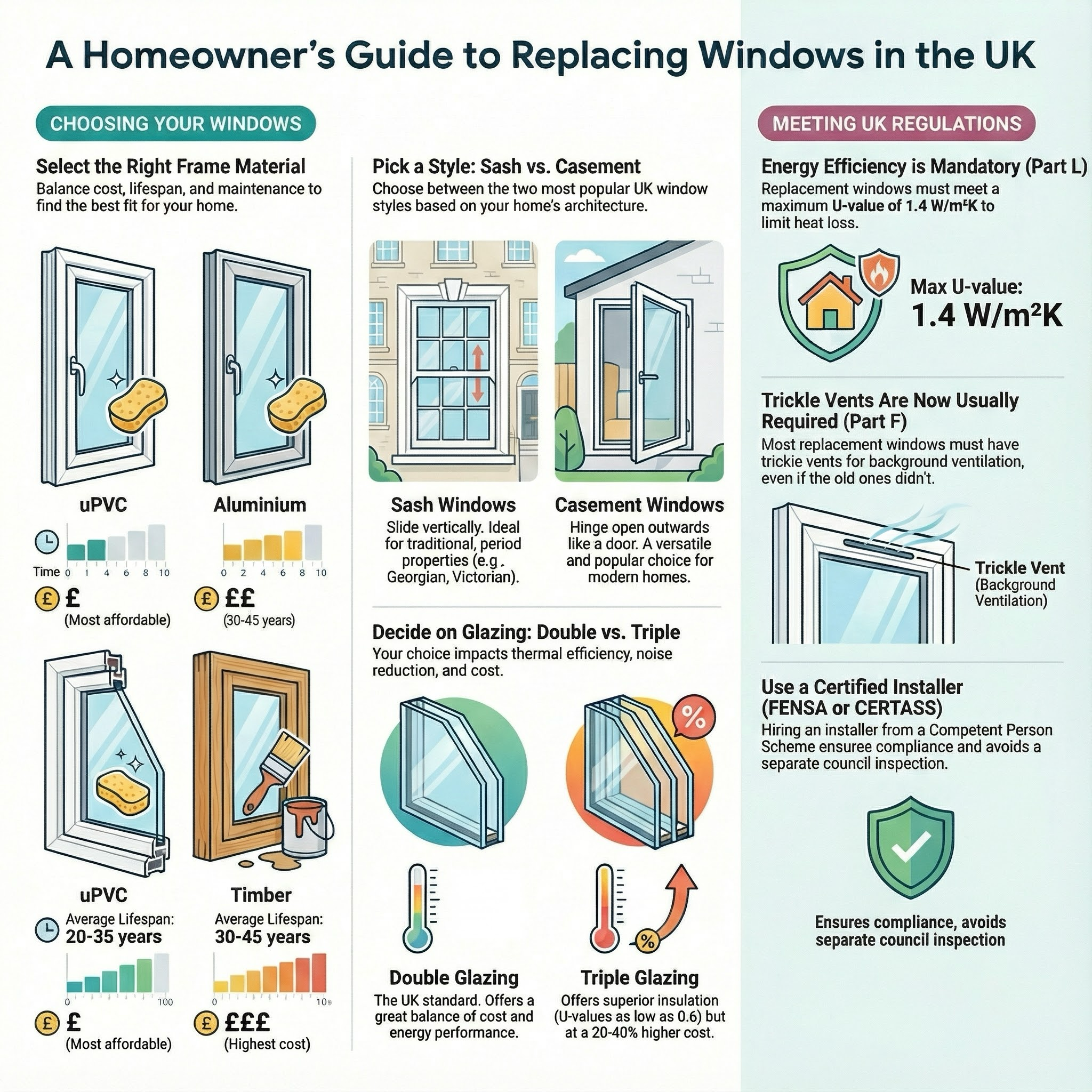
Windows explained
Beyond the immediate aesthetic boost, a professionally installed door reduces heat loss and external noise pollution. Because uPVC is virtually maintenance-free and weather-resistant, it remains the most popular choice for front, back, and side entrances across the UK.
| Item | Low £ | High £ | Notes |
|---|---|---|---|
| Standard White Front Door | £850 | £1,300 | Includes frame, basic hardware, and VAT. |
| Coloured or Woodgrain Door | £1,050 | £1,600 | Anthracite grey, Chartwell green, or Oak finishes. |
| uPVC Back Door (Half Glazed) | £700 | £1,100 | Often simpler hardware than a main front door. |
| uPVC French Doors (Pair) | £1,300 | £2,100 | Based on standard 1.8m width installations. |
| Labour (Per Door) | £250 | £500 | Varies by region (London/SE prices are higher). |
Prices are influenced primarily by the "spec" of the door, including the energy rating (A+ is standard now) and the complexity of the glass design. Decorative leaded glass or high-security laminated glass will push costs toward the higher end of the scale.
While a confident DIYer can physically fit a door, it is strongly discouraged for several reasons. Firstly, uPVC doors must comply with UK Building Regulations regarding thermal efficiency and safety glass; a professional installer provides a FENSA or Certass certificate which is essential when selling your home.
Secondly, the "toe and heeling" process is a skilled task; if done incorrectly, the door will catch on the frame within weeks. Professionals also offer insurance-backed guarantees that cover both the product and the installation for 10 years.
Professional installation ensures your home remains secure and valid under your buildings insurance policy.
Use warm soapy water and a soft cloth for the frames; avoid abrasive cleaners or solvent-based products which can damage the finish. Lightly oil the hinges and multi-point locking mechanism with a silicone-based lubricant once a year.
uPVC doors are made primarily from plastic and are more affordable. Composite doors have a solid timber or foam core with a GRP (glass-reinforced plastic) skin, making them thicker, stronger, and more expensive.
While specialist uPVC paints exist, it is difficult to achieve a factory-standard finish by hand. Painting a new door will also likely void your manufacturer's warranty.
uPVC expands in the sun. If the door is hard to lock, the "keeps" in the frame may need slight adjustment to account for the seasonal movement of the material.
Yes. Any external door with more than 50% glazing requires a compliance certificate to prove it meets thermal and safety regulations.
This is the highest level of security for a lock barrel, designed to resist "snapping," drilling, and picking. Many insurance companies now insist on these for external doors.
This guide was written with AI assistance and is intended for general information only. Prices are estimates based on UK averages and may vary by region. Always get at least three quotes and consult a qualified professional before starting any work.
Ask follow-ups in plain English. The AI explains options, sequencing and what to ask the windows — so you walk in informed.
Roof windows, often referred to by the popular brand name Velux, are a brilliant way to transform dark lofts and extensions into bright, airy living spaces. How...
READ GUIDE →GuideSash windows are a defining feature of British period properties, offering timeless aesthetic appeal and vital ventilation. However, whether due to a stray foot...
READ GUIDE →GuideAdding a roof window is one of the most effective ways to transform a dark, cramped attic or extension into a bright and airy living space. Beyond the aesthetic...
READ GUIDE →GuideReplacing a door is one of the most effective ways to improve your home’s security, energy efficiency, and aesthetic appeal. Whether you are upgrading an old dr...
READ GUIDE →GuideWhether you are converting a former high-street shop into a modern residence or installing expansive, commercial-grade glazing in a contemporary home extension,...
READ GUIDE →GuideA new door is one of the most effective ways to improve your home’s security, thermal efficiency, and kerb appeal. Whether you are replacing a drafty front door...
READ GUIDE →