Instant
01 · Ask
Ask the AI a follow-up
Got more questions about sash window pane replacement? Describe the bit you're unsure about — the AI explains options, sequencing and what to ask the windows.

Single pane in a period sash window — measured, cut, glazing putty applied and painted.
You've read the brief on sash window pane replacement. Now lean on us to find the right windows — and stay in control of the job.
Got more questions about sash window pane replacement? Describe the bit you're unsure about — the AI explains options, sequencing and what to ask the windows.
Costs, timelines, pitfalls and the right questions to ask before any windows starts on sash window pane replacement.
Itemised quotes from up to 3 local windowss on sash window pane replacement — so you can compare like-for-like, not lump sums.
Ready when you are
Enter your postcode and get free quotes from local pros.
Four moves that separate a smooth job from a nightmare.
If the new glass is significantly thicker or heavier than the old pane, the weights inside the frame won't match, and the window will slide down on its own.
Applying paint too early (before the putty has skinned) or too late (after it has dried out and cracked) leads to water ingress and rot.
Often, once the glass is removed, the "bottom rail" is found to be soft. A simple glass swap can turn into a timber repair job very quickly.
The process of removing a sash often puts stress on old, brittle cords. It is best practice to replace these simultaneously.
Indicative UK ranges and what affects price.
By job type
Quote spread is typically ± 18% — always get 3 quotes.
Windows quick-view
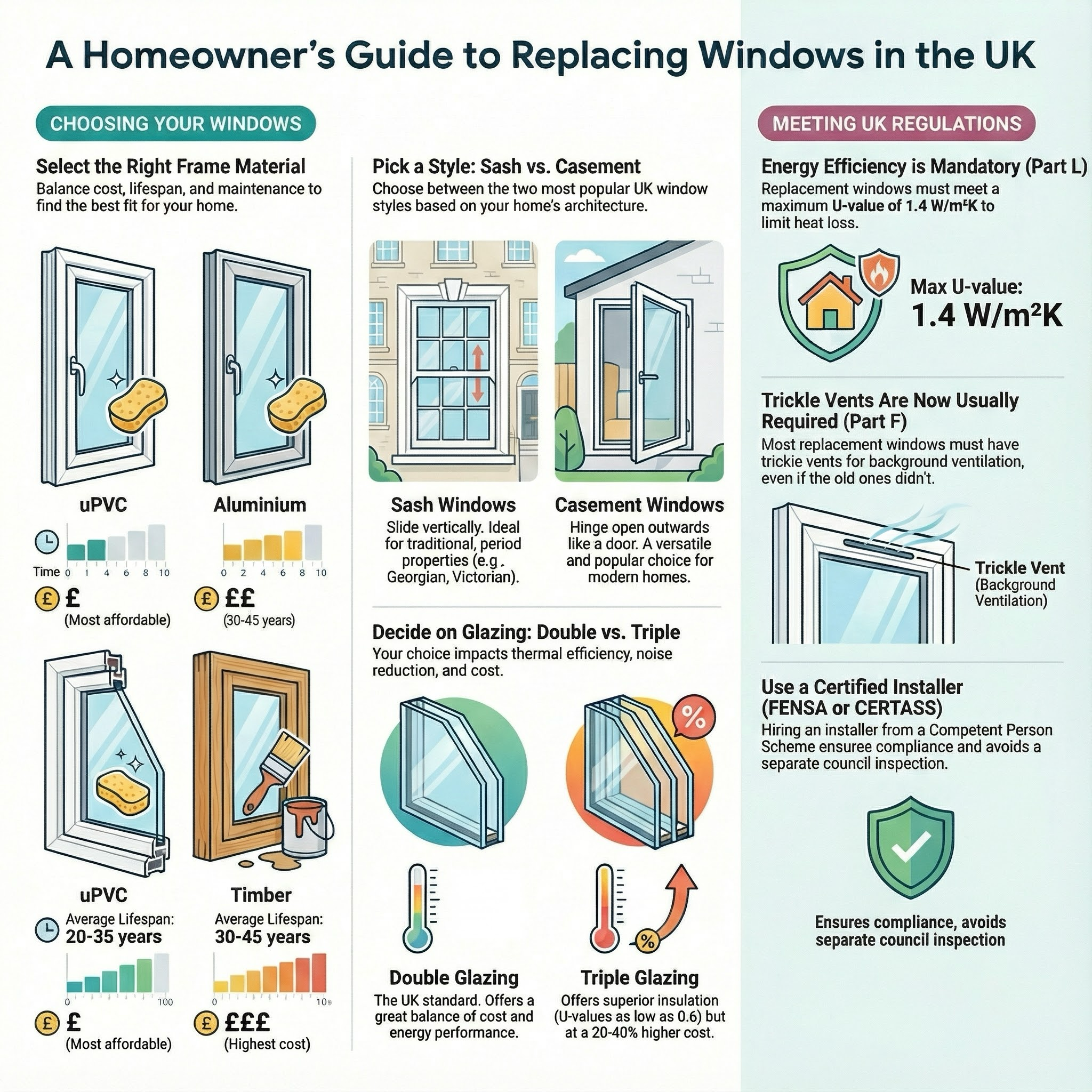
Windows explained
Replacing a single pane is a precision task that involves more than just swapping glass. It requires careful handling of timber frames, traditional putty techniques, and an understanding of the delicate weight and pulley systems that allow these windows to operate smoothly.
The cost of sash window pane replacement depends heavily on the type of glass required and the accessibility of the window. Traditional putty takes time to apply correctly, which is reflected in the labour costs.
| Item | Low £ | High £ | Notes |
|---|---|---|---|
| Call-out / Minimum Charge | £80 | £150 | Often covers the first hour of site time. |
| Standard Float Glass (per pane) | £30 | £70 | Basic 4mm glass for standard sashes. |
| Toughened or Laminated Glass | £80 | £180 | Required for low-level or "critical" zones. |
| Heritage / Cylinder Glass | £120 | £300 | Specialist wavy glass for listed buildings. |
| Labour (per hour) | £50 | £90 | Varies by region (higher in London/SE). |
| Scaffolding / Access Equipment | £250 | £600 | Only if the sash cannot be removed internally. |
Prices generally include VAT at 20%. If your property is a listed building, you may be required to use expensive hand-blown glass to match the original ripples and "seeds" in the surrounding panes.
While a confident DIYer can replace a pane in a modern window, sash windows present unique challenges. The glass provides structural rigidity to the timber frame; if fitted poorly, the sash can "rack" or become misshapen.
Professionals are essential for upper-floor work where the sash must be de-strung and removed from the box. Furthermore, Building Regulations (Part K) dictate exactly where safety glass must be used (e.g., near floors or in doors). A pro ensures your home remains compliant and insurance-valid.
Note: If you live in a Listed Building or a Conservation Area, you may need specific consent even for "like-for-like" glass replacement if the glass type changes.
Don't just hire a general glazier; look for someone with specific experience in timber sash restoration. Traditional joinery skills are often required if the rebate is found to be rotten.
Questions to ask:
Usually not without significant modification. Standard sash rebates are too shallow for double glazing. You would likely need "slimline" units or entirely new sashes designed to fit your existing box frame.
Traditional linseed oil putty typically needs 7 to 14 days to form a hard skin. Do not leave it longer than 28 days, or it may dry out too much and crack. Use an oil-based primer first.
If you live in a period home, your glazier may have used "Heritage" or "Restoration" glass. This is intentionally made with slight imperfections to match the look of 18th and 19th-century windows.
In most cases, no. Sash windows are designed to be serviced from the inside. The beads are removed, the cords detached, and the sash is pulled into the room for repair.
Toughened glass shatters into small, blunt pebbles when broken. Laminated glass has a plastic interlayer that holds the glass together if it breaks, providing better security and sound insulation.
If standard glass is used, the glazier can usually cut it to size on-site or the same day. For toughened or double-glazed units, which must be factory-made, the window will be temporarily secured or boarded for 3–7 days.
This guide was written with AI assistance and is intended for general information only. Prices are estimates based on UK averages and may vary by region. Always get at least three quotes and consult a qualified professional before starting any work.
Ask follow-ups in plain English. The AI explains options, sequencing and what to ask the windows — so you walk in informed.
Roof windows, often referred to by the popular brand name Velux, are a brilliant way to transform dark lofts and extensions into bright, airy living spaces. How...
READ GUIDE →GuideUpgrading to a modern uPVC door is one of the most effective ways for UK homeowners to improve property security and thermal efficiency. Modern uPVC (unplastici...
READ GUIDE →GuideAdding a roof window is one of the most effective ways to transform a dark, cramped attic or extension into a bright and airy living space. Beyond the aesthetic...
READ GUIDE →GuideReplacing a door is one of the most effective ways to improve your home’s security, energy efficiency, and aesthetic appeal. Whether you are upgrading an old dr...
READ GUIDE →GuideWhether you are converting a former high-street shop into a modern residence or installing expansive, commercial-grade glazing in a contemporary home extension,...
READ GUIDE →GuideA new door is one of the most effective ways to improve your home’s security, thermal efficiency, and kerb appeal. Whether you are replacing a drafty front door...
READ GUIDE →