Instant
01 · Ask
Ask the AI a follow-up
Got more questions about custom Casement Window Frame Costs? Describe the bit you're unsure about — the AI explains options, sequencing and what to ask the windows.

Bespoke casement window frames — hardwood, uPVC or aluminium, made to your exact opening.
You've read the brief on custom Casement Window Frame Costs. Now lean on us to find the right windows — and stay in control of the job.
Got more questions about custom Casement Window Frame Costs? Describe the bit you're unsure about — the AI explains options, sequencing and what to ask the windows.
Costs, timelines, pitfalls and the right questions to ask before any windows starts on custom Casement Window Frame Costs.
Itemised quotes from up to 3 local windowss on custom Casement Window Frame Costs — so you can compare like-for-like, not lump sums.
Ready when you are
Enter your postcode and get free quotes from local pros.
Four moves that separate a smooth job from a nightmare.
If a custom frame is even 10mm too large, it may require structural alterations to the masonry, significantly increasing costs.
Custom timber frames must have correctly machined "weep holes" or drainage channels to prevent water sitting and rotting the wood.
If timber frames are not sealed on all six sides (including the bottom edge) before installation, they will absorb moisture and warp.
Poorly fitted frames without proper expanding foam or thermal breaks can lead to condensation and dampness around the internal reveals.
Indicative UK ranges and what affects price.
By job type
Quote spread is typically ± 18% — always get 3 quotes.
Windows quick-view
Windows explained
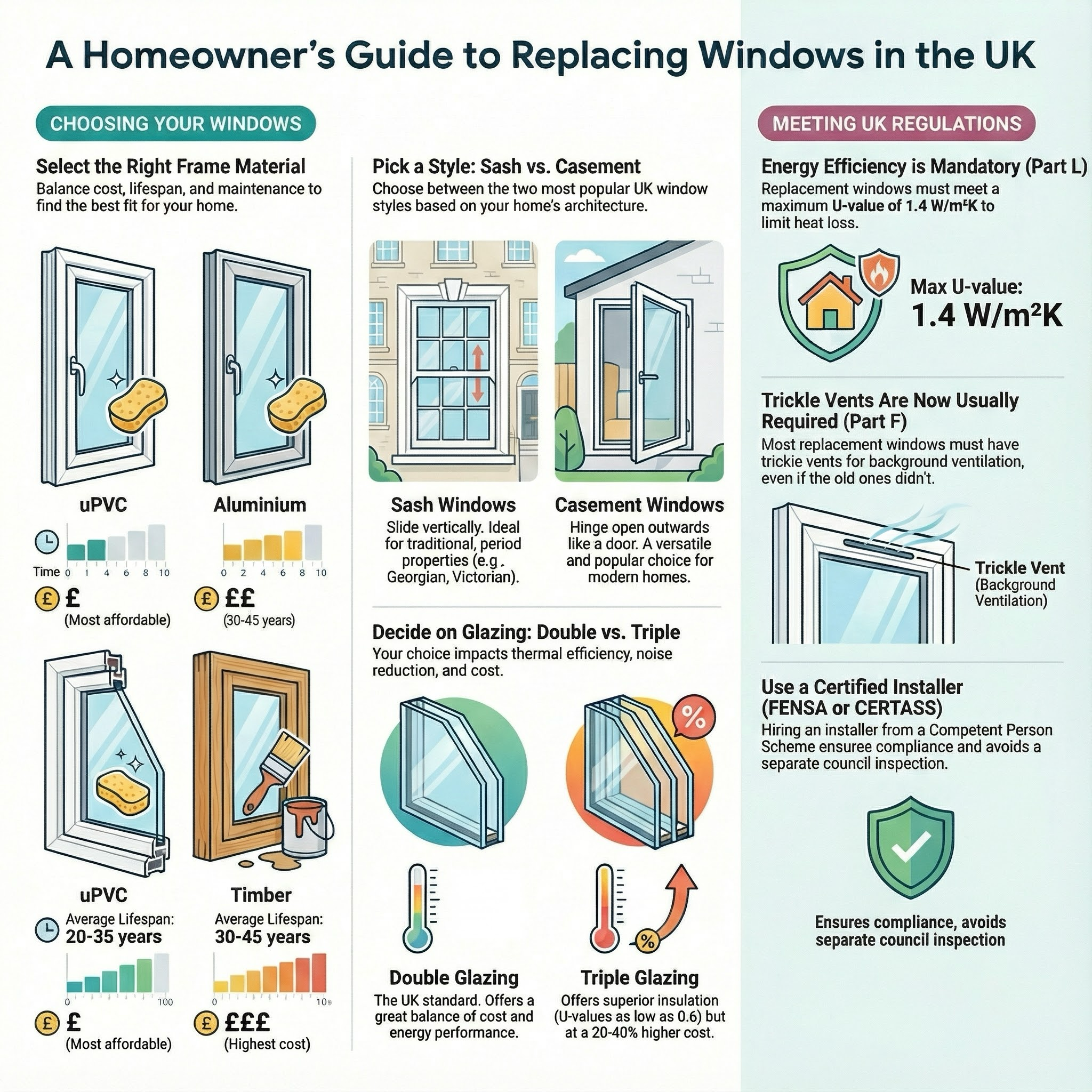
Investing in bespoke frames allows you to specify everything from timber species and ironmongery to high-performance glazing. This guide outlines the genuine costs, timelines, and regulatory requirements for commissioning custom casement window frames in the UK.
The following prices reflect realistic 2025/26 UK averages including VAT. Prices vary significantly based on material choice, with hardwoods and engineered timbers commanding a premium over standard uPVC or softwood.
| Item | Low £ | High £ | Notes |
|---|---|---|---|
| Small Softwood Frame (600x900mm) | £450 | £750 | Includes basic double glazing and primer. |
| Standard Hardwood Frame (Oak/Accoya) | £950 | £1,600 | Premium durability and factory finish. |
| Custom uPVC Casement | £350 | £650 | Coloured or woodgrain foils add 20%. |
| Bespoke Aluminium Frame | £700 | £1,200 | Slim sightlines and RAL colour coding. |
| Installation Labour (per window) | £200 | £400 | Higher for upper floors requiring scaffolding. |
| Survey & Design Fee | £0 | £150 | Often waived if the order is placed. |
Material choice is the primary cost driver; for instance, Accoya timber can cost 30-40% more than softwood but offers a 50-year anti-rot guarantee. Size, glazing specifications (such as acoustic or solar-control glass), and the complexity of the opening also influence the final quote.
While a competent DIYer can technically install a window, it is rarely recommended for custom frames. Professional installation is required to ensure the unit is perfectly level, weather-tight, and compliant with UK thermal efficiency standards.
Replacing windows is a "controlled service" under UK Building Regulations. Using a registered professional (FENSA/Certass) saves you the cost and hassle of an independent Building Control inspection.
Generally, no, as long as the style is similar to the existing windows. However, if you live in a Conservation Area or a Listed Building, you will almost certainly need planning permission or Listed Building Consent.
Softwood (like Pine) is cheaper but requires more frequent painting and maintenance. Hardwood (like Oak) or modified timber (like Accoya) is much denser, naturally rot-resistant, and can last 50+ years if maintained.
Yes, this is known as "sash replacement." It is cheaper than a full frame replacement but only viable if the original outer frame is structurally sound and free from significant rot.
This is actually a sign of high performance. External condensation occurs because the double glazing is so efficient at keeping heat inside that the outer pane remains cold, allowing dew to form on the surface.
Under 2022 Building Regs, if the windows you are replacing had vents, the new ones must have them. If the old ones didn't, the new ones usually still require them to meet modern ventilation standards unless an alternative ventilation strategy is proven.
This guide was written with AI assistance and is intended for general information only. Prices are estimates based on UK averages and may vary by region. Always get at least three quotes and consult a qualified professional before starting any work.
Ask follow-ups in plain English. The AI explains options, sequencing and what to ask the windows — so you walk in informed.
Roof windows, often referred to by the popular brand name Velux, are a brilliant way to transform dark lofts and extensions into bright, airy living spaces. How...
READ GUIDE →GuideSash windows are a defining feature of British period properties, offering timeless aesthetic appeal and vital ventilation. However, whether due to a stray foot...
READ GUIDE →GuideUpgrading to a modern uPVC door is one of the most effective ways for UK homeowners to improve property security and thermal efficiency. Modern uPVC (unplastici...
READ GUIDE →GuideAdding a roof window is one of the most effective ways to transform a dark, cramped attic or extension into a bright and airy living space. Beyond the aesthetic...
READ GUIDE →GuideReplacing a door is one of the most effective ways to improve your home’s security, energy efficiency, and aesthetic appeal. Whether you are upgrading an old dr...
READ GUIDE →GuideWhether you are converting a former high-street shop into a modern residence or installing expansive, commercial-grade glazing in a contemporary home extension,...
READ GUIDE →