Instant
01 · Ask
Ask the AI a follow-up
Got more questions about fire Door Compliance Modifications and Upgrades? Describe the bit you're unsure about — the AI explains options, sequencing and what to ask the windows.

FD30 or FD60 fire-door modifications — intumescent strips, smoke seals, self-closers fitted.
You've read the brief on fire Door Compliance Modifications and Upgrades. Now lean on us to find the right windows — and stay in control of the job.
Got more questions about fire Door Compliance Modifications and Upgrades? Describe the bit you're unsure about — the AI explains options, sequencing and what to ask the windows.
Costs, timelines, pitfalls and the right questions to ask before any windows starts on fire Door Compliance Modifications and Upgrades.
Itemised quotes from up to 3 local windowss on fire Door Compliance Modifications and Upgrades — so you can compare like-for-like, not lump sums.
Ready when you are
Enter your postcode and get free quotes from local pros.
Four moves that separate a smooth job from a nightmare.
Gaps between the door and frame often exceed 4mm, rendering intumescent strips ineffective during the early stages of a fire.
Over-painting intumescent or smoke seals prevents them from expanding or sealing correctly; these must always be replaced if damaged.
Using standard brass hinges or aluminium handles that melt at low temperatures can cause the door to fail prematurely.
If the gap at the bottom of the door exceeds 10mm (or 3mm for smoke control), a drop-down seal must be retrofitted.
Indicative UK ranges and what affects price.
By job type
Quote spread is typically ± 18% — always get 3 quotes.
Windows quick-view
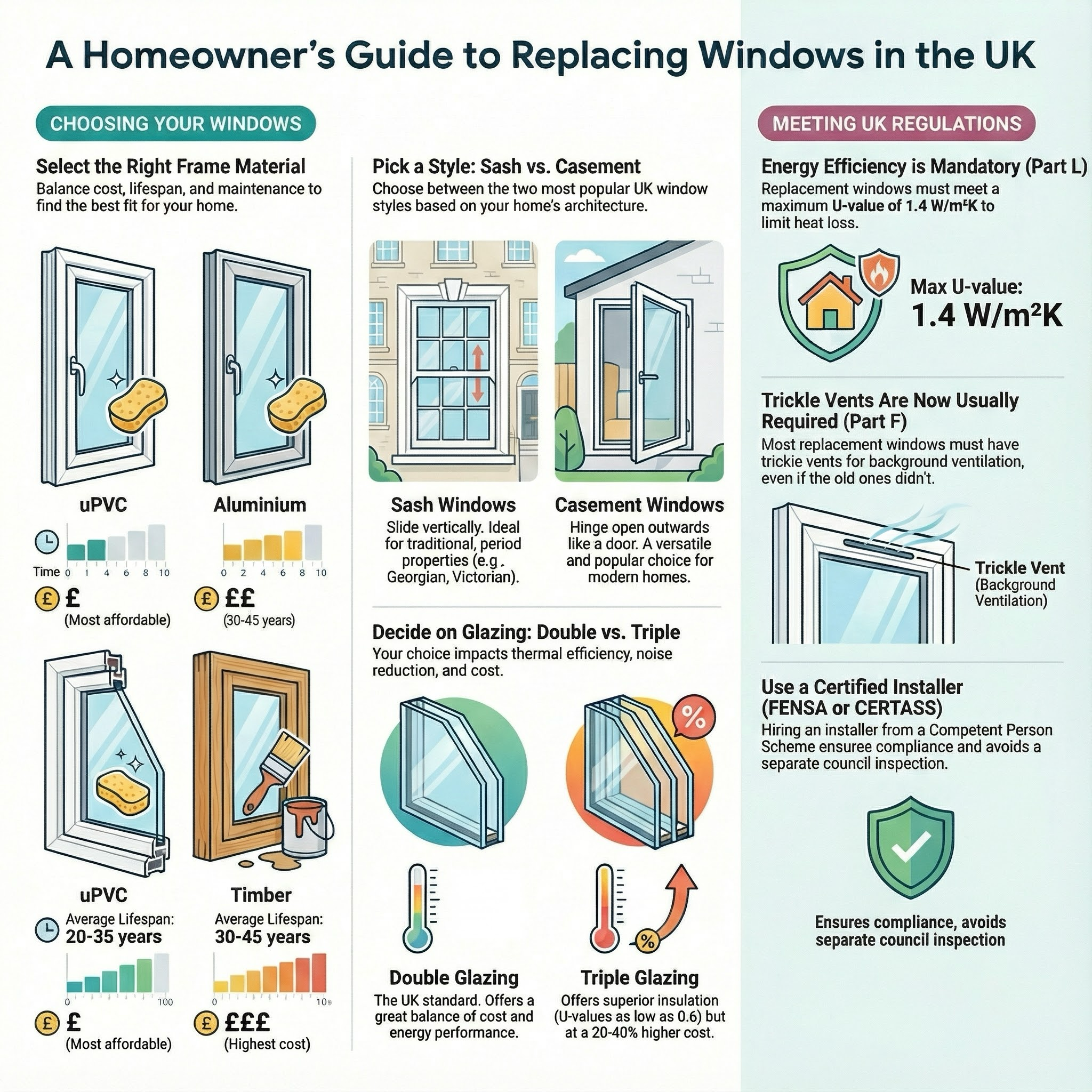
Windows explained
Modifying or upgrading an existing door to meet current British Standards (BS 476-22 or BS EN 1634-1) requires specialist knowledge. A fire door is a complete assembly—including the frame, ironmongery, and seals—and any non-compliant modification can void its fire-resistance rating and invalidate your home insurance.
| Item | Low £ | High £ | Notes |
|---|---|---|---|
| Compliance Survey & Report | £95 | £180 | Often discounted if remedial work is booked. |
| Basic Seal & Hinge Upgrade | £160 | £320 | Per door; includes intumescent strips and Grade 13 hinges. |
| Full Hardware Retrofit | £350 | £750 | Includes fire-rated closers, locks, and handles. |
| Fire-Rated Glazing Upgrade | £220 | £500 | Per panel; includes specialist glass and beading. |
| Labour (Hourly Rate) | £55 | £95 | Specialist joiner or fire door technician. |
Prices vary based on the existing condition of the door and the level of protection required (FD30 vs FD60). Costs generally include VAT and the disposal of non-compliant hardware, but bespoke ironmongery finishes will increase the total.
Fire door modification is not a DIY task. The precision required to maintain the fire rating is extreme; for example, a gap that is 2mm too wide can allow smoke to bypass the door entirely.
Professional installation ensures that the door assembly remains compliant with UK Building Regulations and provides the necessary certification for insurers and local authorities.
In the UK, work should be carried out by a professional accredited by a third-party scheme such as FIRAS, BM TRADA, or the IFC. This provides an audit trail that the materials used and the installation methods meet the original fire test evidence.
You can paint the door leaf, but you must never paint over the intumescent strips or smoke seals. Paint prevents the chemical reaction required for the strips to expand, and it can make smoke seals stiff and ineffective.
UK standards require the gap between the door and the frame (at the top and sides) to be between 2mm and 4mm, with 3mm being the ideal. Anything larger allows too much smoke and heat to pass through before the seals activate.
Yes, in most cases. A fire door is only effective if it is closed; therefore, Building Regulations usually require an overhead or jamb-mounted closer to ensure the door returns to the frame automatically.
Generally, no. A fire door is constructed with a specific core (usually flaxboard or solid timber) and tested as a complete unit. Upgrading a standard door with fire-rated paint or seals rarely provides a certified 30-minute rating.
For domestic properties, an annual check is recommended. For high-traffic areas or multi-occupancy buildings, the UK government recommends formal inspections every six months to check for wear and tear.
This guide was written with AI assistance and is intended for general information only. Prices are estimates based on UK averages and may vary by region. Always get at least three quotes and consult a qualified professional before starting any work.
Ask follow-ups in plain English. The AI explains options, sequencing and what to ask the windows — so you walk in informed.
Roof windows, often referred to by the popular brand name Velux, are a brilliant way to transform dark lofts and extensions into bright, airy living spaces. How...
READ GUIDE →GuideSash windows are a defining feature of British period properties, offering timeless aesthetic appeal and vital ventilation. However, whether due to a stray foot...
READ GUIDE →GuideUpgrading to a modern uPVC door is one of the most effective ways for UK homeowners to improve property security and thermal efficiency. Modern uPVC (unplastici...
READ GUIDE →GuideAdding a roof window is one of the most effective ways to transform a dark, cramped attic or extension into a bright and airy living space. Beyond the aesthetic...
READ GUIDE →GuideReplacing a door is one of the most effective ways to improve your home’s security, energy efficiency, and aesthetic appeal. Whether you are upgrading an old dr...
READ GUIDE →GuideWhether you are converting a former high-street shop into a modern residence or installing expansive, commercial-grade glazing in a contemporary home extension,...
READ GUIDE →