Instant
01 · Ask
Ask the AI a follow-up
Got more questions about glass pane repair? Describe the bit you're unsure about — the AI explains options, sequencing and what to ask the windows.

Cracked or broken pane — measured, cut and replaced. Often same-day for standard sizes.
You've read the brief on glass pane repair. Now lean on us to find the right windows — and stay in control of the job.
Got more questions about glass pane repair? Describe the bit you're unsure about — the AI explains options, sequencing and what to ask the windows.
Costs, timelines, pitfalls and the right questions to ask before any windows starts on glass pane repair.
Itemised quotes from up to 3 local windowss on glass pane repair — so you can compare like-for-like, not lump sums.
Ready when you are
Enter your postcode and get free quotes from local pros.
Four moves that separate a smooth job from a nightmare.
If you see condensation inside the panes, the seal has failed. This cannot be "cleaned" and requires a full unit replacement.
Installing a unit that is too thin for the frame leads to rattling and water leaks; too thick and the beads won't click back into place.
Different manufacturers use different coatings (e.g., Pilkington K), which can result in a slight colour difference between the new pane and the old ones.
In older timber windows, if the putty isn't allowed to skin over before painting, it will crack and allow water to rot the frame.
Indicative UK ranges and what affects price.
By job type
Quote spread is typically ± 18% — always get 3 quotes.
Windows quick-view
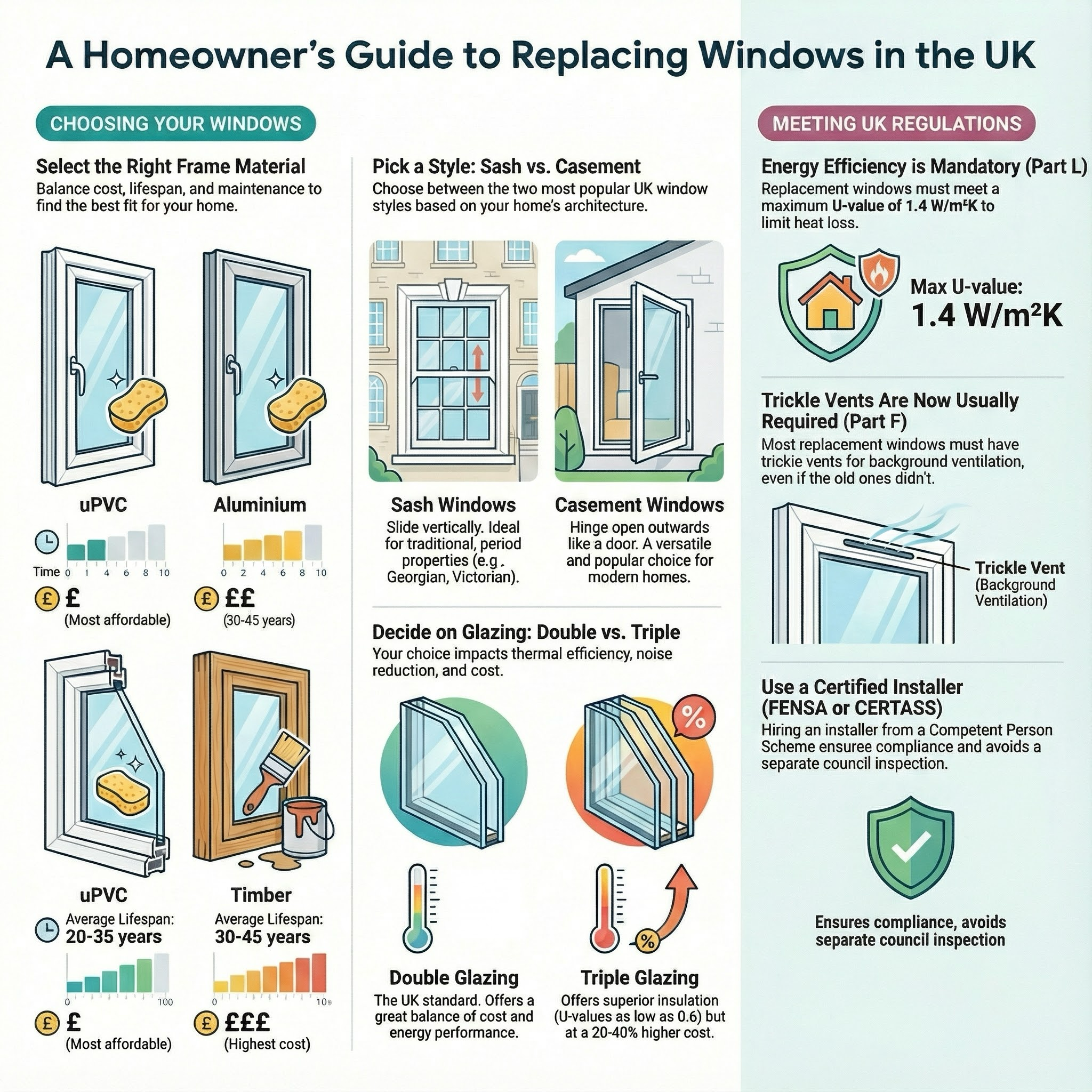
Windows explained
Repairing glass involves more than just swapping one sheet for another. Modern UK homes must adhere to specific safety standards regarding glass type and thermal performance, meaning most repairs require a professional touch to ensure the replacement meets current Building Regulations.
The cost of glass repair in the UK varies based on the glass type, the size of the aperture, and the height of the window. Prices for 2025/26 reflect the rising costs of glass manufacturing and energy-intensive toughening processes.
| Item | Low £ | High £ | Notes |
|---|---|---|---|
| Small Single Pane (Timber) | £90 | £160 | Includes labour and basic 4mm float glass. |
| Standard Double Glazed Unit | £180 | £380 | Typical uPVC window replacement unit. |
| Toughened Safety Glass Unit | £250 | £550 | Required for doors and low-level windows. |
| Emergency Boarding Up | £120 | £250 | Out-of-hours call-out for temporary security. |
| Scaffolding / High Access | £150 | £600 | Required for difficult-to-reach upper floors. |
Labour rates typically range from £50 to £80 per hour, though many glaziers charge a fixed price per unit. Expect to pay a premium for "low-E" (low emissivity) glass or gas-filled units (Argon) which are now standard for thermal efficiency.
While replacing a small pane of glass in a garden shed is a manageable DIY task, domestic window repair should generally be left to professionals. Handling broken glass carries a high risk of injury, and incorrect installation can lead to damp, rot, and voided home insurance.
Modern double-glazed units are vacuum-sealed; if the seal is compromised during a DIY installation, the window will mist up internally within weeks.
Furthermore, UK Building Regulations require safety glass in "critical locations" like doors and low windows. A professional glazier ensures your home remains compliant and provides a guarantee for the unit's seal.
No. Double-glazed units are manufactured as a single, factory-sealed component. If one pane breaks, the entire unit (both panes and the spacer bar) must be replaced to maintain the vacuum or gas fill.
Under UK Building Regulations, safety glass is mandatory for any glass in a door, glass adjacent to a door, or any window where the glass starts within 800mm of the floor level.
This indicates a "failed unit." The perimeter seal has broken, allowing moist air to enter the gap. Once this happens, the unit's insulating properties are lost, and the only solution is replacement.
While glass can be swapped in the rain, it is not ideal. Sealants and silicone require dry surfaces to bond correctly, so your tradesperson may use a temporary cover or wait for a dry spell to ensure a weather-tight finish.
Many standard UK buildings and contents insurance policies include "Accidental Damage" for glass. Check your policy, as you may only need to pay your excess, though this may affect your no-claims bonus.
This guide was written with AI assistance and is intended for general information only. Prices are estimates based on UK averages and may vary by region. Always get at least three quotes and consult a qualified professional before starting any work.
Ask follow-ups in plain English. The AI explains options, sequencing and what to ask the windows — so you walk in informed.
Roof windows, often referred to by the popular brand name Velux, are a brilliant way to transform dark lofts and extensions into bright, airy living spaces. How...
READ GUIDE →GuideSash windows are a defining feature of British period properties, offering timeless aesthetic appeal and vital ventilation. However, whether due to a stray foot...
READ GUIDE →GuideUpgrading to a modern uPVC door is one of the most effective ways for UK homeowners to improve property security and thermal efficiency. Modern uPVC (unplastici...
READ GUIDE →GuideAdding a roof window is one of the most effective ways to transform a dark, cramped attic or extension into a bright and airy living space. Beyond the aesthetic...
READ GUIDE →GuideReplacing a door is one of the most effective ways to improve your home’s security, energy efficiency, and aesthetic appeal. Whether you are upgrading an old dr...
READ GUIDE →GuideWhether you are converting a former high-street shop into a modern residence or installing expansive, commercial-grade glazing in a contemporary home extension,...
READ GUIDE →