Instant
01 · Ask
Ask the AI a follow-up
Got more questions about glass Repair? Describe the bit you're unsure about — the AI explains options, sequencing and what to ask the windows.

What glass repair costs in 2026 — by type, size and method (replace, polish, edge-bond).
You've read the brief on glass Repair. Now lean on us to find the right windows — and stay in control of the job.
Got more questions about glass Repair? Describe the bit you're unsure about — the AI explains options, sequencing and what to ask the windows.
Costs, timelines, pitfalls and the right questions to ask before any windows starts on glass Repair.
Itemised quotes from up to 3 local windowss on glass Repair — so you can compare like-for-like, not lump sums.
Ready when you are
Enter your postcode and get free quotes from local pros.
Four moves that separate a smooth job from a nightmare.
Condensation inside the glass indicates the seal has failed. This cannot be "repaired" and requires a new glass unit.
Even a 2mm error can prevent a double-glazed unit from fitting or sealing correctly, leading to leaks.
If the window frame's drainage holes are blocked during repair, water will sit against the seal and cause premature failure.
Using standard putty on laminated glass can cause the interlayer to delaminate over time.
Indicative UK ranges and what affects price.
By job type
Quote spread is typically ± 18% — always get 3 quotes.
Windows quick-view
Windows explained
Whether you are dealing with a "blown" window (condensation between the panes) or accidental damage, acting quickly prevents further structural issues and rising energy bills. This guide outlines what to expect when hiring a professional glazier and the costs involved for 2025/26.
| Item | Low £ | High £ | Notes |
|---|---|---|---|
| Emergency Call-out | £75 | £150 | Usually covers the first hour or boarding up. |
| Labour (per hour) | £35 | £65 | Higher rates in London and the South East. |
| Single Pane (Float) | £45 | £90 | Standard 4mm glass for older timber frames. |
| Double Glazed Unit | £120 | £250 | Per unit; price varies by size and gas fill (Argon). |
| Toughened/Safety Glass | £80 | £160 | Required for doors and low-level windows. |
| Glass Disposal Fee | £0 | £45 | Often included in the labour, but some charge extra. |
Total project costs are heavily influenced by the type of glass required. Specialist coatings like Low-E (thermal) glass or acoustic laminates for noise reduction will sit at the higher end of the price spectrum. Always check if the quote includes VAT and the cost of any scaffolding required for upper-floor repairs.
While DIY kits exist for minor scratches, most glass work should be left to a professional glazier. Handling broken glass carries a significant risk of injury, and incorrect installation can lead to draughts, damp, and invalidated home insurance.
Professional installation is essential for double-glazed units to ensure the vacuum seal remains intact; a DIY mistake here will lead to "blown" windows within months.
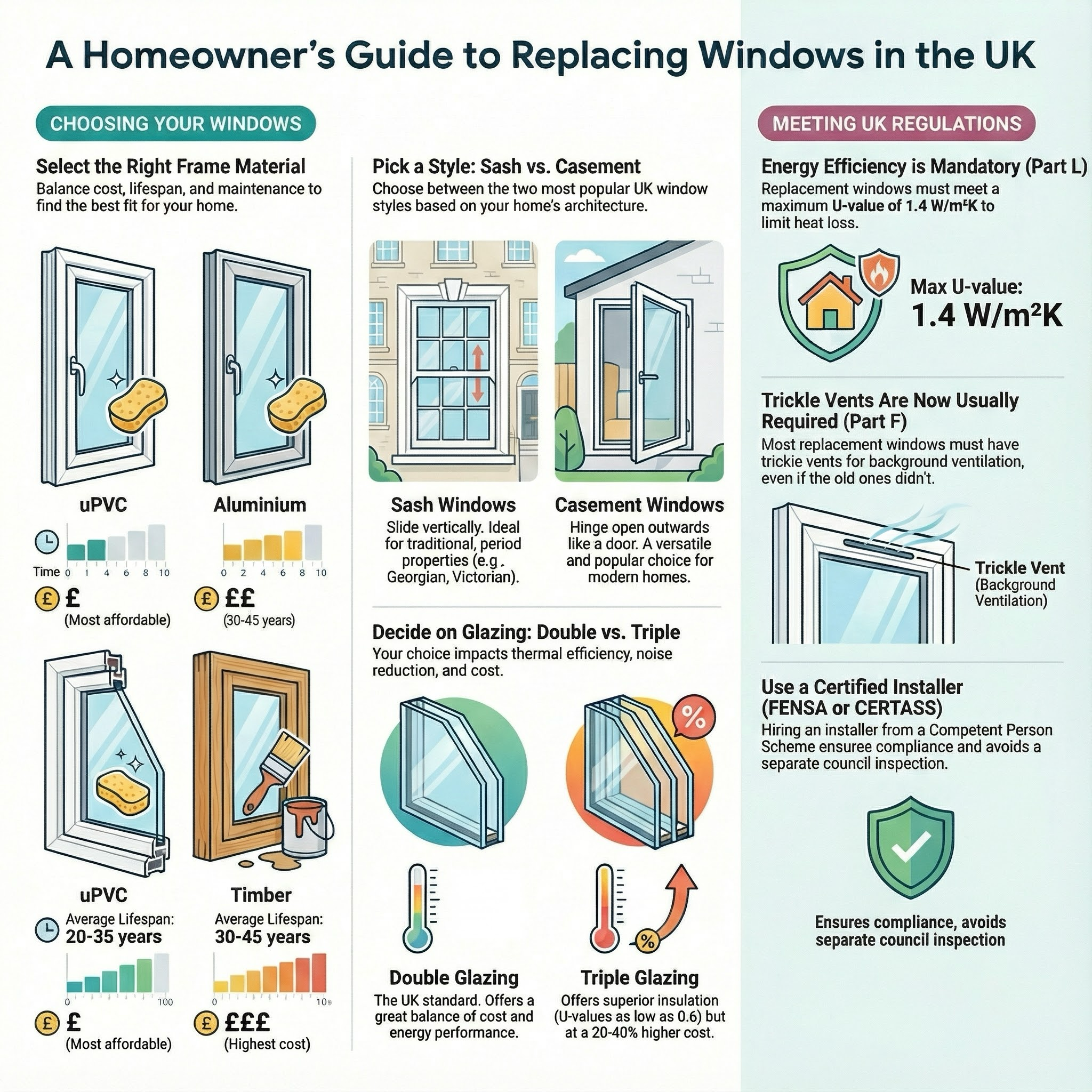
Furthermore, replacement windows in the UK must comply with Building Regulations. A professional installer registered with a competent person scheme (like FENSA or CERTASS) can self-certify the work, saving you the hassle of a separate local authority inspection.
No, once the seal has broken and moisture has entered the unit, the internal desiccant is saturated. The glass unit must be replaced, though you can usually keep the existing frame.
Yes, toughened glass undergoes a heat-treatment process for strength and safety. It typically costs 20-40% more than standard float glass and cannot be cut once it has been toughened.
In most cases, no. Glaziers can replace just the glass unit (the "IGU") within your existing uPVC, timber, or aluminium frames, which is significantly cheaper than a full window replacement.
Low-Emissivity glass has a microscopic metal coating that reflects heat back into the room. It is now a standard requirement for most UK replacement glazing to meet energy efficiency regulations.
Look for a small permanent etched mark in the corner of the pane. If it's toughened glass, it will usually feature a "Kitemark" and the British Standard code BS EN 12150.
This guide was written with AI assistance and is intended for general information only. Prices are estimates based on UK averages and may vary by region. Always get at least three quotes and consult a qualified professional before starting any work.
Ask follow-ups in plain English. The AI explains options, sequencing and what to ask the windows — so you walk in informed.
Roof windows, often referred to by the popular brand name Velux, are a brilliant way to transform dark lofts and extensions into bright, airy living spaces. How...
READ GUIDE →GuideSash windows are a defining feature of British period properties, offering timeless aesthetic appeal and vital ventilation. However, whether due to a stray foot...
READ GUIDE →GuideUpgrading to a modern uPVC door is one of the most effective ways for UK homeowners to improve property security and thermal efficiency. Modern uPVC (unplastici...
READ GUIDE →GuideAdding a roof window is one of the most effective ways to transform a dark, cramped attic or extension into a bright and airy living space. Beyond the aesthetic...
READ GUIDE →GuideReplacing a door is one of the most effective ways to improve your home’s security, energy efficiency, and aesthetic appeal. Whether you are upgrading an old dr...
READ GUIDE →GuideWhether you are converting a former high-street shop into a modern residence or installing expansive, commercial-grade glazing in a contemporary home extension,...
READ GUIDE →