Instant
01 · Ask
Ask the AI a follow-up
Got more questions about summer House Door Repair? Describe the bit you're unsure about — the AI explains options, sequencing and what to ask the windows.

Sticking, rotten or storm-damaged summer-house door — fixed without replacing the whole door.
You've read the brief on summer House Door Repair. Now lean on us to find the right windows — and stay in control of the job.
Got more questions about summer House Door Repair? Describe the bit you're unsure about — the AI explains options, sequencing and what to ask the windows.
Costs, timelines, pitfalls and the right questions to ask before any windows starts on summer House Door Repair.
Itemised quotes from up to 3 local windowss on summer House Door Repair — so you can compare like-for-like, not lump sums.
Ready when you are
Enter your postcode and get free quotes from local pros.
Four moves that separate a smooth job from a nightmare.
Doors that open fine in summer but jam in winter. This is usually caused by inadequate sealing on the top and bottom edges.
The weight of the door pulling the screws out of soft timber, causing the door to "drag" on the threshold.
Water sitting at the base of the door because there is no weather bar or "drip" groove, leading to a rotted bottom rail.
As the timber moves, the latch no longer lines up with the strike plate, making the door impossible to lock.
Indicative UK ranges and what affects price.
By job type
Quote spread is typically ± 18% — always get 3 quotes.
Windows quick-view
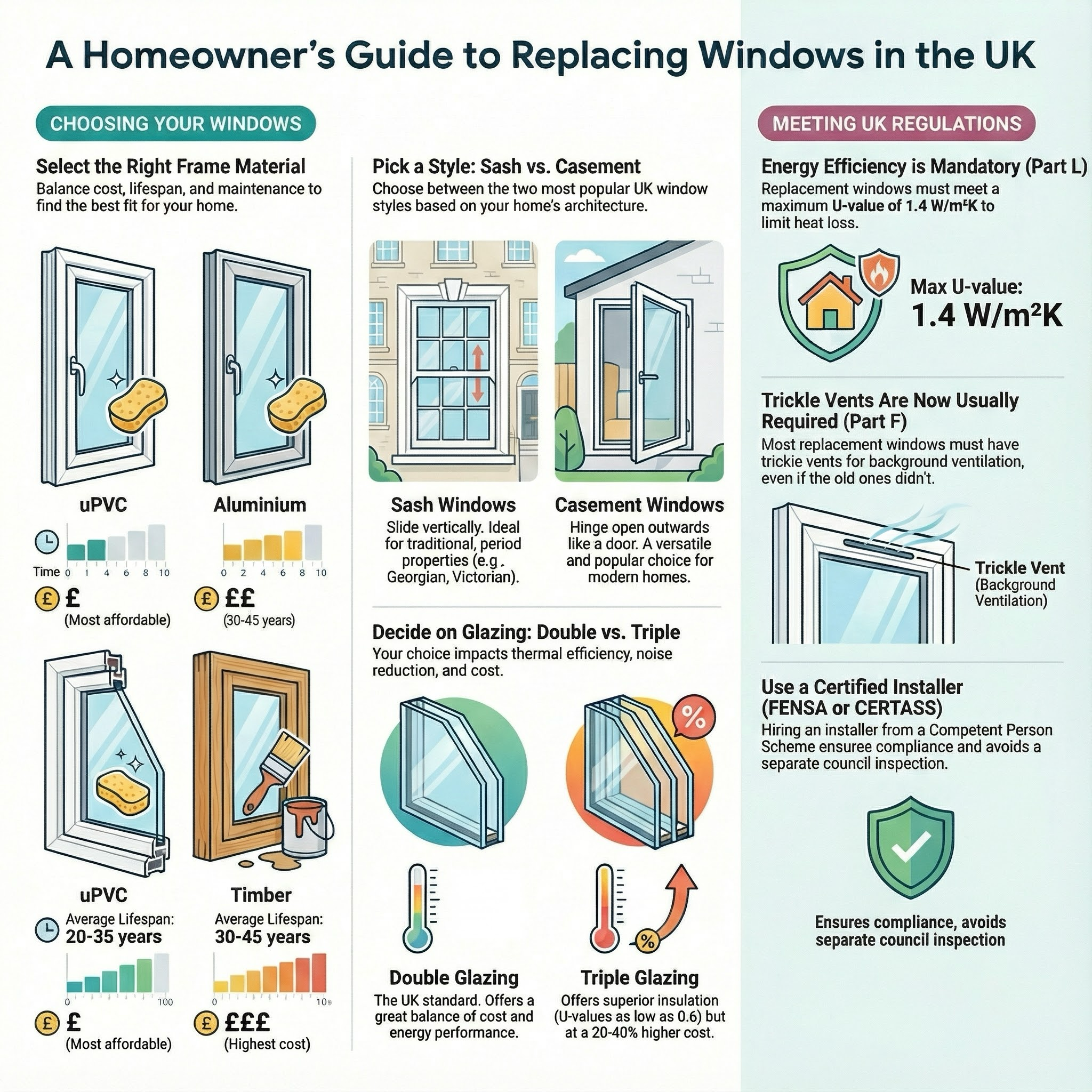
Windows explained
Repairing a summer house door promptly prevents further structural damage to the main building. Whether it is a simple plane-down to stop sticking or a complex timber splice to remove rot, professional intervention ensures your garden room remains a dry, functional space for years to come.
The cost of summer house door repairs depends largely on the extent of timber decay and the quality of the existing hardware. Simple adjustments are inexpensive, while bespoke joinery repairs for rotted heritage-style doors will sit at the higher end of the scale.
| Item | Low £ | High £ | Notes |
|---|---|---|---|
| Call-out / Assessment | £80 | £130 | Often includes the first hour of labour. |
| Hourly Labour Rate | £45 | £70 | Standard rate for a skilled joiner or carpenter. |
| Materials (Fillers/Timber) | £20 | £60 | Includes wood, epoxy, and specialist sealants. |
| Replacement Lock/Hardware | £30 | £85 | Varies by security rating (e.g., 5-lever mortice). |
| Glazing Repair (Single) | £50 | £110 | Per pane, including putty and beads. |
| Total Project Cost | £180 | £380 | Average range for a standard UK repair. |
Please note that these prices include VAT and are based on 2025/26 UK averages. Costs may be higher in London and the South East due to increased labour rates.
If your door is simply "sticking" due to summer humidity, a DIY enthusiast with a hand plane and some wood treatment can often resolve the issue. However, if the door has dropped significantly or the bottom rail is soft to the touch, a professional joiner is required.
Structural repairs require precision; if you remove too much timber or fail to treat rot correctly, the door may become unserviceable or continue to decay from the inside out.
Professional repair is essential for glazed doors. Handling thin, often fragile glass in older summer houses requires specific tools and experience to avoid breakage or injury.
Look for a carpenter or joiner with experience in external timber structures rather than just internal "second-fix" work. External joinery requires a deeper understanding of moisture movement and weatherproofing.
Questions to ask:
Most summer house door repairs do not fall under Building Regulations unless the building is being converted into a habitable "Granny Annexe" or home office with specific thermal requirements. However, certain safety standards still apply:
Yes, a joiner can perform a "splice repair." This involves cutting away the decayed section and joining a new piece of treated timber using waterproof glue and dowels. It is much cheaper than a bespoke replacement door.
Timber is hygroscopic, meaning it absorbs moisture from the air. In a damp UK winter, the wood cells expand. This is often a sign that the door hasn't been painted or sealed on all six sides, including the hidden top and bottom edges.
For small holes or cracks, a high-quality two-part chemical wood filler is excellent. For structural areas or large sections of rot, new timber is always superior as it expands and contracts at the same rate as the rest of the door.
Only if the door frame is thick enough to support the extra weight and depth of a double-glazed unit. Many standard summer house doors are too thin, but a joiner can advise if a rebate adjustment is possible.
Ensure the door has a "weather bar" at the bottom to shed water away from the threshold. Re-paint or re-stain every 2-3 years, and always ensure the bottom edge is heavily sealed against rising damp.
This guide was written with AI assistance and is intended for general information only. Prices are estimates based on UK averages and may vary by region. Always get at least three quotes and consult a qualified professional before starting any work.
Ask follow-ups in plain English. The AI explains options, sequencing and what to ask the windows — so you walk in informed.
Roof windows, often referred to by the popular brand name Velux, are a brilliant way to transform dark lofts and extensions into bright, airy living spaces. How...
READ GUIDE →GuideSash windows are a defining feature of British period properties, offering timeless aesthetic appeal and vital ventilation. However, whether due to a stray foot...
READ GUIDE →GuideUpgrading to a modern uPVC door is one of the most effective ways for UK homeowners to improve property security and thermal efficiency. Modern uPVC (unplastici...
READ GUIDE →GuideAdding a roof window is one of the most effective ways to transform a dark, cramped attic or extension into a bright and airy living space. Beyond the aesthetic...
READ GUIDE →GuideReplacing a door is one of the most effective ways to improve your home’s security, energy efficiency, and aesthetic appeal. Whether you are upgrading an old dr...
READ GUIDE →GuideWhether you are converting a former high-street shop into a modern residence or installing expansive, commercial-grade glazing in a contemporary home extension,...
READ GUIDE →