Instant
01 · Ask
Ask the AI a follow-up
Got more questions about timber Window Restoration? Describe the bit you're unsure about — the AI explains options, sequencing and what to ask the windows.

Period timber windows restored — defective wood cut out, resin filled, primed and 2-coat painted.
You've read the brief on timber Window Restoration. Now lean on us to find the right windows — and stay in control of the job.
Got more questions about timber Window Restoration? Describe the bit you're unsure about — the AI explains options, sequencing and what to ask the windows.
Costs, timelines, pitfalls and the right questions to ask before any windows starts on timber Window Restoration.
Itemised quotes from up to 3 local windowss on timber Window Restoration — so you can compare like-for-like, not lump sums.
Ready when you are
Enter your postcode and get free quotes from local pros.
Four moves that separate a smooth job from a nightmare.
Using non-breathable paints (like thick gloss) can trap moisture inside the wood, accelerating rot from the inside out.
Unscrupulous contractors may remove sash weights to fit modern springs; this devalues period properties and is often unnecessary.
Using standard car body filler instead of specialized wood resins will result in the repair cracking and falling out within a year.
Excessive paint application on the parting beads and staff beads can cause the window to seize completely.
Indicative UK ranges and what affects price.
By job type
Quote spread is typically ± 18% — always get 3 quotes.
Windows quick-view
Windows explained
Modern restoration techniques do more than just improve aesthetics; they significantly enhance thermal performance and eliminate the draughts common in older British homes. By using high-performance resins and draught-proofing systems, you can achieve modern comfort without sacrificing architectural integrity.
| Item | Low £ | High £ | Notes |
|---|---|---|---|
| Standard Overhaul | £450 | £700 | Per window; includes draught-proofing and minor repairs. |
| Full Restoration | £850 | £1,400 | Per window; major rot repair, new sills, and full re-decoration. |
| Sill Replacement | £250 | £500 | Structural replacement of the front or side sill in hardwood. |
| Sash Cord Replacement | £150 | £250 | Per window; includes balancing and cord renewal. |
| Secondary Glazing | £300 | £600 | Installation of internal units for noise and thermal insulation. |
Prices vary based on the window's size, the height of the property (scaffolding requirements), and the severity of the rot. Working on listed buildings or within conservation areas may also increase costs due to specific material requirements and planning complexities.
While basic sanding and painting are manageable for most DIYers, structural timber restoration requires a high level of skill. Working with sash weights, replacing sills, and using epoxy repair systems are tasks best left to specialists to ensure the window remains functional and weather-tight.
Professional restoration is essential for period properties to ensure compliance with conservation standards and to maintain the structural integrity of the window frames.
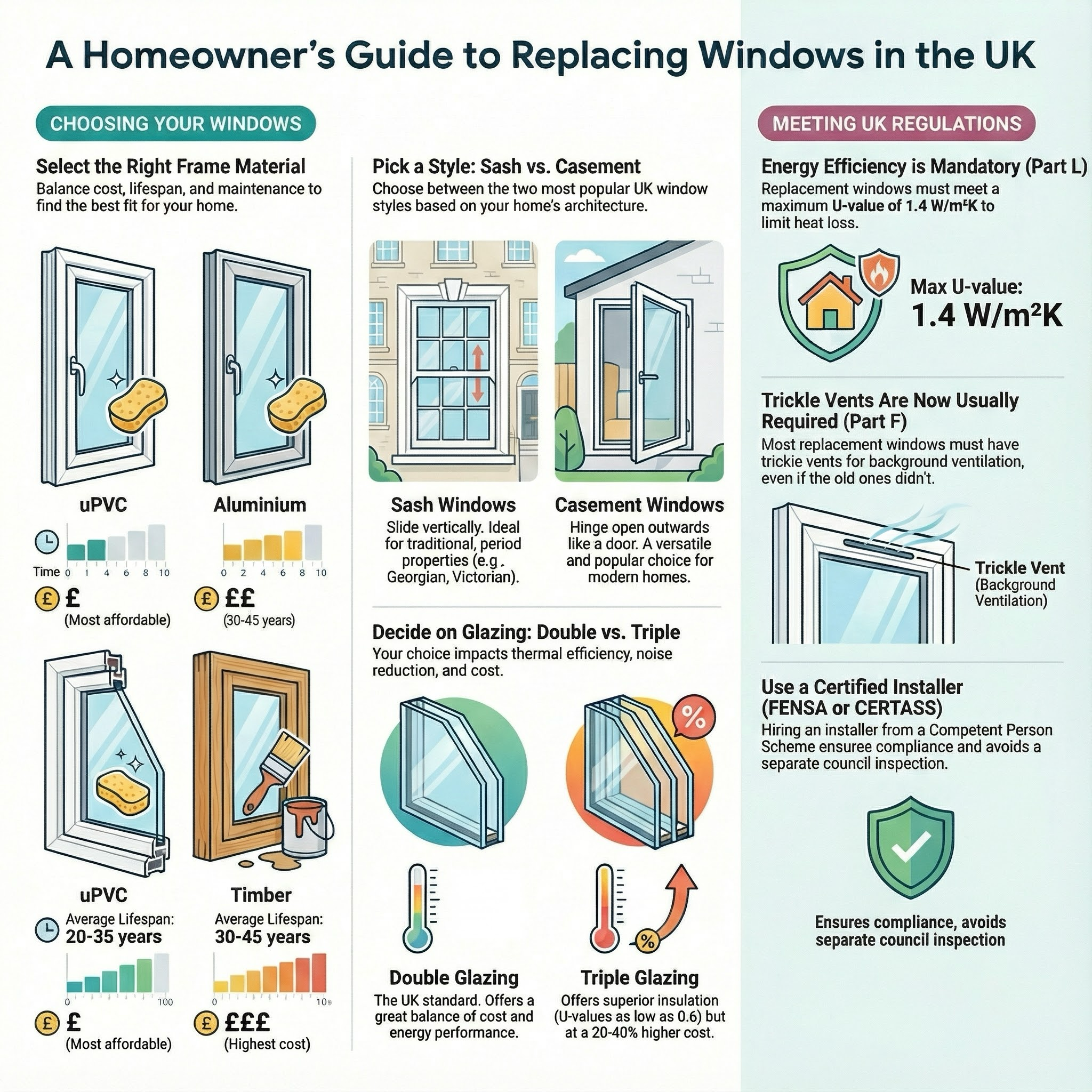
If you are replacing the glass with double-glazed units, the work must comply with Building Regulations Part L. A professional installer registered with FENSA or CERTASS can self-certify this work, saving you the hassle of a separate local authority inspection.
Restoration is typically 30% to 50% cheaper than a high-quality bespoke timber replacement. It also avoids the need for internal re-plastering and avoids the risk of devaluing a period home with inappropriate modern alternatives.
In many cases, yes. Specialists can "re-rebate" your existing sashes to accommodate slimline double-glazing units (often called "vacuum glass" or "slim-heritage" units) while maintaining the original appearance.
If restored using high-quality timber like Accoya and maintained with microporous paint every 5–8 years, restored windows can last another 60 to 100 years. This far exceeds the lifespan of uPVC alternatives.
Generally, no, as restoration is considered maintenance. However, if you live in a Listed Building or an Article 4 Conservation Area, you must consult your local council before changing the glass or the appearance of the frames.
Accoya is widely considered the gold standard for UK window restoration. It is a chemically treated softwood that is virtually rot-proof, does not swell or shrink, and carries a 50-year guarantee against rot.
Yes. A standard part of the restoration process is "draught-proofing," which involves installing brush seals in the beads. This eliminates rattles and significantly reduces outside noise and heat loss.
This guide was written with AI assistance and is intended for general information only. Prices are estimates based on UK averages and may vary by region. Always get at least three quotes and consult a qualified professional before starting any work.
Ask follow-ups in plain English. The AI explains options, sequencing and what to ask the windows — so you walk in informed.
Roof windows, often referred to by the popular brand name Velux, are a brilliant way to transform dark lofts and extensions into bright, airy living spaces. How...
READ GUIDE →GuideSash windows are a defining feature of British period properties, offering timeless aesthetic appeal and vital ventilation. However, whether due to a stray foot...
READ GUIDE →GuideUpgrading to a modern uPVC door is one of the most effective ways for UK homeowners to improve property security and thermal efficiency. Modern uPVC (unplastici...
READ GUIDE →GuideAdding a roof window is one of the most effective ways to transform a dark, cramped attic or extension into a bright and airy living space. Beyond the aesthetic...
READ GUIDE →GuideReplacing a door is one of the most effective ways to improve your home’s security, energy efficiency, and aesthetic appeal. Whether you are upgrading an old dr...
READ GUIDE →GuideWhether you are converting a former high-street shop into a modern residence or installing expansive, commercial-grade glazing in a contemporary home extension,...
READ GUIDE →