Instant
01 · Ask
Ask the AI a follow-up
Got more questions about window replacement? Describe the bit you're unsure about — the AI explains options, sequencing and what to ask the windows.

uPVC, aluminium, hardwood or timber window — supplied, fitted with A-rated glazing and proper trim.
You've read the brief on window replacement. Now lean on us to find the right windows — and stay in control of the job.
Got more questions about window replacement? Describe the bit you're unsure about — the AI explains options, sequencing and what to ask the windows.
Costs, timelines, pitfalls and the right questions to ask before any windows starts on window replacement.
Itemised quotes from up to 3 local windowss on window replacement — so you can compare like-for-like, not lump sums.
Ready when you are
Enter your postcode and get free quotes from local pros.
Four moves that separate a smooth job from a nightmare.
Often caused by blocking trickle vents or lack of ventilation, rather than a fault with the window itself.
If you see misting between the panes, the unit seal has failed and the glass unit needs replacing.
Heavy windows can "drop" over time, making them difficult to lock; this usually requires a simple hinge adjustment.
If water sits in the frame track, the drainage holes may be blocked or the cill was not levelled correctly.
Indicative UK ranges and what affects price.
By job type
Quote spread is typically ± 18% — always get 3 quotes.
Windows quick-view
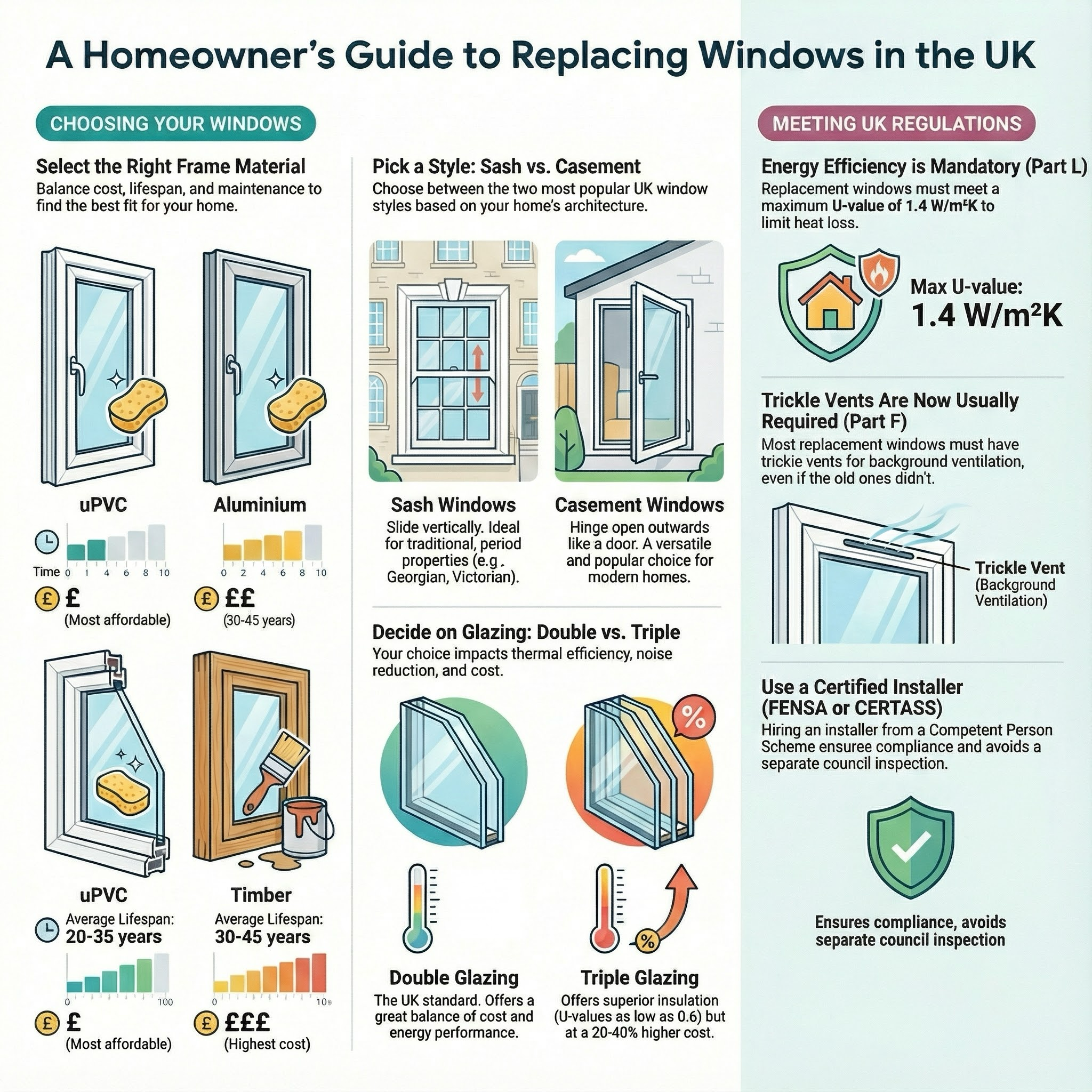
Windows explained
Whether you are upgrading draughty single glazing or replacing tired uPVC units, understanding the process and costs ensures you get a high-quality installation that meets UK Building Regulations. This guide covers everything from material choices to the essential paperwork you need for a future house sale.
Prices vary based on frame material, the number of openings (vents), and the type of glass used. The figures below include professional installation and VAT at 20%.
| Item | Low £ | High £ | Notes |
|---|---|---|---|
| Standard uPVC Casement | £500 | £950 | Per window; white is cheapest. |
| uPVC Sash Window | £850 | £1,400 | Traditional look with modern tech. |
| Aluminium Casement | £950 | £1,600 | Slim sightlines and high durability. |
| Hardwood / Timber Frame | £1,300 | £2,800 | Bespoke joinery for period homes. |
| Bay Window (3-5 segments) | £1,600 | £4,000 | Complex structural installation. |
| Scaffolding (if required) | £450 | £900 | Per elevation for safe access. |
Factors that push costs toward the higher end include choosing "A++" rated triple glazing, selecting woodgrain foils or custom RAL colours, and the need for specialist equipment like glass lifters or scaffolding for hard-to-reach areas.
While a competent DIYer can physically fit a window, it is generally not recommended for most homeowners. Professional installers provide an Insurance Backed Guarantee (IBG) and, crucially, they can self-certify the work through schemes like FENSA or CERTASS.
If you fit windows yourself, you must notify your local Building Control department before starting and pay for an inspection to receive a completion certificate.
Failure to have the correct certification will cause significant delays and costs when you eventually try to sell your property.
Generally no, as long as the windows are of a similar appearance to those being replaced. However, if you live in a Conservation Area or a Listed Building, you will almost certainly need permission before changing the material or style.
Triple glazing offers better acoustic insulation and slightly better thermal performance. However, in the UK's temperate climate, high-quality "A" rated double glazing is usually sufficient and offers a better return on investment.
Building Regulations changed in 2022 to mandate trickle vents in most replacement windows. They provide constant, controlled ventilation which is essential to prevent damp, mould, and poor air quality in increasingly airtight homes.
Quality uPVC windows typically last 20-30 years. Aluminium can last 45 years or more, while well-maintained timber can last a lifetime, though it requires repainting every 5-8 years.
It is proof that your window installation complies with Building Regulations and has been registered with the local authorities. You will need this document when you sell your home.
This guide was written with AI assistance and is intended for general information only. Prices are estimates based on UK averages and may vary by region. Always get at least three quotes and consult a qualified professional before starting any work.
Ask follow-ups in plain English. The AI explains options, sequencing and what to ask the windows — so you walk in informed.
Roof windows, often referred to by the popular brand name Velux, are a brilliant way to transform dark lofts and extensions into bright, airy living spaces. How...
READ GUIDE →GuideSash windows are a defining feature of British period properties, offering timeless aesthetic appeal and vital ventilation. However, whether due to a stray foot...
READ GUIDE →GuideUpgrading to a modern uPVC door is one of the most effective ways for UK homeowners to improve property security and thermal efficiency. Modern uPVC (unplastici...
READ GUIDE →GuideAdding a roof window is one of the most effective ways to transform a dark, cramped attic or extension into a bright and airy living space. Beyond the aesthetic...
READ GUIDE →GuideReplacing a door is one of the most effective ways to improve your home’s security, energy efficiency, and aesthetic appeal. Whether you are upgrading an old dr...
READ GUIDE →GuideWhether you are converting a former high-street shop into a modern residence or installing expansive, commercial-grade glazing in a contemporary home extension,...
READ GUIDE →