Instant
01 · Ask
Ask the AI a follow-up
Got more questions about dishwasher Leak Repair? Describe the bit you're unsure about — the AI explains options, sequencing and what to ask the appliance repair.

Door seal, sump, hose or pump — found, fixed and tested before the kitchen floor takes another hit.
You've read the brief on dishwasher Leak Repair. Now lean on us to find the right appliance repair — and stay in control of the job.
Got more questions about dishwasher Leak Repair? Describe the bit you're unsure about — the AI explains options, sequencing and what to ask the appliance repair.
Costs, timelines, pitfalls and the right questions to ask before any appliance repair starts on dishwasher Leak Repair.
Itemised quotes from up to 3 local appliance repairs on dishwasher Leak Repair — so you can compare like-for-like, not lump sums.
Ready when you are
Enter your postcode and get free quotes from local pros.
Four moves that separate a smooth job from a nightmare.
Food debris causes water to back up and force its way out of the door seals.
If a spray arm is cracked, it can shoot a direct jet of water at the door seal, which is only designed to handle splashes.
Using standard dish soap creates excessive foam that will eventually leak out of the vents.
If the dishwasher isn't perfectly level, water can pool at the front and spill over the tub lip.
Indicative UK ranges and what affects price.
By job type
Quote spread is typically ± 18% — always get 3 quotes.
Appliance Repair quick-view
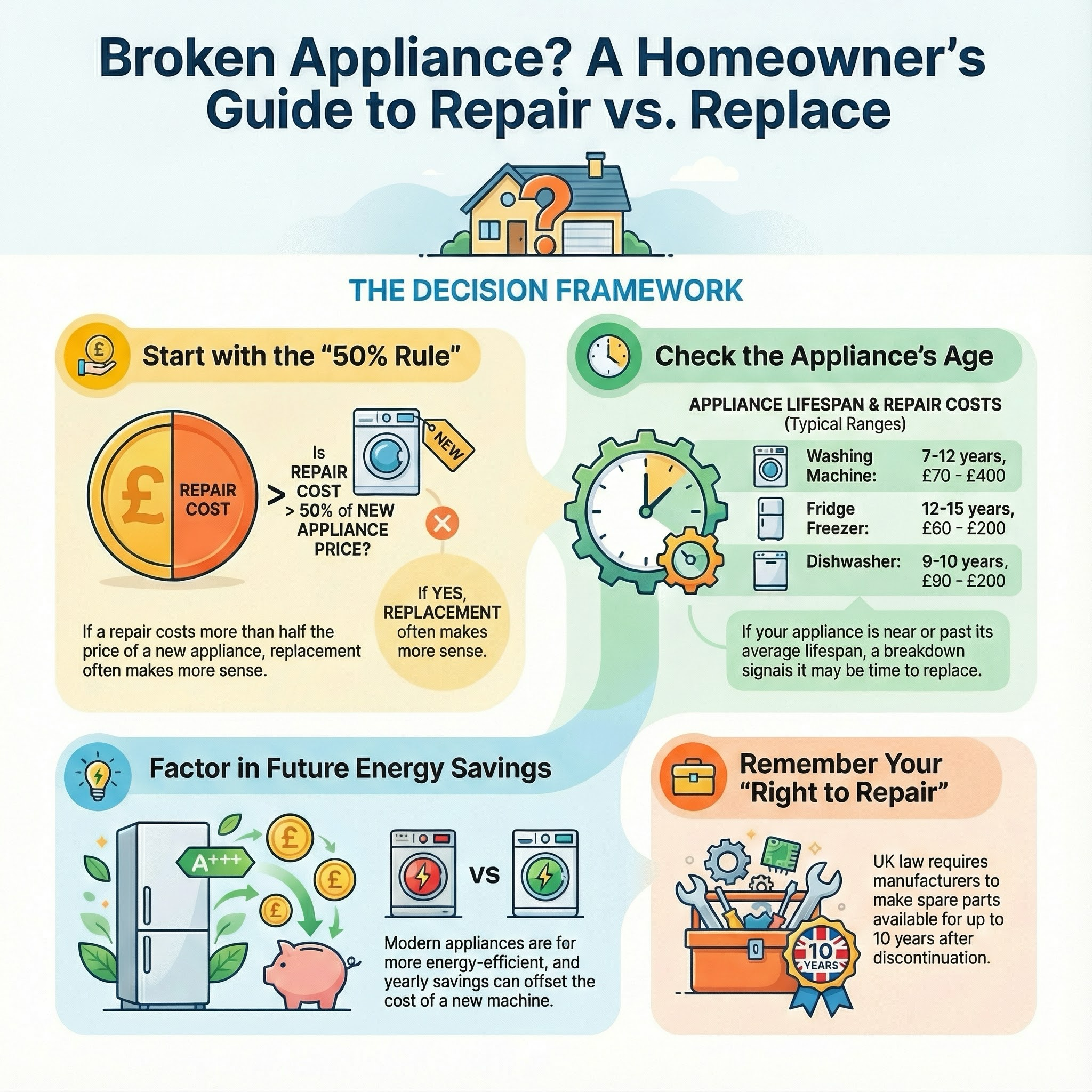
Appliance Repair explained
Most leaks are caused by worn seals, blocked filters, or faulty pumps. Understanding the repair process helps you decide whether to fix the unit or invest in a new one, especially if the appliance is over eight years old.
| Item | Low £ | High £ | Notes |
|---|---|---|---|
| Call-out Fee (Diagnostic) | £65 | £110 | Often deducted from the final repair bill. |
| Labour (per hour) | £50 | £90 | Most repairs are completed within one hour. |
| Door Seal/Gasket | £25 | £60 | Common fix for front-facing leaks. |
| Drain Pump or Inlet Valve | £40 | £95 | Varies by brand (e.g., Miele vs. Beko). |
| Total Average Repair | £120 | £260 | Includes VAT and standard parts. |
Prices vary based on your location in the UK and the brand of the appliance. Premium brands like Miele or Bosch often require more expensive OEM (Original Equipment Manufacturer) parts compared to budget brands.
Pro Tip: Always check if your dishwasher is still under manufacturer warranty or covered by your home emergency insurance before booking an independent repair.
While cleaning a filter or wiping down a door seal is a safe DIY task, internal leaks involve the dangerous combination of water and electricity. If you have an integrated dishwasher, the risk of damaging your kitchen units during removal is high.
Professional engineers have the tools to tilt and drain the machine safely without flooding your floor. Furthermore, any work involving the internal wiring or the mains water connection should be handled by a professional to ensure compliance with UK safety standards.
Generally, no. If the repair cost exceeds 50% of the price of a new, energy-efficient model, replacement is usually the better financial choice for appliances over 8 years old.
This is usually a drainage issue rather than a leak. It is often caused by a blocked sink spigot, a kinked drain hose, or a piece of glass stuck in the pump impeller.
Yes. If water reaches the motor, heating element, or control board, it will likely trip your RCD (fuse box) as a safety precaution. Do not attempt to turn it back on until it is dry and repaired.
Check the floor while the machine is off. If it’s still wet, the leak is likely from the supply valve or waste pipe. If it only leaks during a cycle, the fault lies within the appliance.
No. Most engineers prefer to do this themselves to avoid damage to your flooring. However, you should clear the area under the sink to give them access to the plumbing connections.
This guide was written with AI assistance and is intended for general information only. Prices are estimates based on UK averages and may vary by region. Always get at least three quotes and consult a qualified professional before starting any work.
Ask follow-ups in plain English. The AI explains options, sequencing and what to ask the appliance repair — so you walk in informed.
Microwaves are a staple of the modern UK kitchen, offering convenience for everything from defrosting to full meal preparation. While basic freestanding models ...
READ GUIDE →GuideA faulty fridge or freezer is one of the most urgent domestic repairs, with food safety and waste being the primary concerns. For many UK homeowners, a professi...
READ GUIDE →GuideA cold oven is a major disruption to any UK household, but a failed heating element is one of the most common and cost-effective repairs you can undertake. Inst...
READ GUIDE →GuideScope of Works • inspect appliance and perform diagnostic checks (power, suction, switches, wiring) • clean and test filters, dust bin or bag and airway for blo...
READ GUIDE →GuideA faulty microwave display is a common frustration for UK homeowners. Whether the screen has gone completely dark, is flickering, or showing unintelligible "gho...
READ GUIDE →GuideA faulty oven can bring a UK household to a standstill, turning meal times into a logistical challenge. Whether it is a failed heating element, a noisy fan, or ...
READ GUIDE →