Instant
01 · Ask
Ask the AI a follow-up
Got more questions about oven element replacement? Describe the bit you're unsure about — the AI explains options, sequencing and what to ask the appliance repair.

Top or bottom element burnt out — swapped, isolated, tested and back to roasting same day.
You've read the brief on oven element replacement. Now lean on us to find the right appliance repair — and stay in control of the job.
Got more questions about oven element replacement? Describe the bit you're unsure about — the AI explains options, sequencing and what to ask the appliance repair.
Costs, timelines, pitfalls and the right questions to ask before any appliance repair starts on oven element replacement.
Itemised quotes from up to 3 local appliance repairs on oven element replacement — so you can compare like-for-like, not lump sums.
Ready when you are
Enter your postcode and get free quotes from local pros.
Four moves that separate a smooth job from a nightmare.
When the old element is unscrewed, the wires can spring back into the insulation behind the oven wall, requiring a full strip-down to retrieve.
Years of high-heat cycles often cause screws to rust or seize, making them easy to snap or round off without the right tools.
Many ovens have multiple versions of the same model; fitting a "near-match" element can lead to overheating or poor cooking results.
Sometimes the element isn't the problem—a burnt-out changeover switch or a faulty timer can mimic a dead element.
Indicative UK ranges and what affects price.
By job type
Quote spread is typically ± 18% — always get 3 quotes.
Appliance Repair quick-view
Appliance Repair explained
While the repair is relatively straightforward for a professional, it involves working with high-voltage electrical circuits. Ensuring the replacement is done correctly is vital for both the longevity of the oven and the safety of your household. This guide covers everything from current UK pricing to the technical steps involved in a professional repair.
Prices for oven element replacement in the UK are generally stable, though costs in London and the South East may sit at the higher end of these brackets. Most engineers charge a fixed labour fee plus the cost of the specific part required.
| Item | Low £ | High £ | Notes |
|---|---|---|---|
| Standard Fan Element (Part) | £25 | £65 | Genuine parts for premium brands cost more. |
| Labour / Call-out Fee | £70 | £120 | Includes the first hour of work. |
| Grill or Base Element (Part) | £35 | £85 | Often more complex to access than fan elements. |
| Total Average Job | £110 | £220 | Inclusive of VAT and basic testing. |
The primary factors affecting the price are the brand of the oven and the ease of access. High-end brands like Miele or Neff often require more expensive "genuine" parts compared to universal "pattern" parts used for budget models.
While many homeowners feel confident replacing an element themselves, it is a task that carries significant risk if done incorrectly. Loose connections can cause electrical arcing, which is a common cause of domestic fires. Furthermore, if the wires slip behind the oven cavity during the swap, the entire appliance may need to be dismantled.
Safety Warning: Always ensure the appliance is fully isolated at the consumer unit or cooker switch before attempting any inspection. Never work on a "live" appliance.
Hiring a professional ensures the job is compliant with UK safety standards. A qualified appliance engineer will also check for underlying issues, such as a faulty thermostat or cooling fan, which might have caused the element to fail prematurely.
In most cases, yes, as the grill uses a separate heating element. However, if the element has "shorted" and tripped your RCD (fuse box), you should leave the appliance off until it is repaired to avoid further electrical damage.
As elements age, the outer metal casing thins. Eventually, the internal filament touches the outer casing, causing a short circuit and a small "explosion" or bright flash. This is common and usually doesn't mean the whole oven is broken.
Genuine parts are made by the manufacturer and often have better build quality. Pattern parts are cheaper alternatives that usually work well but may have a slightly shorter lifespan or different heat-up times.
A high-quality replacement element should last between 2 and 5 years, depending on how often the oven is used and at what temperatures. Frequent use at maximum heat will shorten its lifespan.
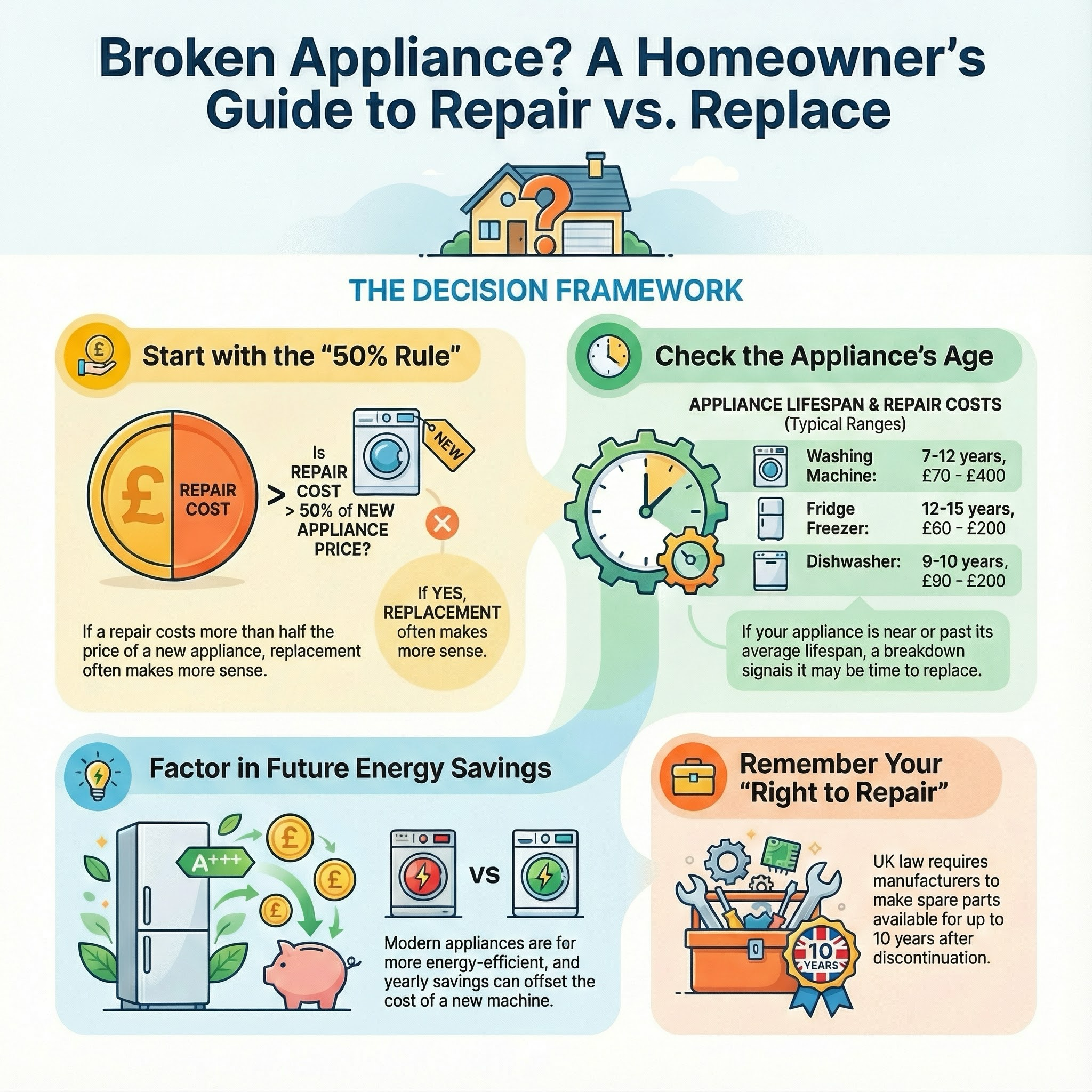
If the oven is otherwise in good condition, a £120 repair is much cheaper than a £400 replacement. However, if the door seals are perished and the hinges are loose, it might be time to invest in a new, more energy-efficient model.
This guide was written with AI assistance and is intended for general information only. Prices are estimates based on UK averages and may vary by region. Always get at least three quotes and consult a qualified professional before starting any work.
Ask follow-ups in plain English. The AI explains options, sequencing and what to ask the appliance repair — so you walk in informed.
Microwaves are a staple of the modern UK kitchen, offering convenience for everything from defrosting to full meal preparation. While basic freestanding models ...
READ GUIDE →GuideA faulty fridge or freezer is one of the most urgent domestic repairs, with food safety and waste being the primary concerns. For many UK homeowners, a professi...
READ GUIDE →GuideA cold oven is a major disruption to any UK household, but a failed heating element is one of the most common and cost-effective repairs you can undertake. Inst...
READ GUIDE →GuideScope of Works • inspect appliance and perform diagnostic checks (power, suction, switches, wiring) • clean and test filters, dust bin or bag and airway for blo...
READ GUIDE →GuideA faulty microwave display is a common frustration for UK homeowners. Whether the screen has gone completely dark, is flickering, or showing unintelligible "gho...
READ GUIDE →GuideA faulty oven can bring a UK household to a standstill, turning meal times into a logistical challenge. Whether it is a failed heating element, a noisy fan, or ...
READ GUIDE →