Instant
01 · Ask
Ask the AI a follow-up
Got more questions about tumble dryer repair? Describe the bit you're unsure about — the AI explains options, sequencing and what to ask the appliance repair.

Not heating, not spinning, smelling or tripping — diagnosed in one visit, fixed in the next.
You've read the brief on tumble dryer repair. Now lean on us to find the right appliance repair — and stay in control of the job.
Got more questions about tumble dryer repair? Describe the bit you're unsure about — the AI explains options, sequencing and what to ask the appliance repair.
Costs, timelines, pitfalls and the right questions to ask before any appliance repair starts on tumble dryer repair.
Itemised quotes from up to 3 local appliance repairs on tumble dryer repair — so you can compare like-for-like, not lump sums.
Ready when you are
Enter your postcode and get free quotes from local pros.
Four moves that separate a smooth job from a nightmare.
Usually caused by a tripped thermal cut-out or a burnt-out heating element due to restricted airflow.
The motor runs, but the drum doesn't turn. This is often caused by overloading the machine.
Often indicates worn drum bearings or a faulty jockey pulley that needs urgent replacement.
In condenser dryers, this is frequently a blocked pump or a cracked water reservoir.
Indicative UK ranges and what affects price.
By job type
Quote spread is typically ± 18% — always get 3 quotes.
Appliance Repair quick-view
Appliance Repair explained
Most modern dryers are highly repairable, with components like belts, heating elements, and thermostats readily available for most major brands. Investing in a repair not only saves money but also reduces electronic waste, keeping your home running efficiently and sustainably.
Repair costs vary depending on the brand and the complexity of the fault. Premium brands like Miele or Bosch may have higher part costs compared to entry-level models.
| Item | Low £ | High £ | Notes |
|---|---|---|---|
| Diagnostic Call-out Fee | £70 | £120 | Often deducted from the final repair bill. |
| Labour (per hour) | £45 | £90 | Most repairs take 1 to 2 hours. |
| Replacement Drive Belt | £15 | £50 | Includes part only; labour is extra. |
| Heating Element | £45 | £130 | Cost depends heavily on brand/model. |
| Control Board / PCB | £120 | £280 | The most expensive part to replace. |
| Drum Bearings/Rollers | £30 | £80 | Common fix for noisy machines. |
Prices generally include VAT. Expect to pay a premium for emergency same-day call-outs or weekend visits in major cities like London or Manchester.
While cleaning a lint filter or emptying a water tank is standard homeowner maintenance, internal repairs should be left to the pros. Tumble dryers involve high-voltage electricity and high-wattage heating elements; a poorly fitted part can lead to a house fire.
Warning: If you own a rare gas-powered tumble dryer, it is a legal requirement in the UK that any repairs are carried out by a Gas Safe registered engineer.
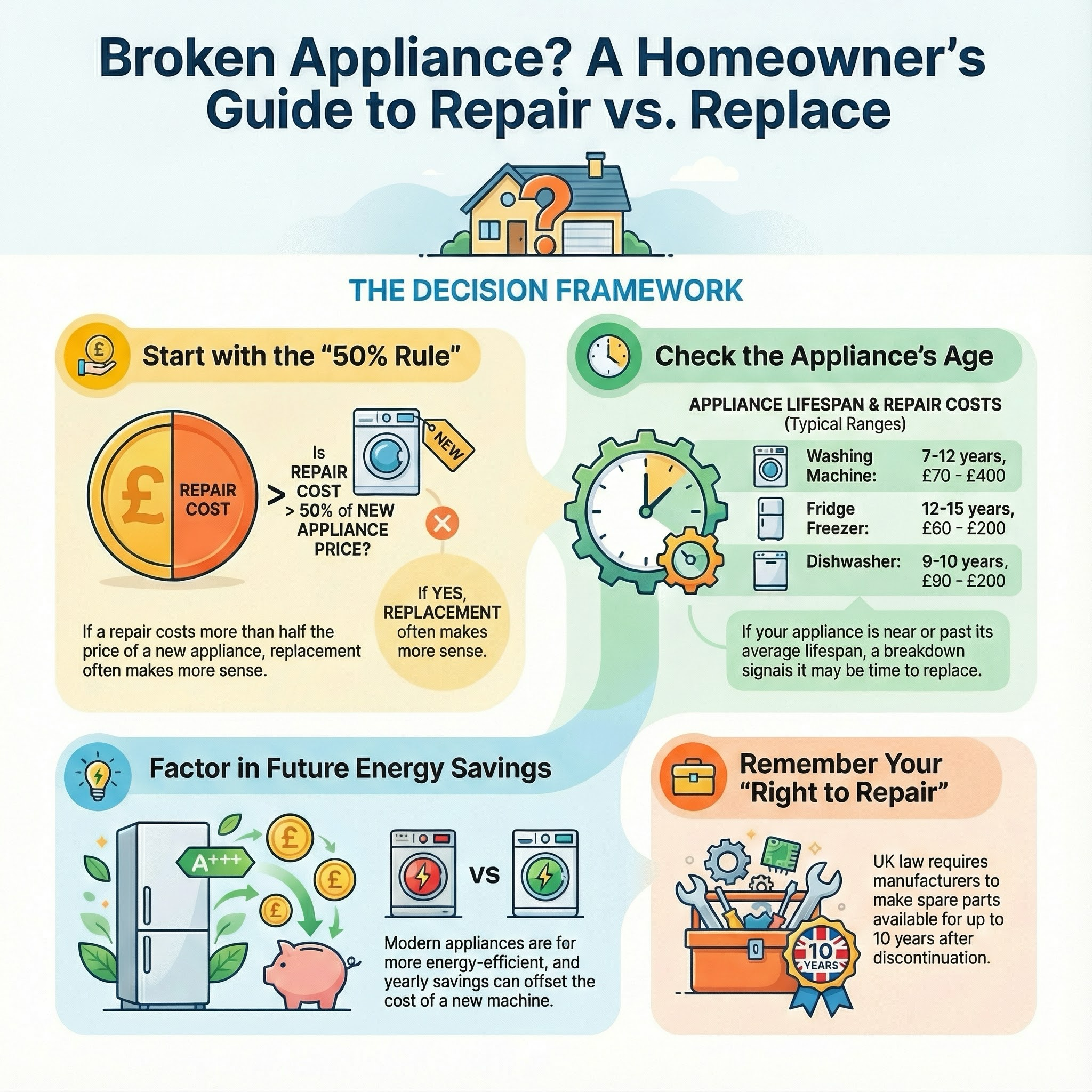
Generally, yes. Most quality dryers have a lifespan of 10-15 years. If the repair cost is less than 50% of a new machine, it is usually the smarter financial choice.
This is usually an airflow issue. Check your external vent hose for kinks or lint blockages, and ensure the condenser unit (if applicable) is washed under a tap.
It is not recommended. A loud noise usually indicates a mechanical failure that will worsen and potentially damage other components if left running.
If the dryer is "built-in" or behind a kitchen plinth, let the engineer know in advance. Otherwise, they will usually move the unit themselves to access the rear panels.
It is a safety device that cuts power if the dryer gets too hot. It usually blows because the lint filter or vent is blocked, causing heat to build up inside the cabinet.
This guide was written with AI assistance and is intended for general information only. Prices are estimates based on UK averages and may vary by region. Always get at least three quotes and consult a qualified professional before starting any work.
Ask follow-ups in plain English. The AI explains options, sequencing and what to ask the appliance repair — so you walk in informed.
Microwaves are a staple of the modern UK kitchen, offering convenience for everything from defrosting to full meal preparation. While basic freestanding models ...
READ GUIDE →GuideA faulty fridge or freezer is one of the most urgent domestic repairs, with food safety and waste being the primary concerns. For many UK homeowners, a professi...
READ GUIDE →GuideA cold oven is a major disruption to any UK household, but a failed heating element is one of the most common and cost-effective repairs you can undertake. Inst...
READ GUIDE →GuideScope of Works • inspect appliance and perform diagnostic checks (power, suction, switches, wiring) • clean and test filters, dust bin or bag and airway for blo...
READ GUIDE →GuideA faulty microwave display is a common frustration for UK homeowners. Whether the screen has gone completely dark, is flickering, or showing unintelligible "gho...
READ GUIDE →GuideA faulty oven can bring a UK household to a standstill, turning meal times into a logistical challenge. Whether it is a failed heating element, a noisy fan, or ...
READ GUIDE →