Instant
01 · Ask
Ask the AI a follow-up
Got more questions about washing machine belt replacement? Describe the bit you're unsure about — the AI explains options, sequencing and what to ask the appliance repair.

Slipping, snapped or smoking belt — fitted, tensioned and spin-tested before the engineer leaves.
You've read the brief on washing machine belt replacement. Now lean on us to find the right appliance repair — and stay in control of the job.
Got more questions about washing machine belt replacement? Describe the bit you're unsure about — the AI explains options, sequencing and what to ask the appliance repair.
Costs, timelines, pitfalls and the right questions to ask before any appliance repair starts on washing machine belt replacement.
Itemised quotes from up to 3 local appliance repairs on washing machine belt replacement — so you can compare like-for-like, not lump sums.
Ready when you are
Enter your postcode and get free quotes from local pros.
Four moves that separate a smooth job from a nightmare.
Consistently washing heavy items like rugs or large duvets puts immense strain on the belt, causing it to stretch or snap prematurely.
If the drum bearings are failing, the drum will "sag," causing the belt to slip off the pulley repeatedly.
If the motor mounting bolts have loosened, the belt will never stay in place regardless of how many times it is replaced.
Using a belt that is even 5mm too long will result in slipping during the high-speed spin cycle.
Indicative UK ranges and what affects price.
By job type
Quote spread is typically ± 18% — always get 3 quotes.
Appliance Repair quick-view
Appliance Repair explained
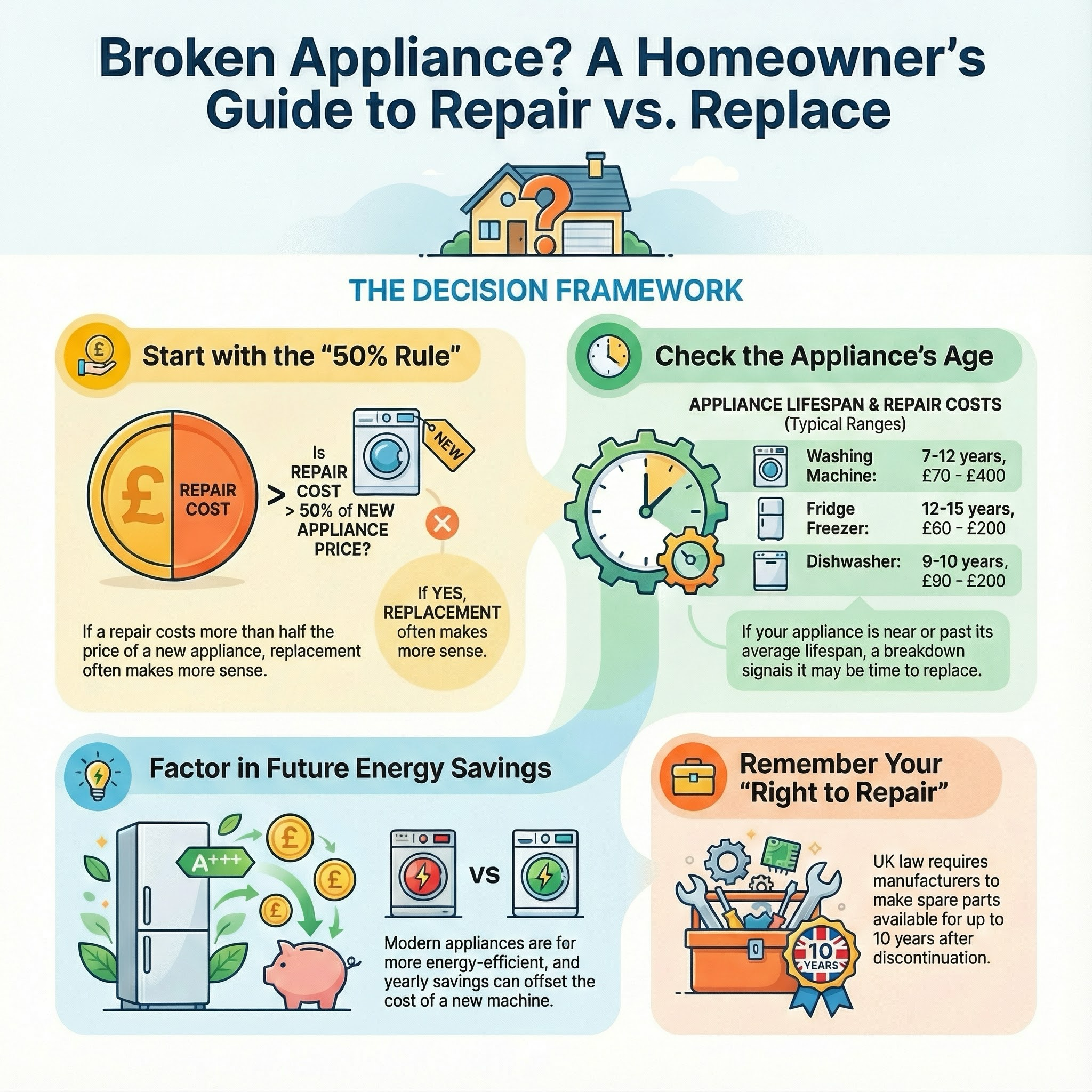
Repairing a belt is significantly cheaper than replacing the entire appliance and is one of the most sustainable ways to extend the life of your machine. This guide covers everything you need to know about the process, costs, and finding a reliable engineer in 2025.
A professional appliance engineer will follow a systematic process to ensure the repair is safe and long-lasting. The work typically includes:
Prices for appliance repairs have stabilised in 2025, though location plays a significant role in labour rates. Expect to pay more in London and the South East.
| Item | Low £ | High £ | Notes |
|---|---|---|---|
| Call-out Fee | £65 | £110 | Often covers the first 30-60 minutes of labour. |
| Replacement Belt (Part) | £15 | £55 | OEM parts for premium brands like Miele cost more. |
| Labour (Hourly Rate) | £50 | £90 | Only applicable if the job exceeds the call-out period. |
| Integrated Appliance Surcharge | £20 | £45 | Extra time needed to remove kitchen plinths and decor doors. |
| Total Average Cost | £110 | £230 | Most UK repairs fall within this range. |
The primary factor affecting the price is whether you choose an Original Equipment Manufacturer (OEM) part or a generic "pattern" part. While generic belts are cheaper, OEM belts are designed specifically for the tension requirements of your specific model.
The time required depends heavily on the accessibility of your machine and the specific brand.
Replacing a washing machine belt is a "medium" difficulty DIY task. If you are confident with a screwdriver and can safely pull the machine out, you can save on labour costs. However, many modern machines use "stretch" belts which require significant physical strength and specific techniques to fit without snapping the new part.
Safety Warning: Always unplug the machine before removing any panels. If your machine is hardwired or you suspect an electrical fault in the motor, always hire a professional.
A professional engineer provides the benefit of a guarantee on both parts and labour. They will also check for underlying issues, such as worn drum bearings, which might have caused the belt to slip in the first place.
When looking for an appliance engineer, look for specialists rather than general "handymen." Use the following criteria to vet your pro:
Questions to ask:
While there are no specific "belt replacement" laws, several UK standards apply to appliance repairs:
Simply replacing a belt isn't always the end of the story. Watch out for these common issues:
The most common causes are overloading the machine, which creates too much friction, or general wear and tear over 5-10 years. Occasionally, a seized drum or motor will cause the belt to burn through in one spot.
No. While the machine might still fill and drain, the drum will not rotate. Continuing to run the motor without the belt attached can sometimes lead to the motor over-speeding or overheating.
If the machine is under 8 years old and otherwise in good condition, a belt replacement is almost always worth it. If the machine is very old and the bearings are also noisy, it may be time to consider a replacement.
Poly-V belts have ridges and are usually tightened via a motor adjustment. Stretch belts have no adjustment mechanism and rely on the elasticity of the material to stay tight; these are much harder to fit by hand.
In the UK, the model number is usually found on a sticker inside the door rim, behind the kick-plate at the bottom, or on the back of the machine. You need the full model number and "PCN" or "Product Code" for an exact belt match.
This guide was written with AI assistance and is intended for general information only. Prices are estimates based on UK averages and may vary by region. Always get at least three quotes and consult a qualified professional before starting any work.
Ask follow-ups in plain English. The AI explains options, sequencing and what to ask the appliance repair — so you walk in informed.
Microwaves are a staple of the modern UK kitchen, offering convenience for everything from defrosting to full meal preparation. While basic freestanding models ...
READ GUIDE →GuideA faulty fridge or freezer is one of the most urgent domestic repairs, with food safety and waste being the primary concerns. For many UK homeowners, a professi...
READ GUIDE →GuideA cold oven is a major disruption to any UK household, but a failed heating element is one of the most common and cost-effective repairs you can undertake. Inst...
READ GUIDE →GuideScope of Works • inspect appliance and perform diagnostic checks (power, suction, switches, wiring) • clean and test filters, dust bin or bag and airway for blo...
READ GUIDE →GuideA faulty microwave display is a common frustration for UK homeowners. Whether the screen has gone completely dark, is flickering, or showing unintelligible "gho...
READ GUIDE →GuideA faulty oven can bring a UK household to a standstill, turning meal times into a logistical challenge. Whether it is a failed heating element, a noisy fan, or ...
READ GUIDE →