Instant
01 · Ask
Ask the AI a follow-up
Got more questions about washing machine gasket fitting? Describe the bit you're unsure about — the AI explains options, sequencing and what to ask the appliance repair.

Bellows perished or mouldy — gasket fitted, clamp ring re-seated and door-seal tested.
You've read the brief on washing machine gasket fitting. Now lean on us to find the right appliance repair — and stay in control of the job.
Got more questions about washing machine gasket fitting? Describe the bit you're unsure about — the AI explains options, sequencing and what to ask the appliance repair.
Costs, timelines, pitfalls and the right questions to ask before any appliance repair starts on washing machine gasket fitting.
Itemised quotes from up to 3 local appliance repairs on washing machine gasket fitting — so you can compare like-for-like, not lump sums.
Ready when you are
Enter your postcode and get free quotes from local pros.
Four moves that separate a smooth job from a nightmare.
If the gasket is rotated even slightly, the drain holes won't line up, causing water to pool and mould to grow rapidly.
If the retaining clamp isn't seated in the groove, the seal will pop off mid-cycle, leading to a major leak.
Rough handling during installation can tear the new rubber on the sharp metal edge of the drum housing.
Many models look similar but use slightly different gaskets; using the wrong part number will prevent the door from latching correctly.
Indicative UK ranges and what affects price.
By job type
Quote spread is typically ± 18% — always get 3 quotes.
Appliance Repair quick-view
Appliance Repair explained
Replacing the gasket restores the watertight integrity of your machine and eliminates the unpleasant damp smells caused by black mould build-up. Professional fitting ensures the seal is seated correctly, preventing the common "leaking after repair" issues that plague DIY attempts.
| Item | Low £ | High £ | Notes |
|---|---|---|---|
| Call-out / Diagnosis | £60 | £110 | Often covers the first hour of labour. |
| Labour (Hourly) | £45 | £90 | Most replacements take 1–1.5 hours. |
| Standard Gasket Part | £25 | £60 | For common brands like Beko, Hotpoint, or Bosch. |
| Premium Gasket Part | £70 | £140 | For high-end brands like Miele, Samsung, or LG. |
| Total Project Cost | £130 | £340 | Inc. VAT and parts. |
Prices vary primarily based on the appliance brand and whether the machine is integrated. Integrated machines require more labour as they must be unbolted from the cabinetry and the decorative door removed before work can begin.
Replacing a door seal is a notoriously "fiddly" job. While a confident DIYer can handle many freestanding models, the tension springs are difficult to refit without specialist expansion tools, often resulting in punctured seals or bruised knuckles.
Professional engineers provide a guarantee on both the part and the labour, giving you peace of mind that your kitchen won't flood during the next wash cycle.
If your machine is integrated or still under a third-party warranty, a professional repair is essential. They will also perform a basic electrical safety check (PAT) after reassembling the unit to ensure no wires were pinched during the process.
If the mould has "pitted" the rubber (black spots that won't scrub off), the structural integrity is compromised. While cleaning helps hygiene, it won't fix a seal that has started to perish or thin.
Common causes include coins or bra wires getting trapped in the fold, over-loading the machine which causes the drum to rub against the seal, or natural perishing due to high-temperature washes and detergent build-up.
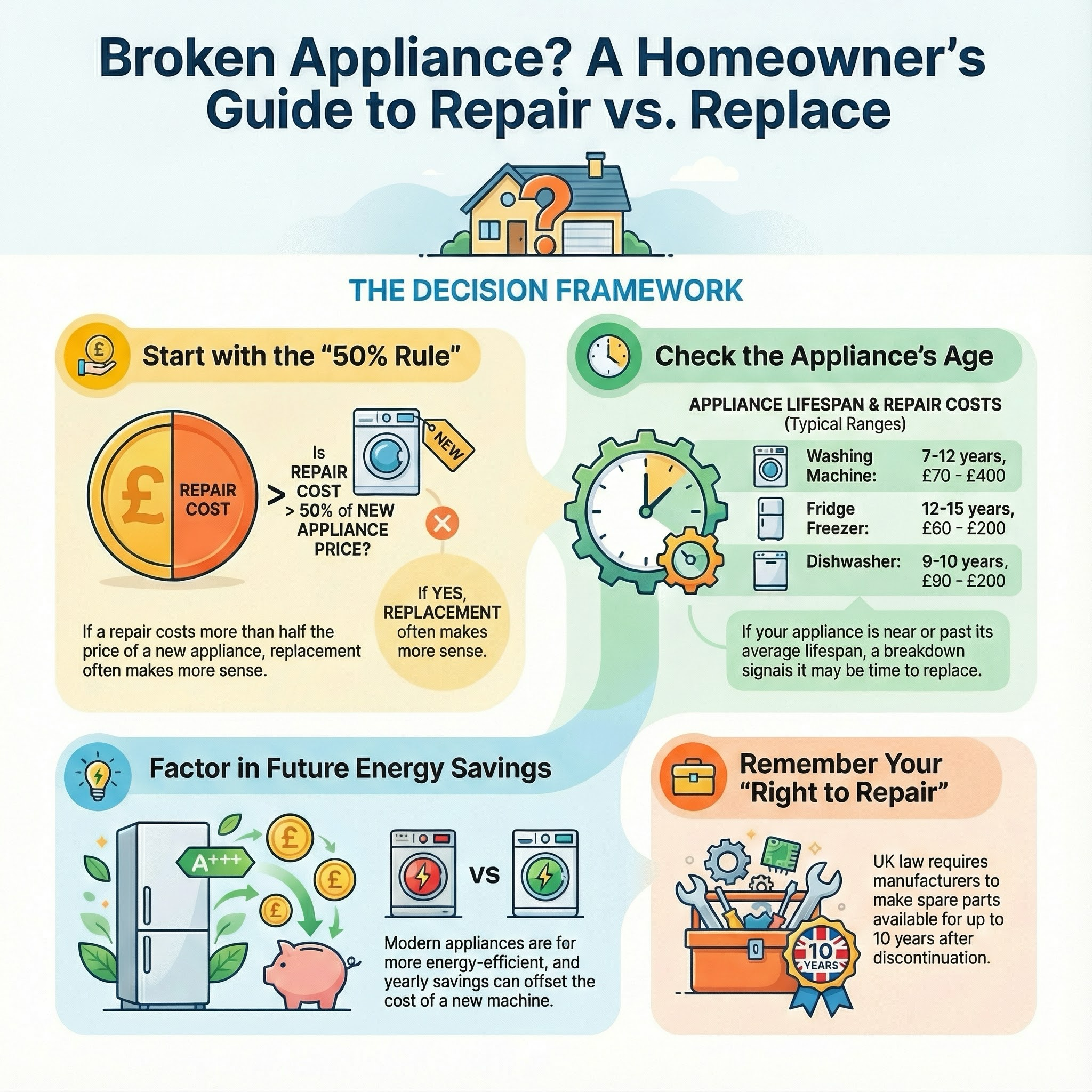
If the machine is otherwise in good health (bearings and motor are quiet), a £150 seal replacement is much cheaper than a £400+ new machine. However, if the bearings are also failing, replacement is usually better value.
New gaskets can have a slight "rubbery" scent for the first 2–3 washes. Running a maintenance wash at 60°C with a dedicated cleaner after installation usually eliminates this quickly.
Yes. Water leaking from the front of the drum often drips directly onto the door lock mechanism or the motor below, which can cause an electrical short and a much more expensive repair bill.
This guide was written with AI assistance and is intended for general information only. Prices are estimates based on UK averages and may vary by region. Always get at least three quotes and consult a qualified professional before starting any work.
Ask follow-ups in plain English. The AI explains options, sequencing and what to ask the appliance repair — so you walk in informed.
Microwaves are a staple of the modern UK kitchen, offering convenience for everything from defrosting to full meal preparation. While basic freestanding models ...
READ GUIDE →GuideA faulty fridge or freezer is one of the most urgent domestic repairs, with food safety and waste being the primary concerns. For many UK homeowners, a professi...
READ GUIDE →GuideA cold oven is a major disruption to any UK household, but a failed heating element is one of the most common and cost-effective repairs you can undertake. Inst...
READ GUIDE →GuideScope of Works • inspect appliance and perform diagnostic checks (power, suction, switches, wiring) • clean and test filters, dust bin or bag and airway for blo...
READ GUIDE →GuideA faulty microwave display is a common frustration for UK homeowners. Whether the screen has gone completely dark, is flickering, or showing unintelligible "gho...
READ GUIDE →GuideA faulty oven can bring a UK household to a standstill, turning meal times into a logistical challenge. Whether it is a failed heating element, a noisy fan, or ...
READ GUIDE →