Instant
01 · Ask
Ask the AI a follow-up
Got more questions about washing machine leak repair? Describe the bit you're unsure about — the AI explains options, sequencing and what to ask the appliance repair.

Seal, pump, hose, soap drawer or sump — leaks traced and fixed before the floor takes more damage.
You've read the brief on washing machine leak repair. Now lean on us to find the right appliance repair — and stay in control of the job.
Got more questions about washing machine leak repair? Describe the bit you're unsure about — the AI explains options, sequencing and what to ask the appliance repair.
Costs, timelines, pitfalls and the right questions to ask before any appliance repair starts on washing machine leak repair.
Itemised quotes from up to 3 local appliance repairs on washing machine leak repair — so you can compare like-for-like, not lump sums.
Ready when you are
Enter your postcode and get free quotes from local pros.
Four moves that separate a smooth job from a nightmare.
Mould or sharp objects (like bra wires) can tear the rubber gasket, leading to puddles at the front of the machine.
Dried powder can cause water to back up and overflow down the front of the machine during the fill cycle.
If the filter at the bottom-front isn't screwed in perfectly straight after cleaning, it will leak during the drain cycle.
Vibration over several years can cause internal rubber hoses to rub against the drum and eventually split.
Indicative UK ranges and what affects price.
By job type
Quote spread is typically ± 18% — always get 3 quotes.
Appliance Repair quick-view
Appliance Repair explained
Professional repair ensures the source of the leak—whether it is a perished seal, a cracked pump, or a blocked internal hose—is identified accurately. Acting quickly prevents the "domino effect" of water damage to subfloors and neighbouring units.
The cost of a washing machine leak repair typically depends on the brand of the appliance and the accessibility of the faulty part. High-end brands like Miele or Siemens often have higher part costs compared to budget-friendly manufacturers.
| Item | Low £ | High £ | Notes |
|---|---|---|---|
| Call-out / Diagnostic Fee | £80 | £120 | Often covers the first 30–60 minutes. |
| Hourly Labour Rate | £60 | £95 | Charged after the initial call-out period. |
| Minor Parts (Seals/Hoses) | £15 | £65 | Door gaskets, inlet hoses, or clamps. |
| Major Parts (Pumps/Valves) | £70 | £180 | Drain pumps or internal solenoid valves. |
| Total Average Repair | £150 | £350 | Most common leak fixes fall here. |
Note: If your machine is integrated, expect to pay a premium of £30–£50 for the additional labour involved in removing and refitting the kitchen furniture plinths and door panels.
Homeowners can often handle simple maintenance, such as cleaning a blocked detergent drawer or tightening an external cold-water fill hose. However, internal leaks require dismantling the machine’s chassis, which involves sharp metal edges and electrical components.
Professional intervention is highly recommended for internal leaks to ensure the machine remains compliant with UK safety standards. If the repair involves any changes to your home's fixed wiring, it must comply with Part P of the Building Regulations.
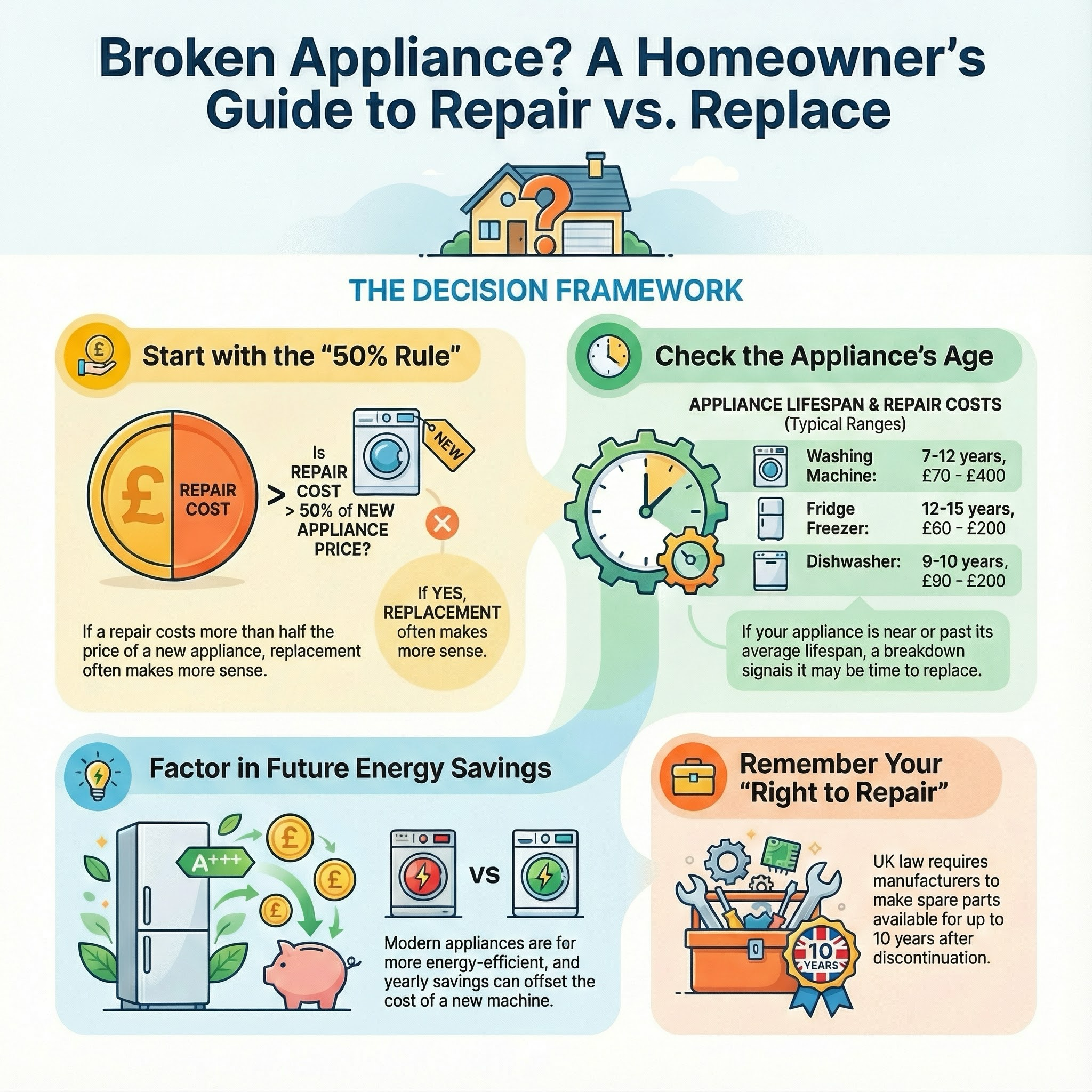
If the machine is under 5 years old and the repair is under £200, it is usually worth fixing. If the drum bearings are also noisy or the machine is over 8 years old, replacement is often more cost-effective.
This usually indicates a problem with the drain pump, the waste hose, or a split in the door seal that only opens up when the drum vibrates heavily at high speeds.
No. Water and electricity are a dangerous combination. Even a small leak can short-circuit the control board or cause a fire hazard, not to mention the risk of rot in your floorboards.
Some UK repair firms offer this, meaning if they cannot diagnose or repair the fault, you don't pay. However, always check if a "diagnostic fee" still applies, as this is often separate from the repair fee.
Regularly clean the pump filter, avoid overloading the drum, and use a descaler monthly to prevent limescale from corroding internal seals and valves.
This guide was written with AI assistance and is intended for general information only. Prices are estimates based on UK averages and may vary by region. Always get at least three quotes and consult a qualified professional before starting any work.
Ask follow-ups in plain English. The AI explains options, sequencing and what to ask the appliance repair — so you walk in informed.
Microwaves are a staple of the modern UK kitchen, offering convenience for everything from defrosting to full meal preparation. While basic freestanding models ...
READ GUIDE →GuideA faulty fridge or freezer is one of the most urgent domestic repairs, with food safety and waste being the primary concerns. For many UK homeowners, a professi...
READ GUIDE →GuideA cold oven is a major disruption to any UK household, but a failed heating element is one of the most common and cost-effective repairs you can undertake. Inst...
READ GUIDE →GuideScope of Works • inspect appliance and perform diagnostic checks (power, suction, switches, wiring) • clean and test filters, dust bin or bag and airway for blo...
READ GUIDE →GuideA faulty microwave display is a common frustration for UK homeowners. Whether the screen has gone completely dark, is flickering, or showing unintelligible "gho...
READ GUIDE →GuideA faulty oven can bring a UK household to a standstill, turning meal times into a logistical challenge. Whether it is a failed heating element, a noisy fan, or ...
READ GUIDE →