Instant
01 · Ask
Ask the AI a follow-up
Got more questions about washing machine service? Describe the bit you're unsure about — the AI explains options, sequencing and what to ask the appliance repair.

Drum clean, filter flush, heater check and door-seal inspect — keeps the machine and your laundry fresh.
You've read the brief on washing machine service. Now lean on us to find the right appliance repair — and stay in control of the job.
Got more questions about washing machine service? Describe the bit you're unsure about — the AI explains options, sequencing and what to ask the appliance repair.
Costs, timelines, pitfalls and the right questions to ask before any appliance repair starts on washing machine service.
Itemised quotes from up to 3 local appliance repairs on washing machine service — so you can compare like-for-like, not lump sums.
Ready when you are
Enter your postcode and get free quotes from local pros.
Four moves that separate a smooth job from a nightmare.
Often caused by hairpins, coins, or bra wires escaping the drum and jamming the impeller.
A common cause of the drum failing to spin; these are relatively cheap to replace if caught early.
In hard water areas, scale builds up on the element, causing the machine to take longer to heat or tripping the RCD in your fuse box.
Caused by low-temperature washes and leaving the door closed between cycles; often requires a full seal replacement if cleaning fails.
Indicative UK ranges and what affects price.
By job type
Quote spread is typically ± 18% — always get 3 quotes.
Appliance Repair quick-view
Appliance Repair explained
Professional servicing ensures that small issues, such as a weeping seal or a worn carbon brush, are identified before they cause catastrophic damage to the machine or your flooring. This guide outlines the costs, timeframes, and essential checks involved in maintaining your appliance to professional standards.
| Item | Low £ | High £ | Notes |
|---|---|---|---|
| Call-out / Diagnostic Fee | £80 | £130 | Usually covers the first 30–60 minutes on site. |
| Labour (per hour) | £50 | £95 | Charged for time required beyond the initial call-out. |
| Minor Parts (Seals, Hoses) | £20 | £70 | Includes VAT; prices vary by brand (e.g., Miele vs Beko). |
| Major Components (Motor, PCB) | £120 | £280 | Electronic control boards and motors are the most expensive. |
| Disposal Fee | £0 | £30 | Small parts are usually free; full machine removal is extra. |
| Total (Routine Service) | £130 | £350 | Most standard services with minor repairs fall here. |
Pricing is primarily influenced by the appliance brand and your location in the UK. Premium German brands often require more expensive proprietary parts, while call-out rates in London and the South East are typically 20-30% higher than the national average.
Homeowners can easily manage basic maintenance such as cleaning the detergent drawer, wiping down the door seal, and clearing the debris filter. These simple tasks can prevent many common drainage issues and "smelly machine" syndromes.
Any work involving the electrical system, internal plumbing, or structural components like the drum and motor should be left to a qualified appliance engineer.
UK electrical safety is paramount; if your machine is hardwired rather than plugged into a standard 13A socket, certain repairs may fall under Part P of the Building Regulations. Furthermore, opening the casing of a machine still under manufacturer warranty will almost certainly void your protection.
For a standard family household, a professional service every 2 to 3 years is recommended. However, you should perform monthly DIY maintenance like cleaning the filter and running a hot "service wash" at 90°C with a descaler.
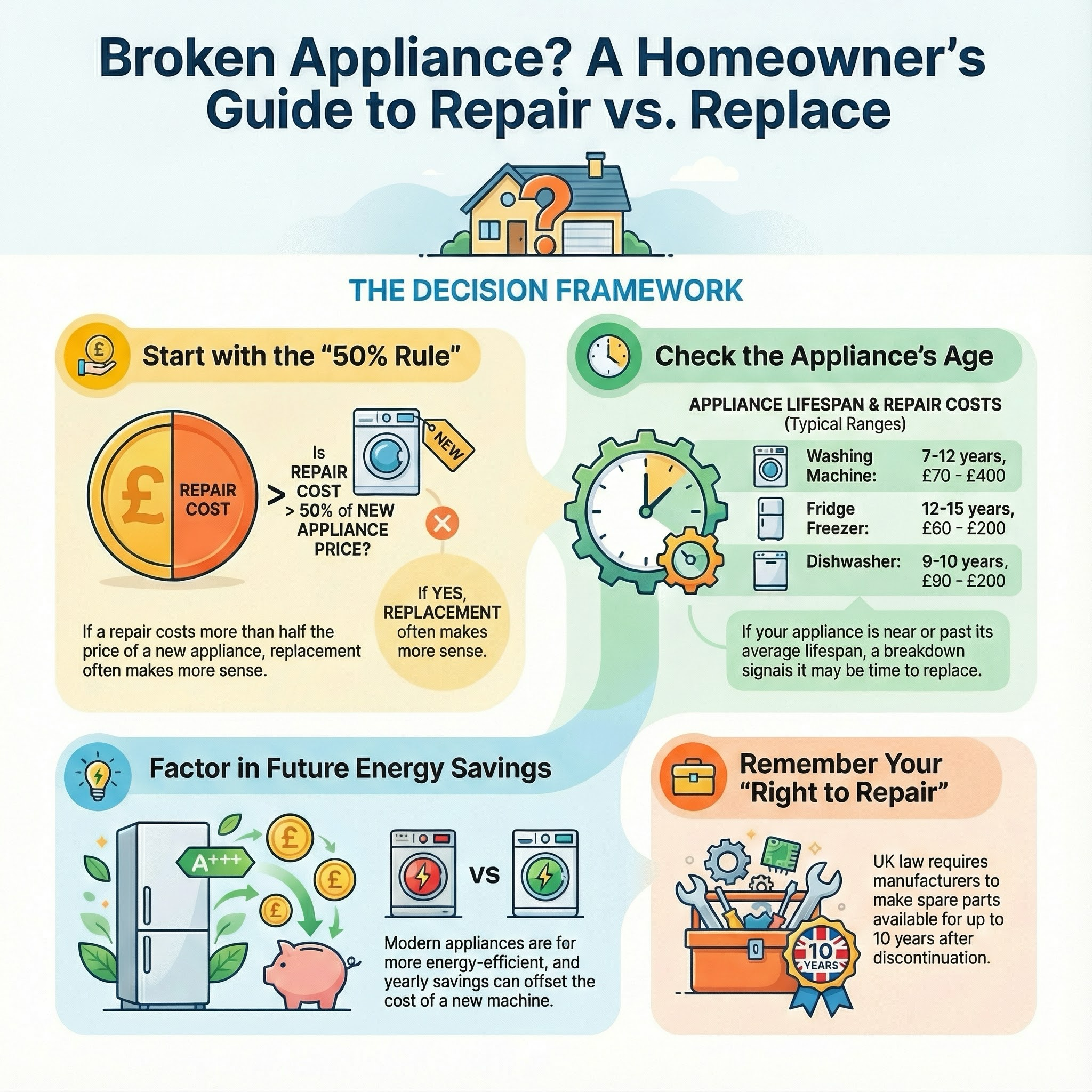
This depends on the initial cost of the machine. For a budget model, a repair costing over £150 is rarely worth it. For premium brands like Miele or Bosch (Serie 6/8), a repair is often significantly cheaper than a £700+ replacement.
This is usually caused by a buildup of bacteria and undissolved detergent (biofilm) in the outer drum. A professional service will deep clean the internal hoses and the "sump" where this sludge accumulates.
Plumbers deal with the external pipes and taps. For internal mechanical or electrical faults, you need a dedicated Domestic Appliance Engineer who understands the specific circuitry and components of the machine.
A service wash is a high-temperature cycle (usually 60°C or 90°C) run with an empty drum and a proprietary cleaner. It is a DIY task that helps remove grease and limescale, but it does not replace a physical inspection by an engineer.
It can. An engineer will check if the machine is level, inspect the shock absorbers (suspension struts), and ensure the concrete counterweights haven't come loose, which are the primary causes of vibration.
This guide was written with AI assistance and is intended for general information only. Prices are estimates based on UK averages and may vary by region. Always get at least three quotes and consult a qualified professional before starting any work.
Ask follow-ups in plain English. The AI explains options, sequencing and what to ask the appliance repair — so you walk in informed.
Microwaves are a staple of the modern UK kitchen, offering convenience for everything from defrosting to full meal preparation. While basic freestanding models ...
READ GUIDE →GuideA faulty fridge or freezer is one of the most urgent domestic repairs, with food safety and waste being the primary concerns. For many UK homeowners, a professi...
READ GUIDE →GuideA cold oven is a major disruption to any UK household, but a failed heating element is one of the most common and cost-effective repairs you can undertake. Inst...
READ GUIDE →GuideScope of Works • inspect appliance and perform diagnostic checks (power, suction, switches, wiring) • clean and test filters, dust bin or bag and airway for blo...
READ GUIDE →GuideA faulty microwave display is a common frustration for UK homeowners. Whether the screen has gone completely dark, is flickering, or showing unintelligible "gho...
READ GUIDE →GuideA faulty oven can bring a UK household to a standstill, turning meal times into a logistical challenge. Whether it is a failed heating element, a noisy fan, or ...
READ GUIDE →