Instant
01 · Ask
Ask the AI a follow-up
Got more questions about wine chiller repair? Describe the bit you're unsure about — the AI explains options, sequencing and what to ask the appliance repair.

Built-in or freestanding wine cooler — compressor, thermostat or fan fault fixed on-site.
You've read the brief on wine chiller repair. Now lean on us to find the right appliance repair — and stay in control of the job.
Got more questions about wine chiller repair? Describe the bit you're unsure about — the AI explains options, sequencing and what to ask the appliance repair.
Costs, timelines, pitfalls and the right questions to ask before any appliance repair starts on wine chiller repair.
Itemised quotes from up to 3 local appliance repairs on wine chiller repair — so you can compare like-for-like, not lump sums.
Ready when you are
Enter your postcode and get free quotes from local pros.
Four moves that separate a smooth job from a nightmare.
Often caused by a failing compressor mount or fan, which can "bruise" wine by disturbing sediment.
Usually indicates a split door seal or a faulty defrost sensor, leading to inconsistent temperatures.
Often a sign that the compressor start relay is failing, which can lead to total cooling failure if ignored.
Frequently caused by a blocked drainage hole or a cracked drip tray, potentially damaging kitchen flooring.
Indicative UK ranges and what affects price.
By job type
Quote spread is typically ± 18% — always get 3 quotes.
Appliance Repair quick-view
Appliance Repair explained
Repairing these units requires a specialist touch, particularly for high-end integrated models found in modern UK kitchens. Professional repair ensures the delicate balance of vibration reduction and thermal stability is restored without damaging your cabinetry or the appliance itself.
Prices for wine chiller repairs vary significantly based on the brand (e.g., Liebherr vs. budget brands) and whether the unit is freestanding or integrated. Expect to pay a premium for emergency call-outs or for repairs involving the refrigerant circuit.
| Item | Low £ | High £ | Notes |
|---|---|---|---|
| Call-out / Diagnostic Fee | £80 | £130 | Often deducted from the final repair bill. |
| Labour (Hourly Rate) | £65 | £110 | Higher rates for London and specialist brands. |
| Thermostat / Sensor Replacement | £40 | £120 | Common fix for temperature issues. |
| Fan Motor Replacement | £90 | £180 | Includes part and labour. |
| Compressor / Gas Recharge | £350 | £700+ | Major work involving F-gas certification. |
| Integrated Unit Removal | £50 | £100 | Additional labour for built-in appliances. |
Note: Most standard repairs fall between £180 and £350 including parts and labour. If the compressor has failed on a budget unit, it is often more cost-effective to replace the entire appliance.
While you can safely clean the condenser coils or replace a lightbulb yourself, most wine chiller repairs require a professional. UK law is very strict regarding refrigerant gases; it is illegal for anyone without F-gas certification to break the seal on a cooling system.
Attempting to repair the control board or compressor yourself can void your home insurance and the manufacturer's warranty.
This is usually caused by the cooling fan or the compressor. If it's a vibrating hum, the unit might simply be unlevel, but a grinding noise typically indicates the fan motor bearings are failing.
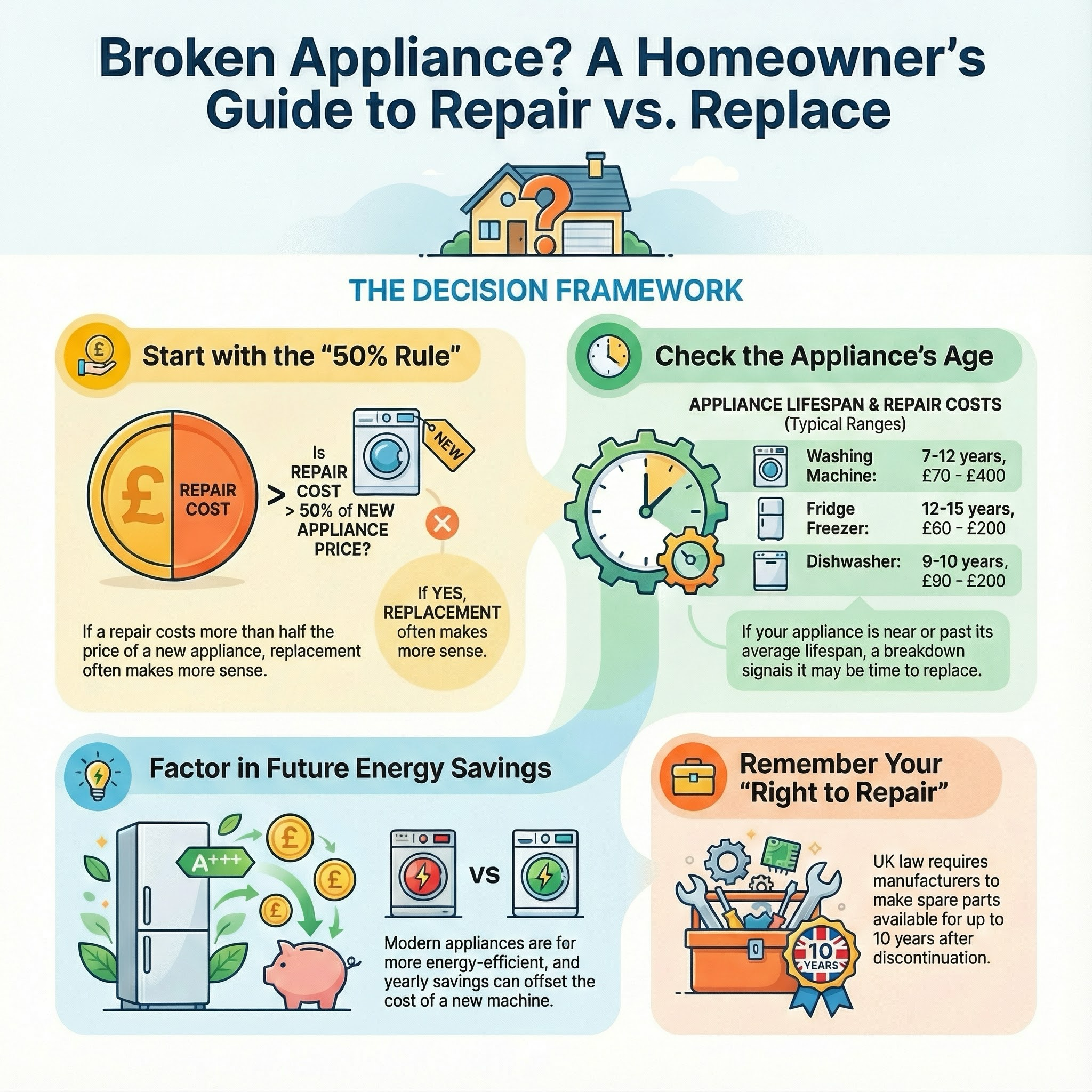
For high-end, expensive brands, a repair is usually worth it. For budget freestanding units, the cost of a new compressor often exceeds the value of the appliance, making replacement the better option.
Yes, most domestic appliance engineers can fix wine chillers, but ensure they understand dual-zone cooling systems and humidity controls, which are not present in standard fridges.
This usually points to a refrigerant leak or a failed compressor. If the lights and fans are working but there is no cooling, you will likely need an F-gas specialist to check the gas levels.
A professional service every 2-3 years is recommended. This includes cleaning the condenser coils, checking the seals, and ensuring the drainage system is clear to prevent unexpected breakdowns.
This guide was written with AI assistance and is intended for general information only. Prices are estimates based on UK averages and may vary by region. Always get at least three quotes and consult a qualified professional before starting any work.
Ask follow-ups in plain English. The AI explains options, sequencing and what to ask the appliance repair — so you walk in informed.
Microwaves are a staple of the modern UK kitchen, offering convenience for everything from defrosting to full meal preparation. While basic freestanding models ...
READ GUIDE →GuideA faulty fridge or freezer is one of the most urgent domestic repairs, with food safety and waste being the primary concerns. For many UK homeowners, a professi...
READ GUIDE →GuideA cold oven is a major disruption to any UK household, but a failed heating element is one of the most common and cost-effective repairs you can undertake. Inst...
READ GUIDE →GuideScope of Works • inspect appliance and perform diagnostic checks (power, suction, switches, wiring) • clean and test filters, dust bin or bag and airway for blo...
READ GUIDE →GuideA faulty microwave display is a common frustration for UK homeowners. Whether the screen has gone completely dark, is flickering, or showing unintelligible "gho...
READ GUIDE →GuideA faulty oven can bring a UK household to a standstill, turning meal times into a logistical challenge. Whether it is a failed heating element, a noisy fan, or ...
READ GUIDE →