Instant
01 · Ask
Ask the AI a follow-up
Got more questions about flint Wall Construction? Describe the bit you're unsure about — the AI explains options, sequencing and what to ask the bricklayer.

Knapped or whole flint — bedded in lime mortar with brick or stone quoins, in the traditional Sussex/Hampshire style.
You've read the brief on flint Wall Construction. Now lean on us to find the right bricklayer — and stay in control of the job.
Got more questions about flint Wall Construction? Describe the bit you're unsure about — the AI explains options, sequencing and what to ask the bricklayer.
Costs, timelines, pitfalls and the right questions to ask before any bricklayer starts on flint Wall Construction.
Itemised quotes from up to 3 local bricklayers on flint Wall Construction — so you can compare like-for-like, not lump sums.
Ready when you are
Enter your postcode and get free quotes from local pros.
Four moves that separate a smooth job from a nightmare.
Using modern cement causes the mortar to be harder than the stone, leading to "spalling" where the flint faces pop out.
Without proper "weep holes" or a suitable backing, water pressure can cause the wall to bulge or bow.
Often caused by inadequate foundations or failing to use "through-stones" (stones that span the width of the wall).
Laying flint in late autumn or winter without thermal protection can cause the wet mortar to freeze and crumble.
Indicative UK ranges and what affects price.
By job type
Quote spread is typically ± 18% — always get 3 quotes.
Bricklayer quick-view
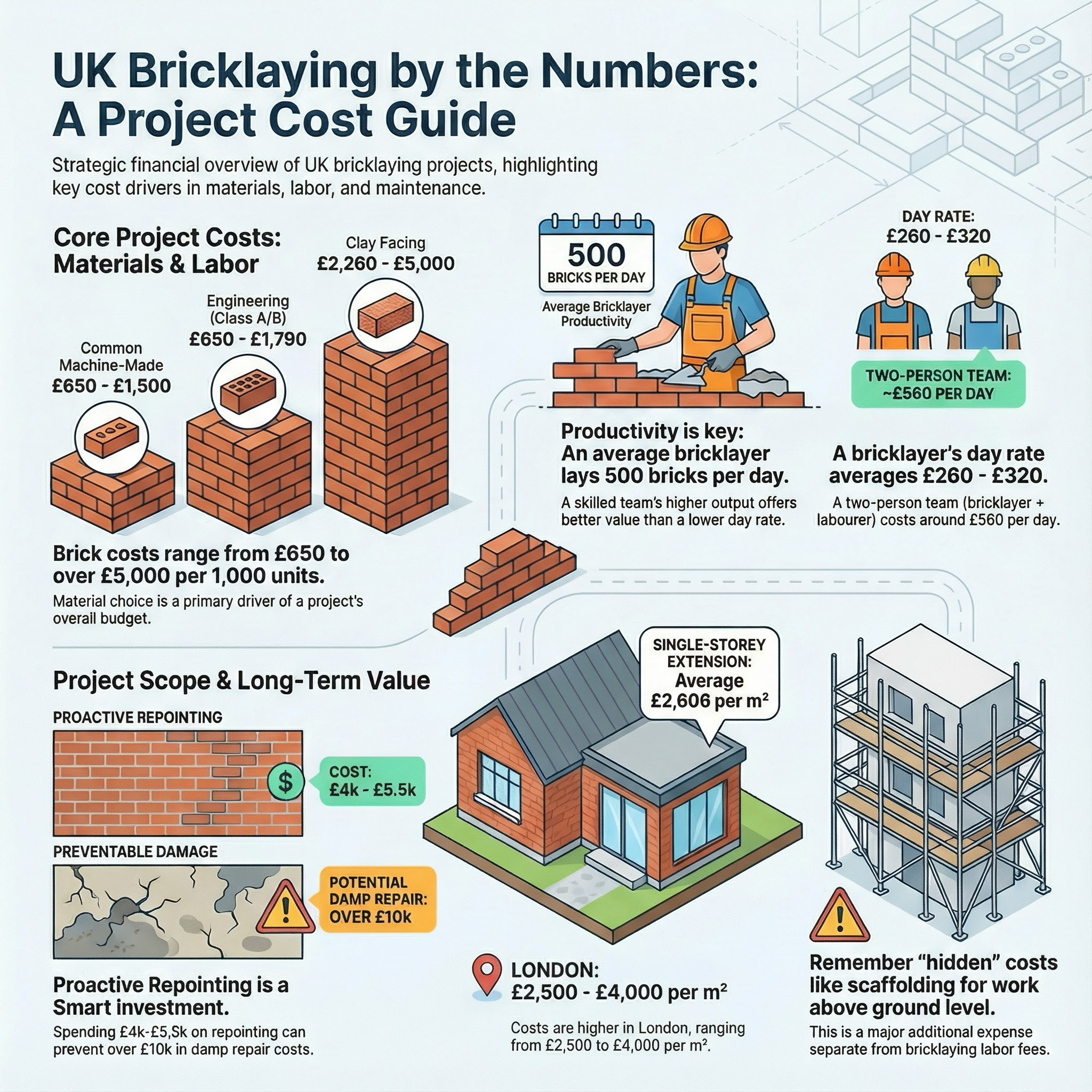
Constructing or repairing a flint wall is a specialist craft that differs significantly from standard bricklaying. Because flint is an irregular, non-porous stone, it requires specific techniques and materials—usually lime-based mortars—to ensure the wall remains breathable and structurally sound for decades to come.
| Item | Low £ | High £ | Notes |
|---|---|---|---|
| Labour (per m²) | £180 | £350 | Depends on knapping complexity and location. |
| Raw Flint (per tonne) | £250 | £550 | Knapped flint is significantly more expensive. |
| Lime Mortar (per 25kg bag) | £15 | £25 | Premixed hydraulic lime is standard. |
| Foundation Excavation | £400 | £900 | Includes waste removal and concrete pour. |
| Repointing (per m²) | £80 | £150 | Specialist lime mortar rake-out and finish. |
The total cost is primarily driven by the "face" of the wall. Using pre-knapped flints or intricate patterns like "checkerboard" with stone or brick will push prices toward the higher end, while random "field flint" walls are more cost-effective.
While a keen DIYer can handle basic brickwork, flint walling is an art form that is notoriously difficult to master. Flints are "slippery" in wet mortar and do not absorb water like bricks, making the wall prone to "slumping" if too many courses are laid at once.
Professional flint masons understand the "suction" of the stone and the specific ratios of lime mortar required to prevent the wall from cracking or collapsing under its own weight.
Furthermore, if your property is a Listed Building or in a Conservation Area, you are legally required to use traditional materials and methods. A professional will ensure your project meets these strict UK heritage standards.
Yes, typically 50% to 100% more expensive. This is due to the higher cost of the raw stone and the significant amount of labour required to set irregular shapes compared to uniform bricks.
Unknapped flints are whole stones used in their natural, rounded state. Knapped flints have been split by a mason to reveal the glassy, dark interior, creating a flatter and more sophisticated finish.
If built correctly with lime mortar and solid foundations, a flint wall can easily last over 100 years. Many flint structures in the UK have stood for centuries with only minor maintenance.
Flint itself is virtually indestructible, but the mortar joints will eventually weather. You should inspect the wall every few years for "loose" flints or crumbling mortar and have them repointed with lime.
Yes, this is a common modern technique. A concrete block wall is built first, and a flint "skin" is tied to it using stainless steel wall ties, providing the look of a traditional wall with modern structural speed.
This guide was written with AI assistance and is intended for general information only. Prices are estimates based on UK averages and may vary by region. Always get at least three quotes and consult a qualified professional before starting any work.
Ask follow-ups in plain English. The AI explains options, sequencing and what to ask the bricklayer — so you walk in informed.
Brickwork is the backbone of most UK homes, providing structural integrity and protection against our unpredictable weather. Over time, exposure to rain, frost,...
READ GUIDE →GuideYour front steps are more than just a functional entrance; they are a vital part of your home’s kerb appeal and structural safety. For UK homeowners, replacing ...
READ GUIDE →GuideRepointing is the process of renewing the external part of mortar joints between bricks. Over time, the UK’s harsh weather causes mortar to crumble, crack, and ...
READ GUIDE →GuideCracks in brickwork are a common sight for UK homeowners, often triggered by seasonal temperature changes, heavy clay soils, or historical settlement. While man...
READ GUIDE →GuideGarden walls are more than just boundaries; they provide security, privacy, and kerb appeal to UK homes. However, constant exposure to the British weather—parti...
READ GUIDE →GuideHistoric dry stone walls are a defining feature of the British countryside and many period properties. Unlike modern masonry, these structures rely on gravity a...
READ GUIDE →